




The NVIDIA RTX 5070 Founders Edition:
Architecture :
As a reminder, the cards in the “Founders Edition” series are unique models offered by NVIDIA. The main advantage of these cards is that they are offered at a “locked-in” price, which will not change in the coming weeks or months, unless the price goes down. NVIDIA ‘s partners will also be offering their own models. Visually, NVIDIA has radically changed its design, moving to a 2-slot wide card that will be SFF-Ready. We’ll be coming back to this new design in more detail later in this article.
This NVIDIA RTX 5080 benefits from the Blackwell architecture and retains a 4 nanometre engraving finesse, but switches to the TSMC N4P process, enabling greater transistor density and improved energy efficiency. This architecture features new 5th generation Tensor Cores and 4th generation Ray Tracing Cores. The 5th generation Tensor Cores will provide support for the FP4 (Floating Point 4 bits) format, which will double the computational performance of neural models while halving the memory footprint. We’ll be coming back to this development during our tests, in particular with the UL Procyon software that we’ve been using for several weeks now.
Of course, DLSS 4 support cannot be overlooked, and this new RTX 5070 is equipped with 6,144 CUDA Cores, compared with 8,960 for the RTX 5070 Ti version. While the RTX 5070 Ti model did not have a Founders Edition version, this is the case here with the RTX 5070, as was the case with the RTX 5080 FE and RTX 5090 FE.


There’s also something new on the memory front, with 12GB of GDDR7 memory (672 GB/s). As for the TDP, it’s announced at 250 watts, and NVIDIA recommends a 650 watt power supply. But let’s move on to discovering the new packaging for this Founders Edition series.
The Founders Edition bundle :
The first thing that strikes you is the size of the box, which is more imposing in terms of dimensions when compared to previous generation cards. Despite this, NVIDIA says it has halved the packaging of this NVIDIA RTX 5070 Founders Edition compared to the ADA Lovelace cards, because there’s a little surprise. As with the previous generation, the card arrives in a cardboard box, but here, this cardboard box is actually the packaging for our RTX 5070 FE, whereas with the RTX 4000s, the cardboard box was merely a protective layer before we discovered the graphics card’s ‘real box’ (click here to remember).
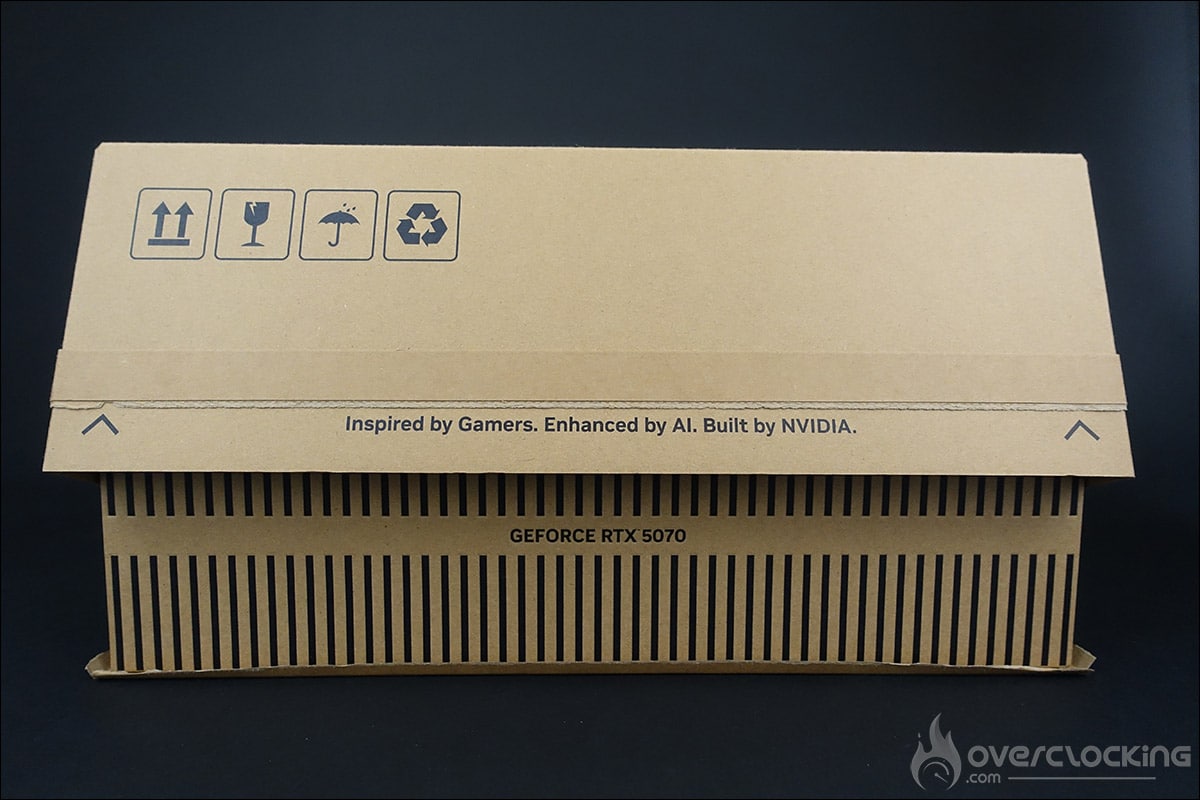
Ecologically, the first good point for the Greens, and you’ll see that this isn’t the only effort made, since there’s no plastic and the whole thing is made from paper fibres. The cardboard tab that seals the box reveals the following annotation: ” Inspired by Gamers. Enhanced by AI. Built by NVIDIA “. It says it all: gamers, artificial intelligence and NVIDIA.
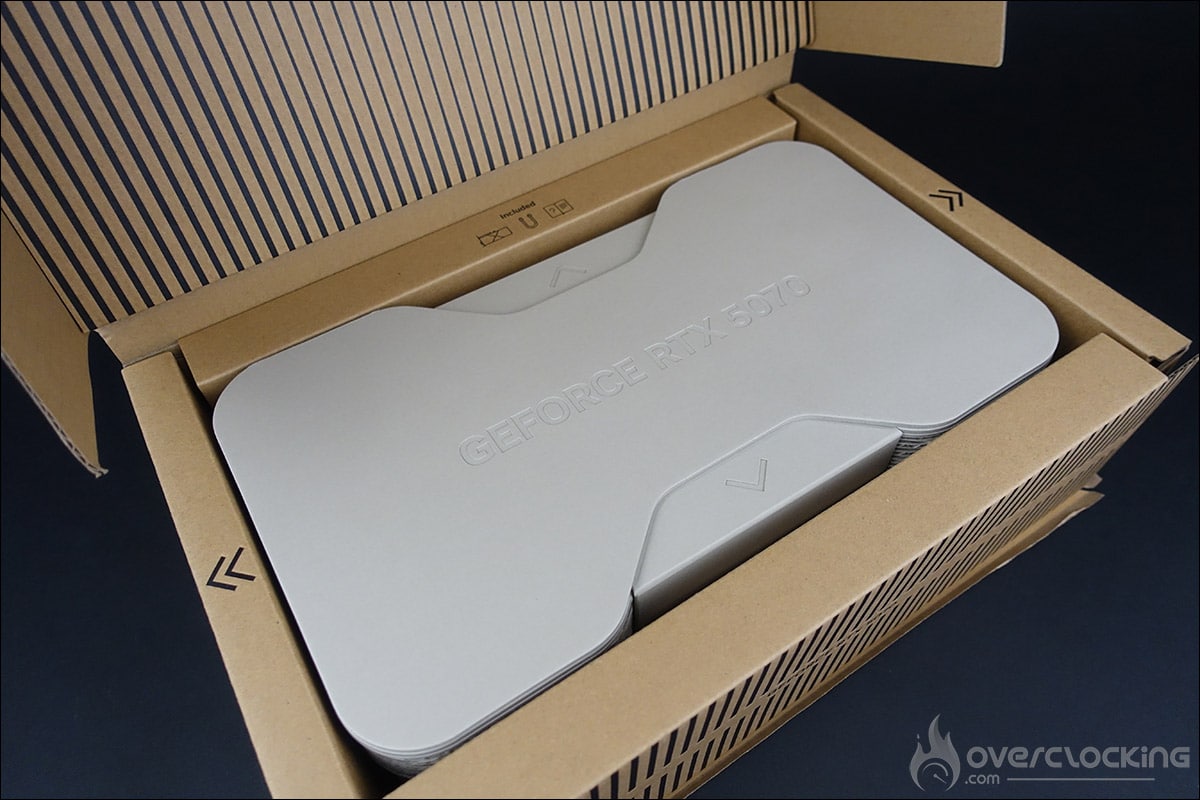
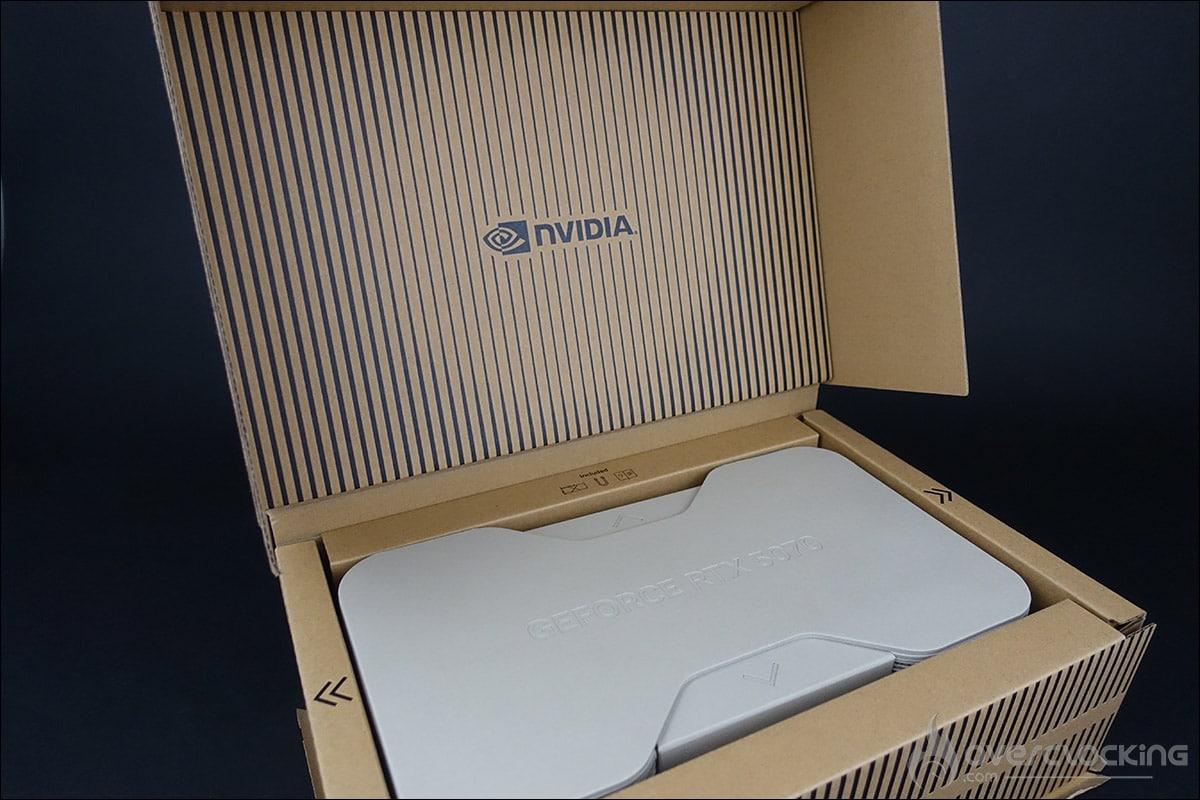
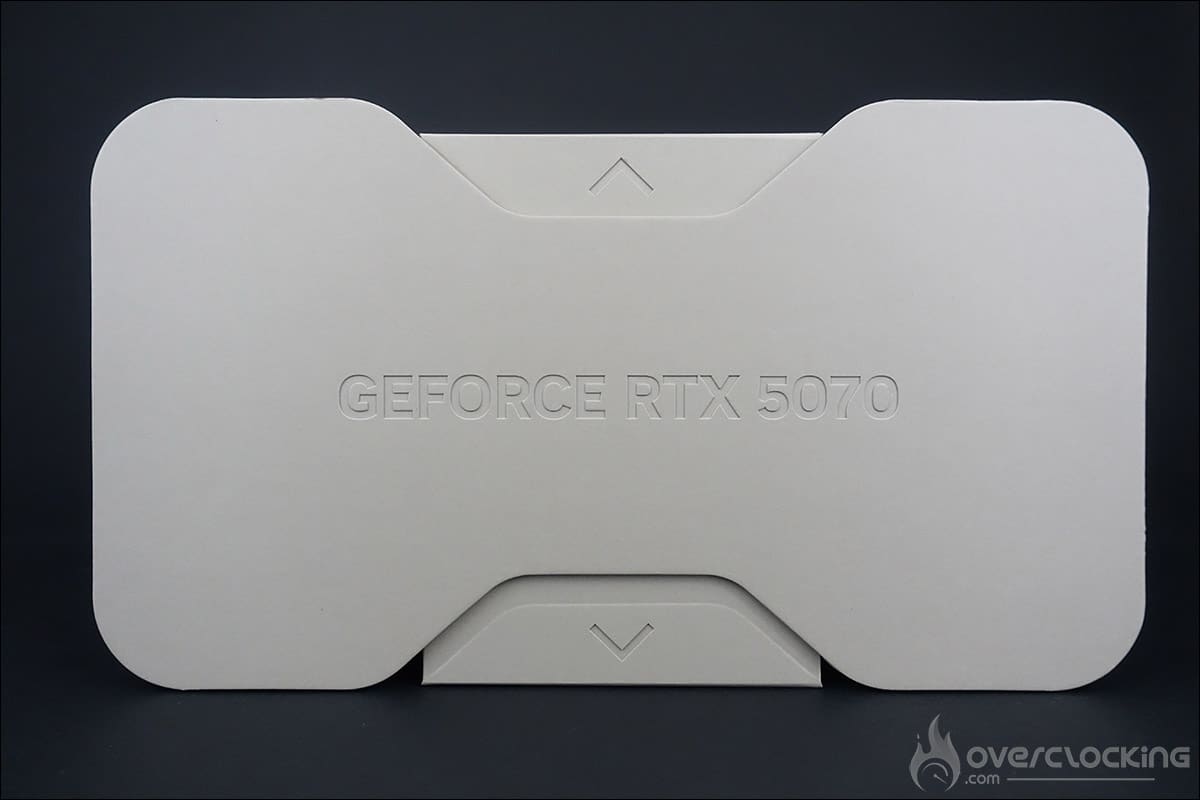
So what does this new box have in store for us? As usual, NVIDIA has taken great care with the packaging, offering a cardboard box in which to hide our copy of the NVIDIA RTX 5070 Founders Edition. It’s always very exciting to discover the new packaging offered by NVIDIA for the arrival of a new generation. The box opens at the front and conceals a second cardboard box in the centre, with the words “GeForce RTX 5070” engraved on the top.
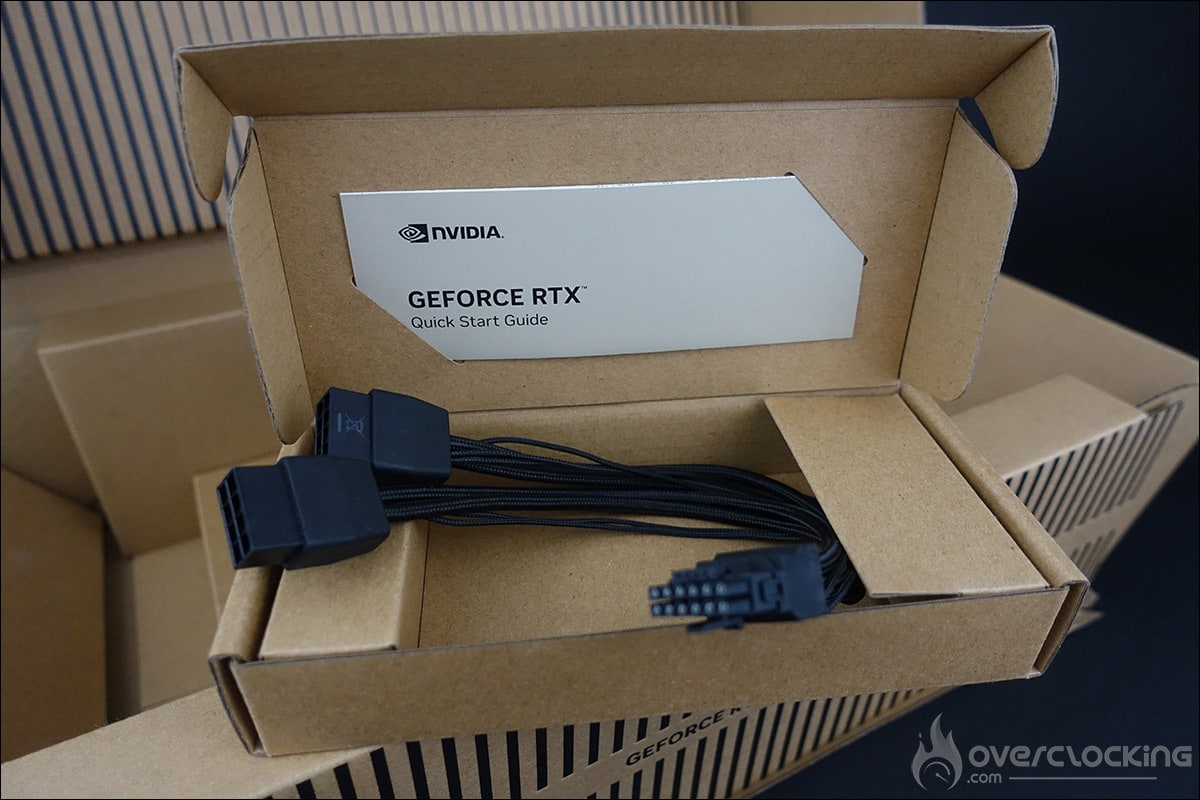
When this is removed, a small box is revealed, containing the adapter for the card’s power supply and a quick start guide. Note that the adapter is a 2 x PCIe 8-pin model to be compatible with your power supply, if you don’t have the 12V-2×6 connector. NVIDIA recommends a minimum power supply of 650 watts.
To access and discover our NVIDIA RTX 5070 Founders Edition, all you have to do is slide out the top and bottom cardboard boxes, which hold the two sides of the box together. NVIDIA is therefore playing the eco-responsible card with the packaging for this Founders Edition, and we can’t help but agree!
The NVIDIA RTX 5070 Founders Edition:
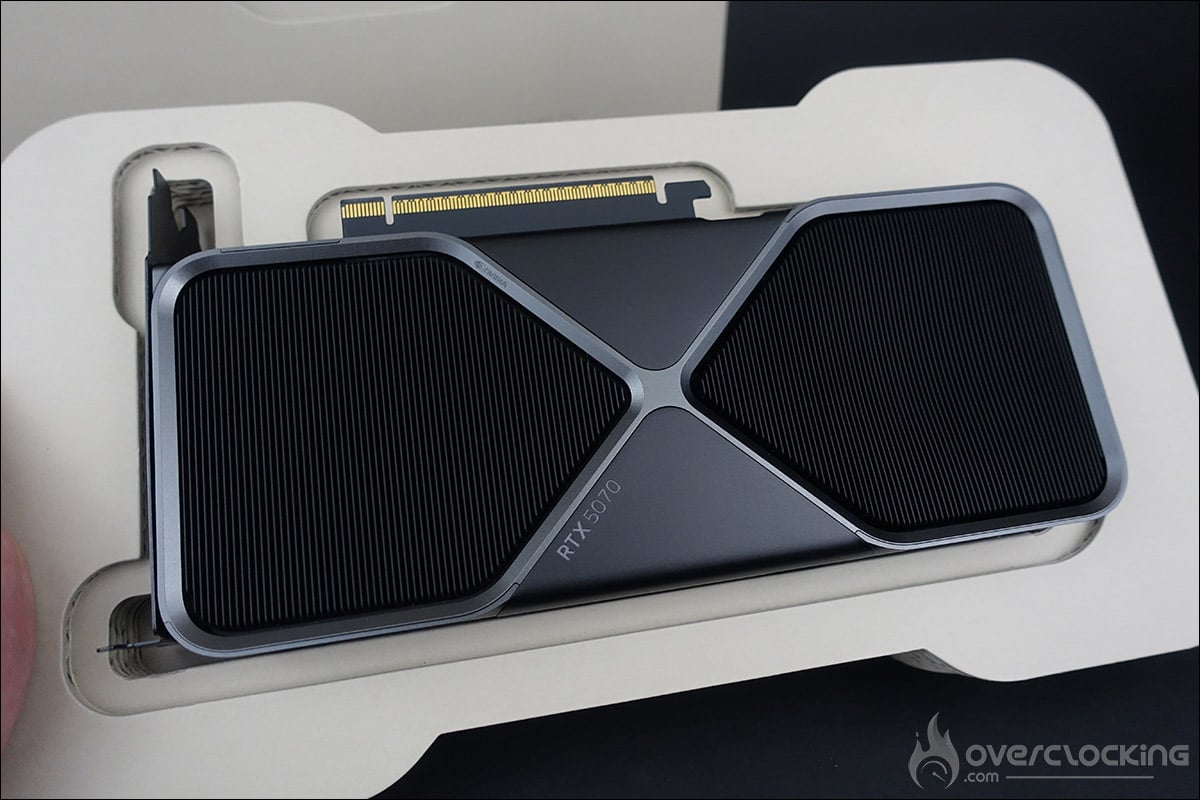
The card is 242 mm long, 112 mm high and 2 slots (40 mm) thick, which means it can be labelled SFF-Ready. This means it can be inserted into a case compatible with the Small Form Factor for anyone who decides to design a compact configuration.


There are two 115mm fans that draw in cool air from the bottom of your case, which is then evacuated by the fans at the top. As we already hinted at in this brief, the internal design is made up of three elements: the PCB with the graphics chip, memory chips and power supply stages, a PCB with the PCIe Gen5 connector and finally a PCB in charge of the video ports linked by a flexible cable to the central PCB.
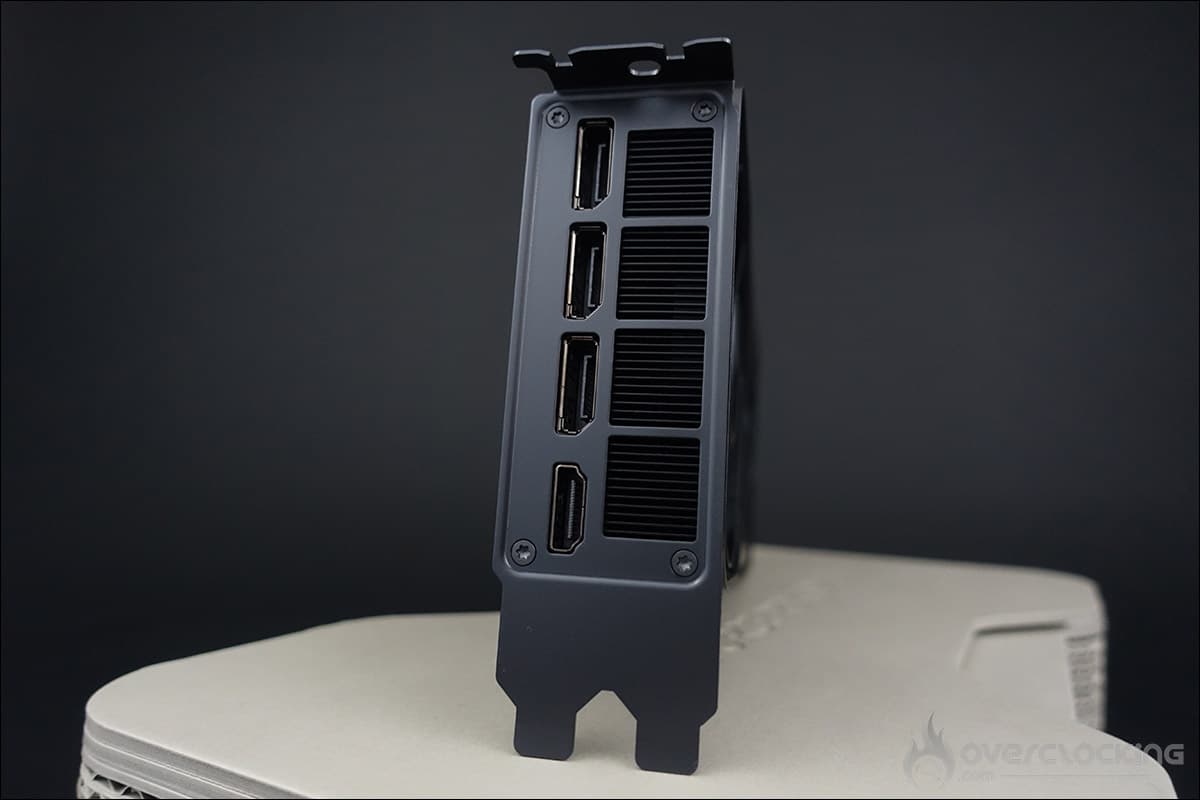
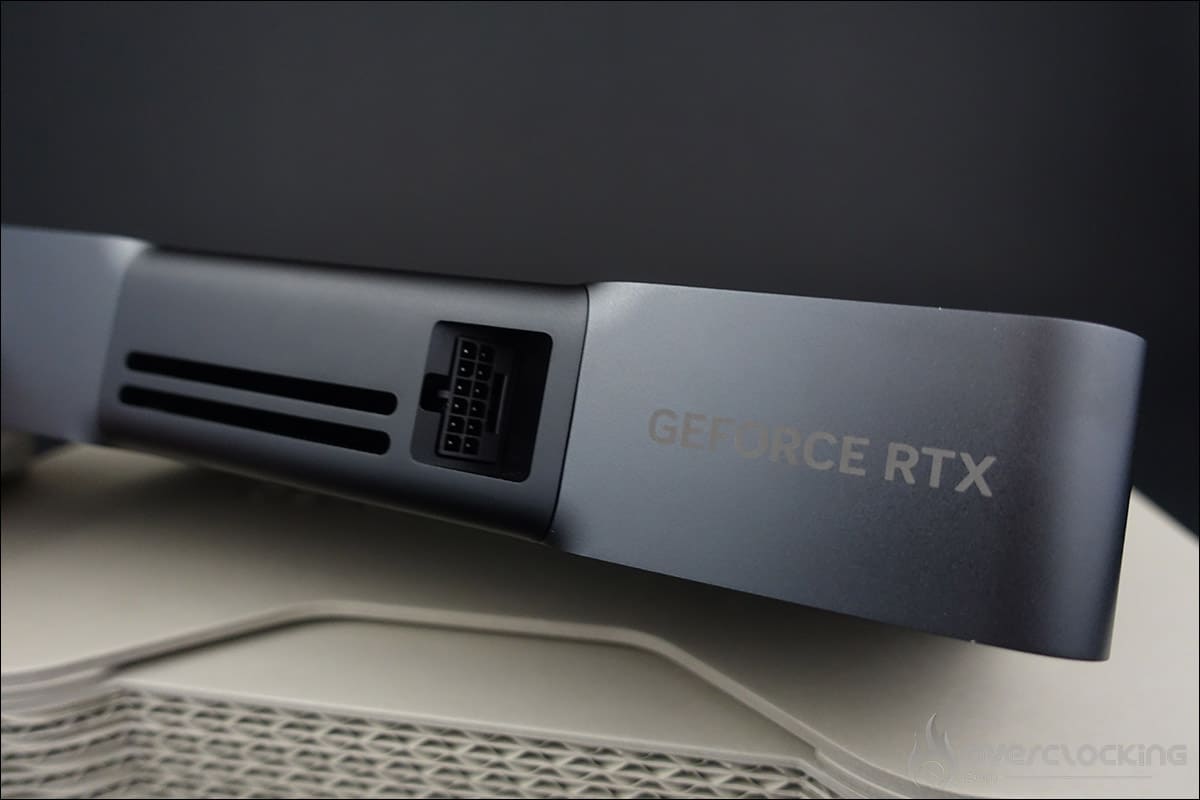
Finally, to power the card, there is a single 12V-2×6 connector, but you can use the 2 x PCIe 8-pin adapter supplied in the bundle by NVIDIA. Note that its position has changed compared to the previous generation. Aesthetically, it will be more difficult to hide the power cable. As for video, you’ll get three DisplayPort 2.1b with UHBR20 and one HDMI 2.1b. NVIDIA has even gone so far as to offer a bracket in matt grey, rather than metallic.