
[nextpage title=”Introduction:”]
Thursday 16 January sees the end of the NDA for the Intel B570 graphics cards, the little sisters of the B580 models. In mid-December we reviewed the Intel ARC B580 Limited Edition, and today we’ll be taking a look at the ASRock ARC B570 Challenger OC. If you’ve just arrived from a neighbouring planet and hadn’t heard of these new models, we invite you to take a look at this summary of the announcements for these two cards.
Thanks to Intel and ASRock for making this ASRock B570 Challenger OC card available.
[nextpage title=”ASRock ARC B570 Challenger OC : “]
This isn’t Intel’ s first foray into graphics cards, since nearly two years ago we tested the ARC A770 16 GB and ARC A750 8 GB models. These graphics cards featured the ARC Alchemist architecture, and even back then Intel was confirming its desire to continue offering other models in the years to come. We also seemed to have understood that Intel was more interested in the entry-level market. So Intel has arrived with a new architecture, the Arc Battlemage, and two models, the B580 and B570.
Packaging:
So here we go with the discovery of this ASRock ARC B570 Challenger OC graphics card. If you’re a graphics card addict, you’ll have noticed that this model has the OC label on the front, and that’s pretty good news.
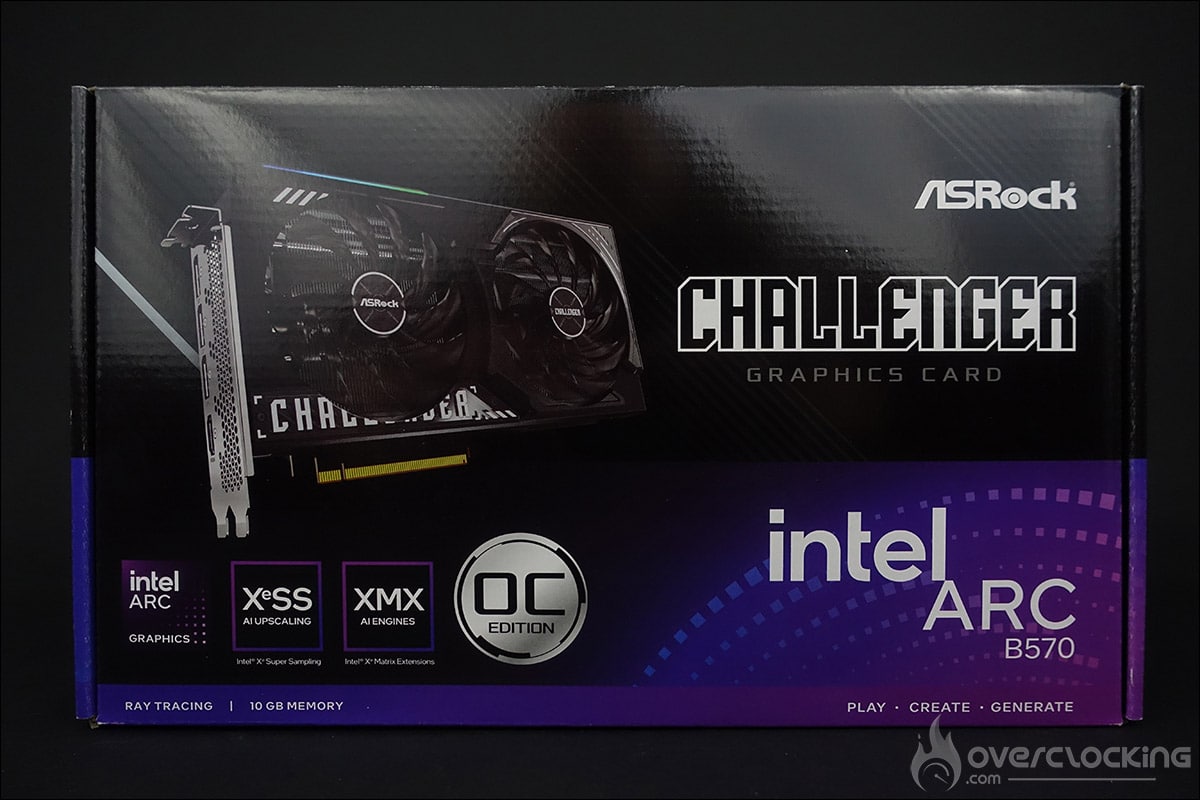
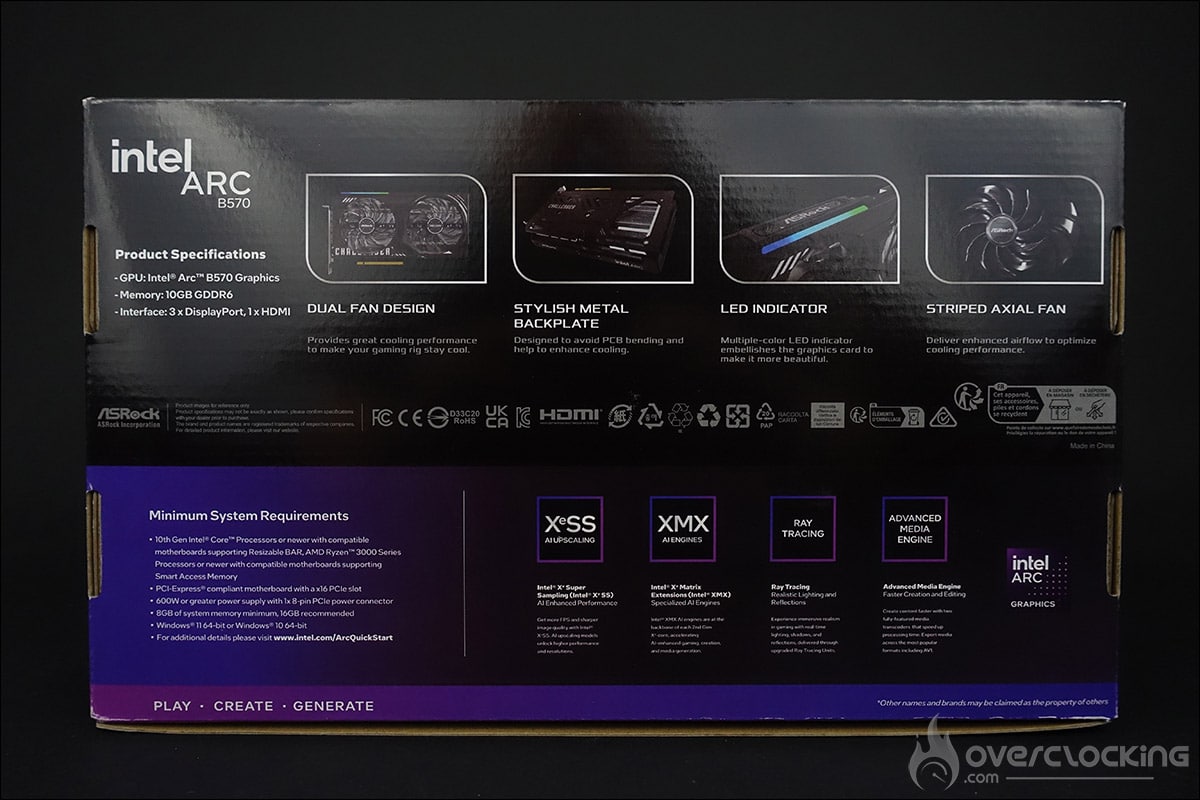
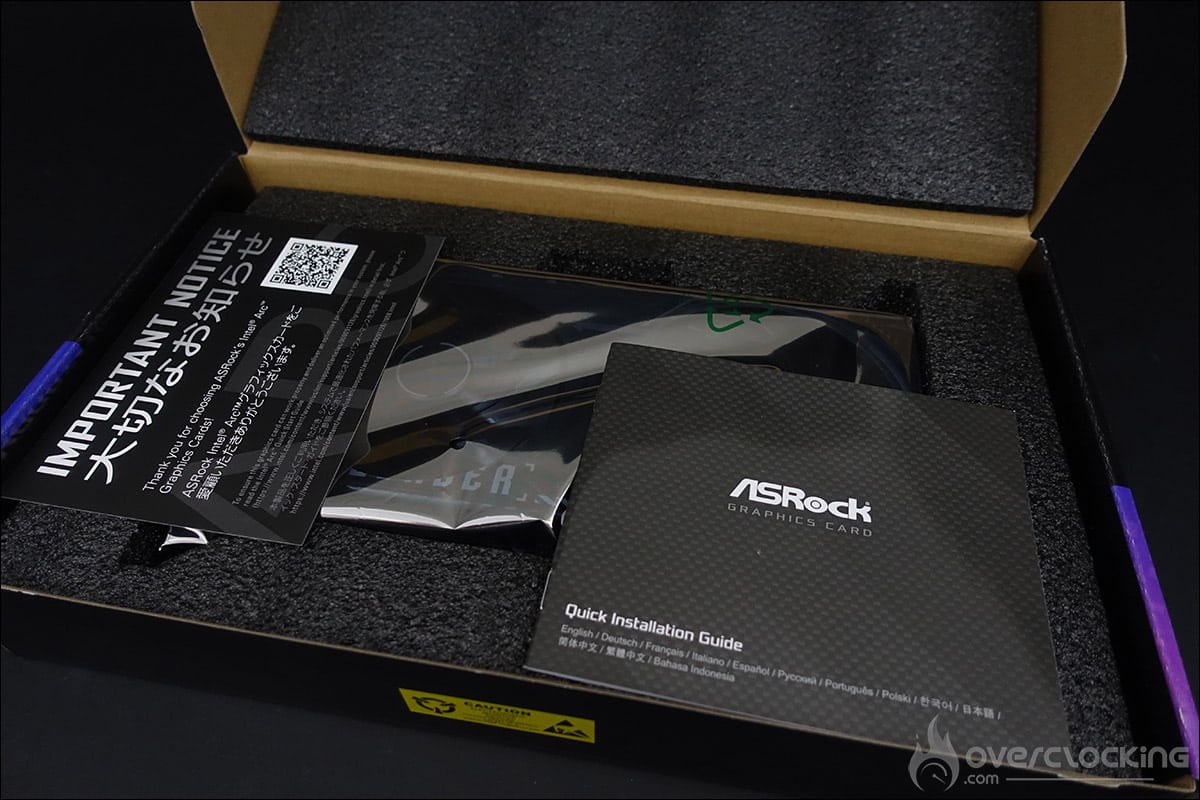
Inside the box is the bare minimum: our copy of the ASRock ARC B570 Challenger OC card and a quick installation guide.
ASRock ARC B570 Challenger OC:
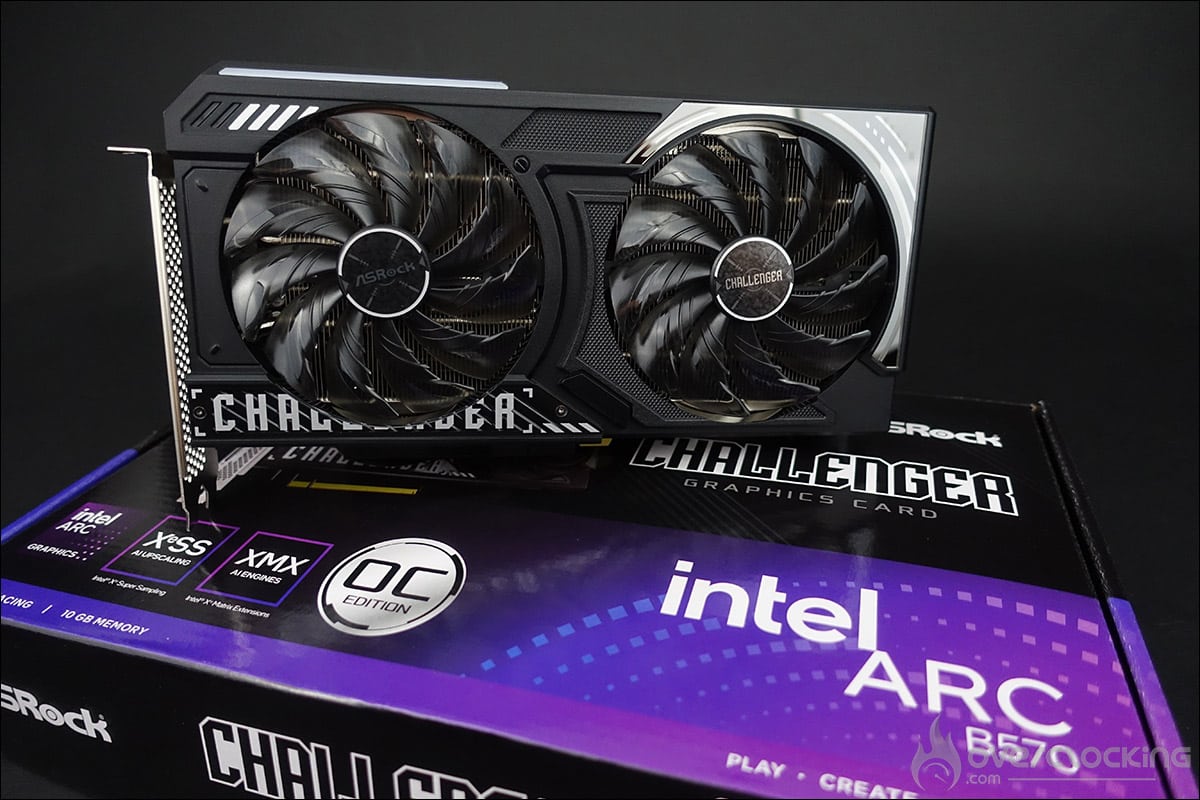
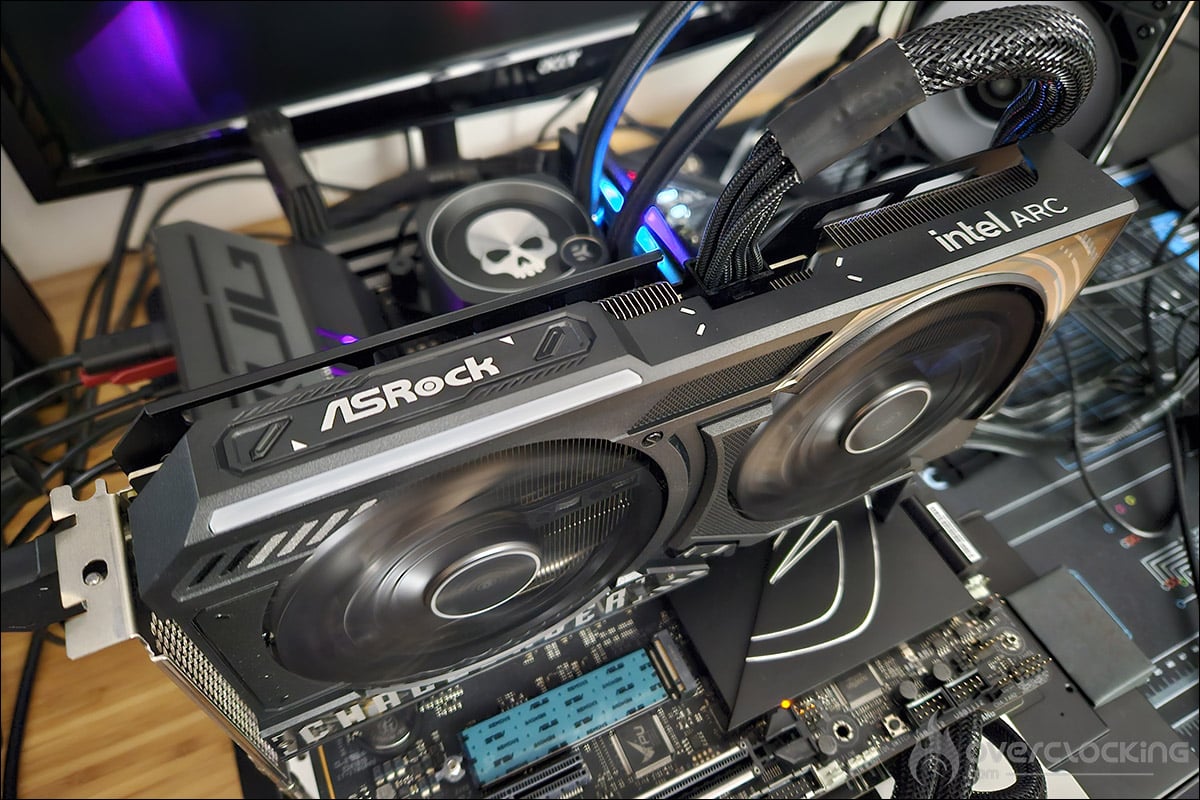
In terms of proportions, this B570 model from ASRock is shorter than Intel’s B580 Limited Edition. This model measures 249 x 132 x 41mm and will occupy 2 slots. On the front, there are two 95 mm fans with 11 blades, and a rather unusual design with numerous ridges. The idea is to optimise cooling. The card is equipped with 0 dB technology, which leaves the fans idle if the temperature is not too high.
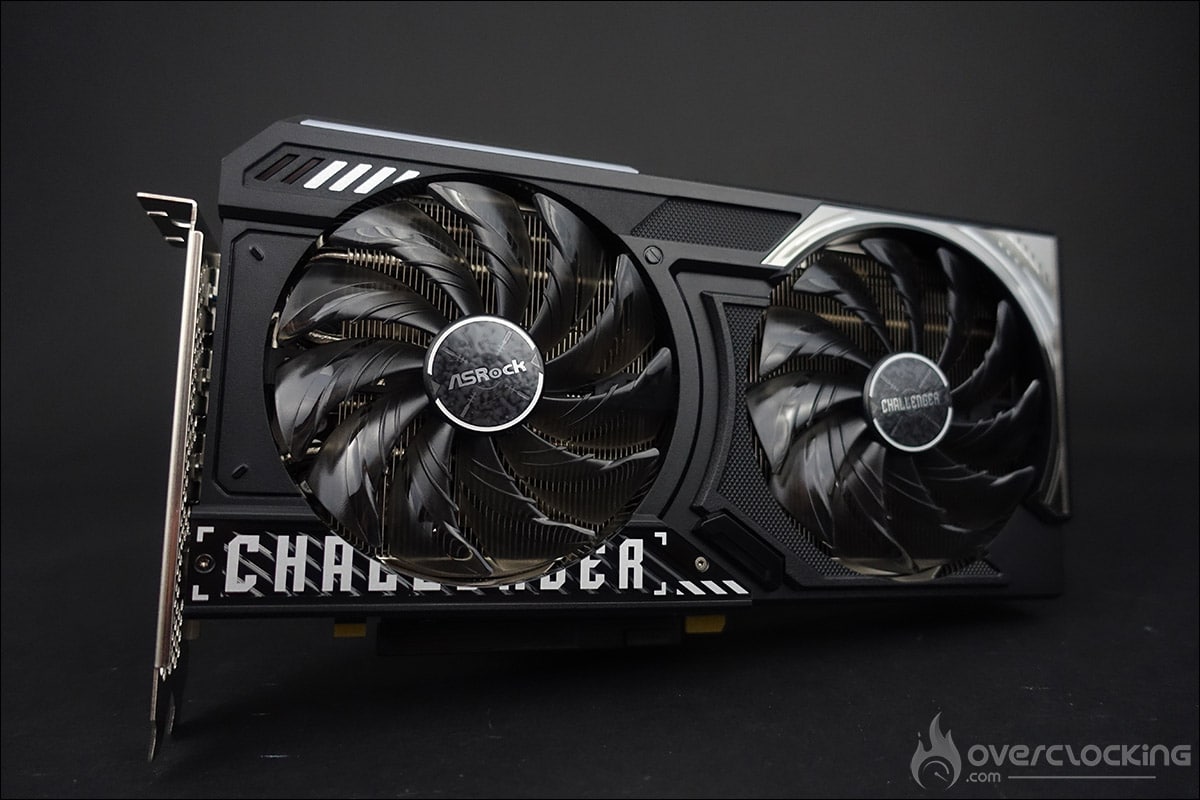
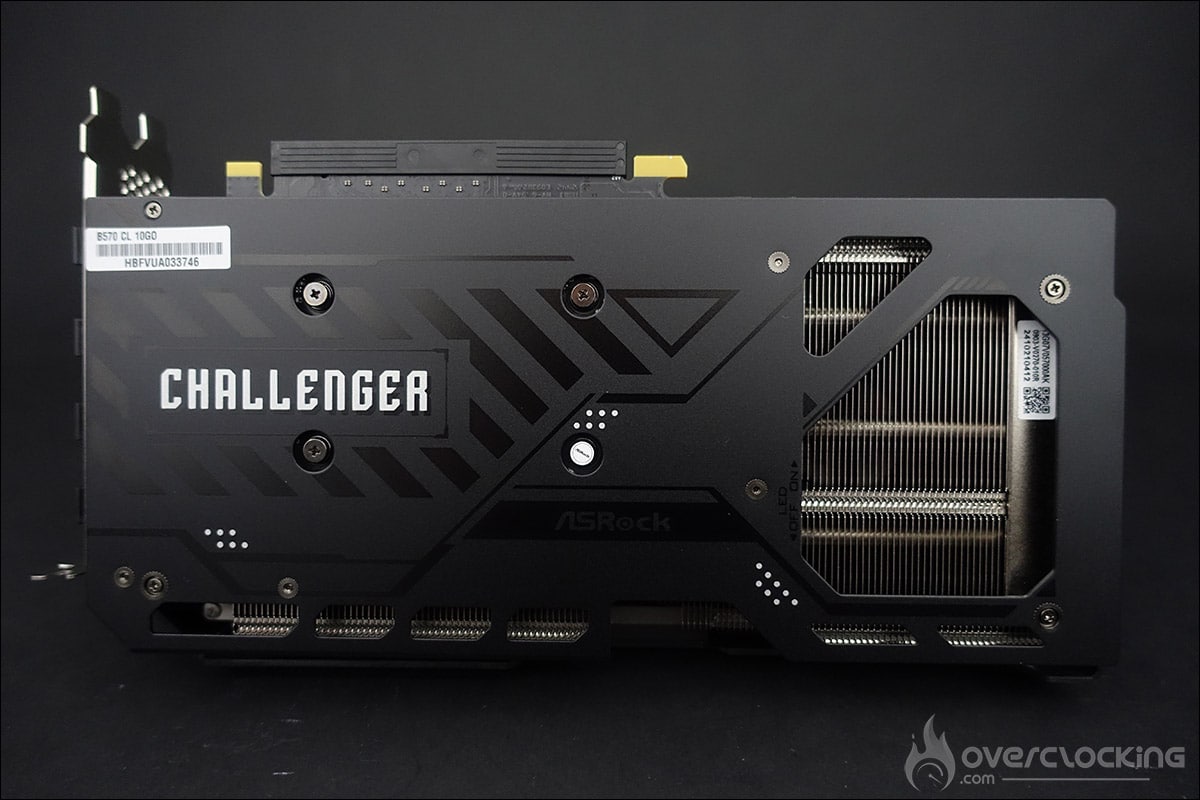
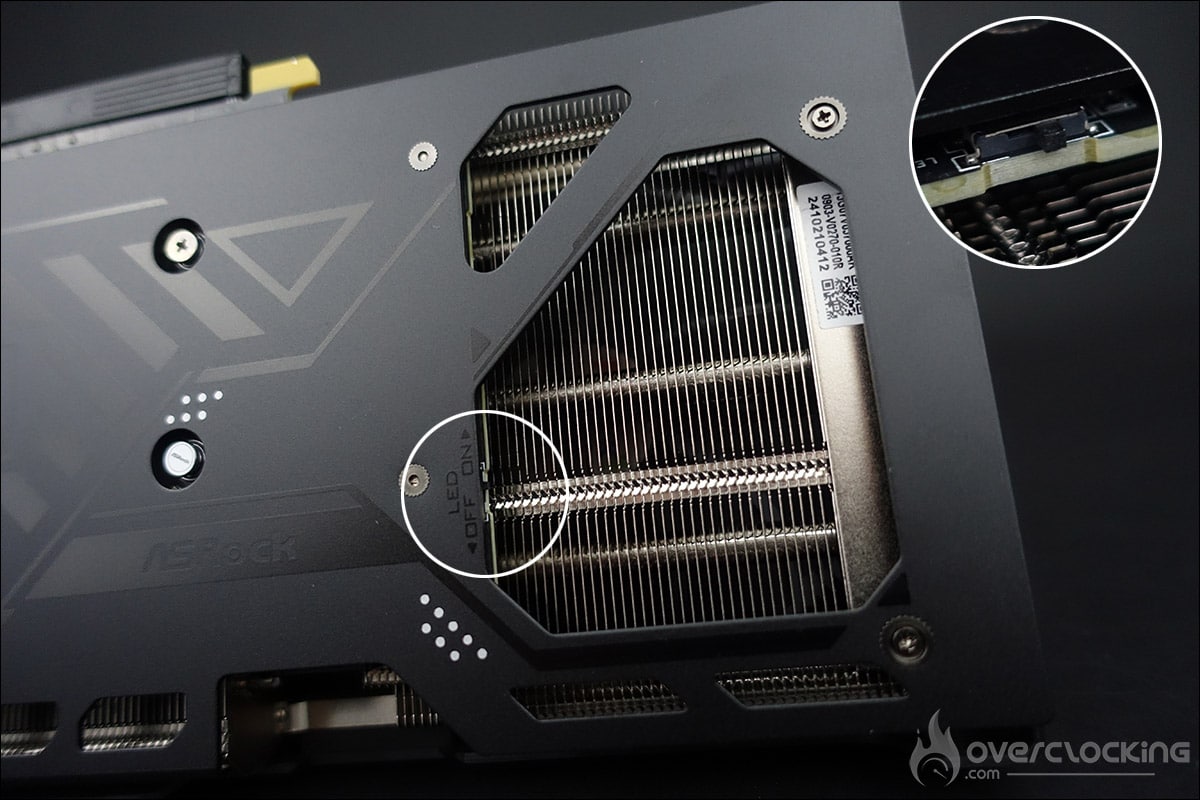
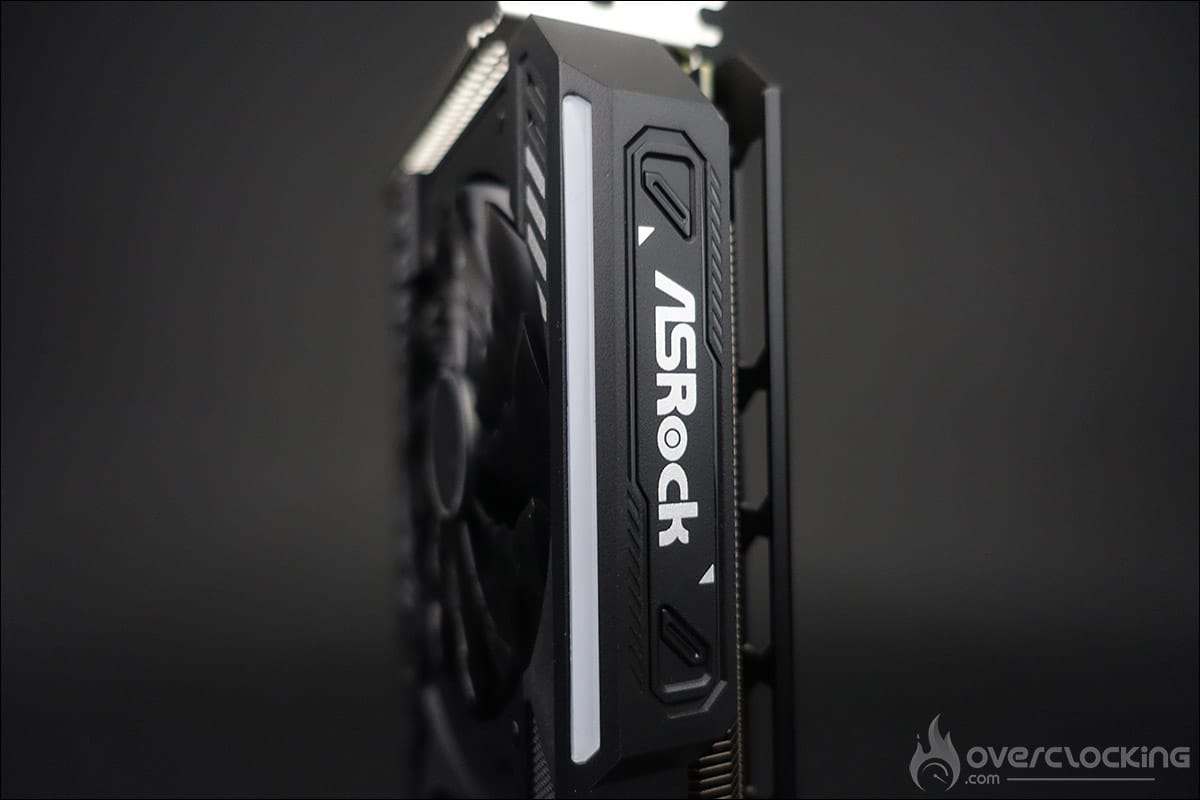
As was already the case with the ARC B580 Limited Edition version, which we thought was already quite light at 785g, this ASRock model weighs in at 722g. Aesthetically, the card is really sober, but with a small backlight on the top edge. Note that this can be deactivated via the switch on the back of the card, which we advise you to do because, personally, it doesn’t really add anything to the card – quite the contrary.
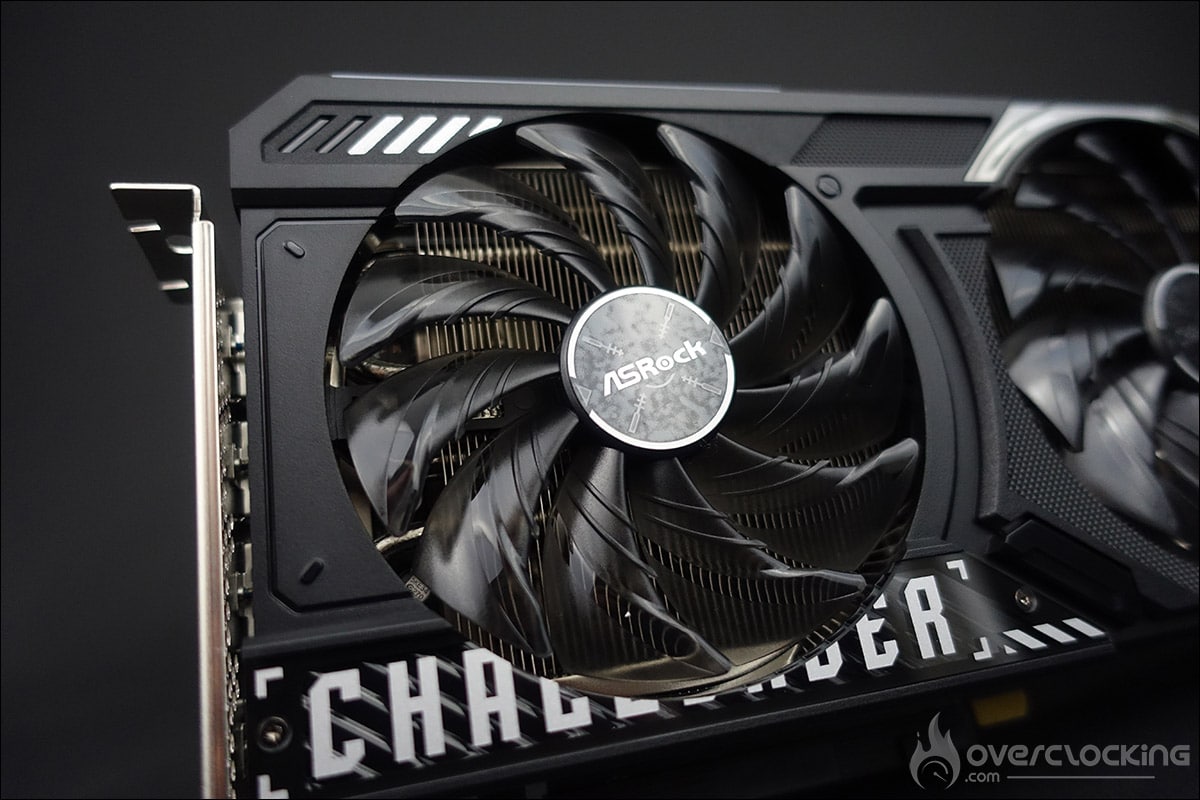
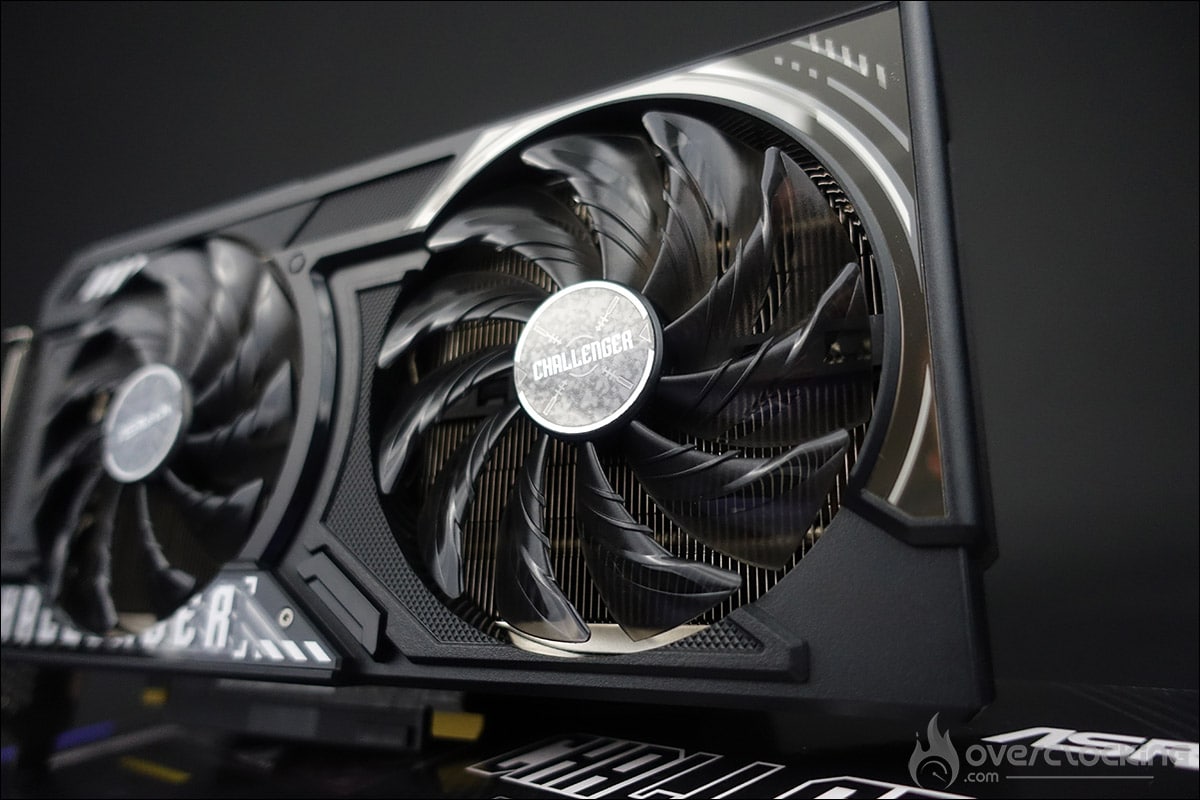
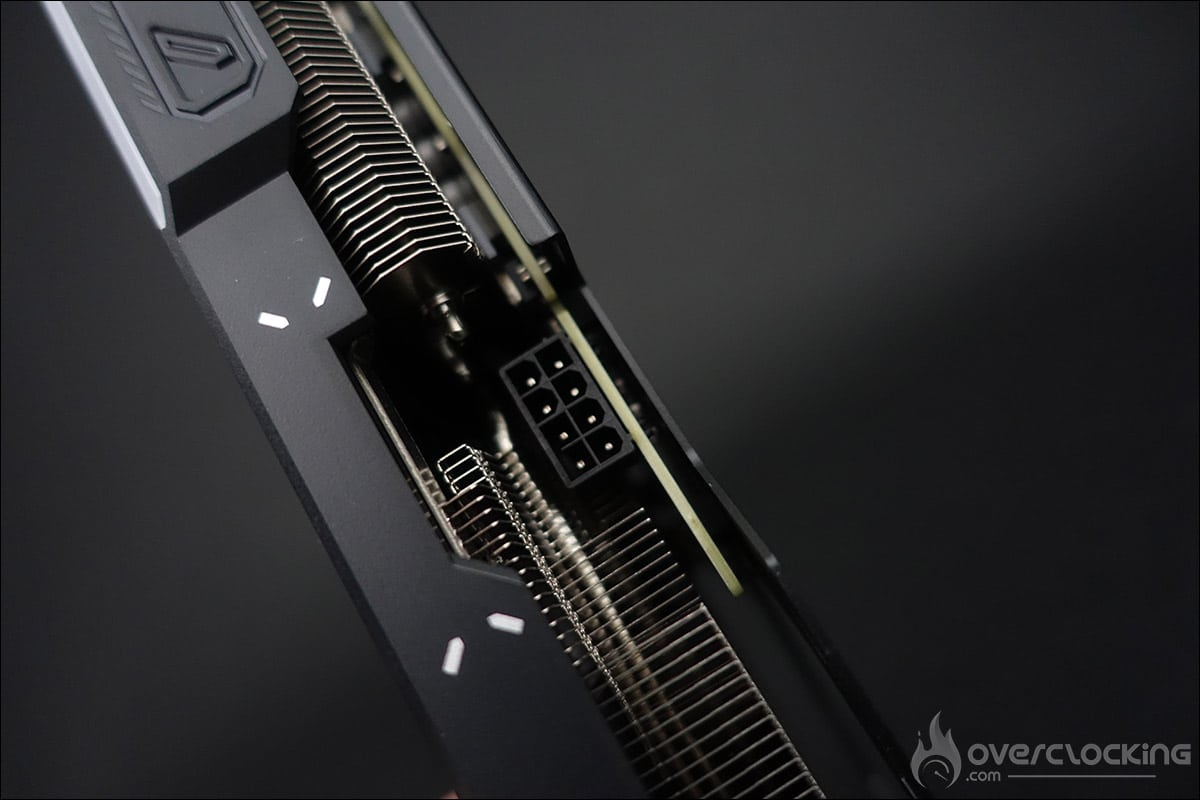
On the back, there’s a black steel backplate with the word Challenger on it. It’s easy to see that the PCB is shorter than the cooling system. The end of the radiator and the second fan will improve heat dissipation. To power this ASRock, you’ll need a single 8-pin connector. Intel is retaining the use of ‘traditional’ power connectors, and all the better for it.
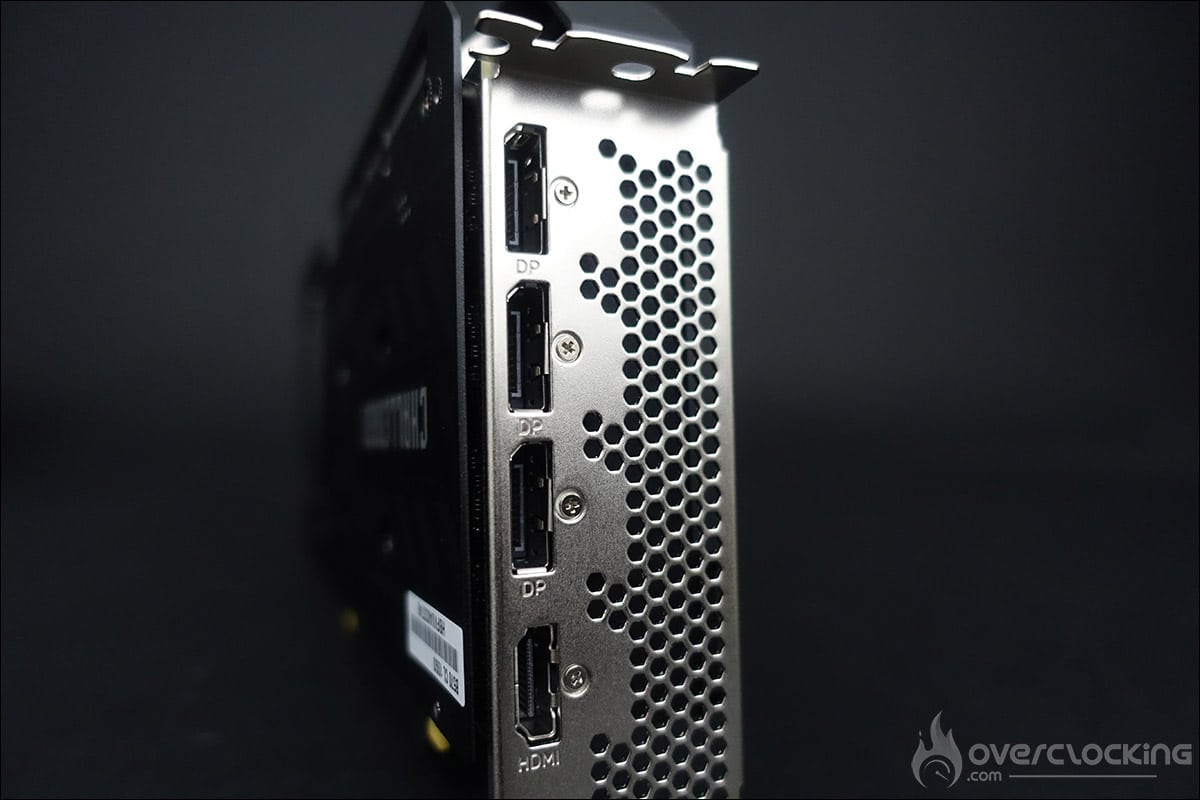
Finally, when it comes to video outputs, you’ll have three DisplayPort 2.1 and one HDMI 2.1 port. The PCIe bracket is perforated in a number of places to allow some of the hot air to escape.
When you buy an Intel ARC B570, you’ll also receive a copy of Assassin’s Creed Shadows, due for release in February.
[nextpage title=”Technical specifications:”]
At the time of publishing this test, GPU-Z was perfectly able to recognise our ASRock Arc B570 Challenger OC thanks to the 2.61.0 update.
In terms of frequency, ASRock has announced a base frequency of 2600 MHz for this Arc B570 Challenger OC. The 10 GB of GDDR6 memory run at 2375 MHz (380 GB/s) on a 160-bit bus. This model therefore has higher frequencies than some other B570 models, since we’re talking about a version that benefits from factory overclocking.
Let’s take a quick look at GPU-Z to check that the information read is correct. Don’t forget that the GPU frequency could be higher in the benchmarks, depending on the quality of your chip and the cooling system.

In fact, we ran a test under 3DMark Time Spy to observe the GPU frequency. We can see that it climbs to 2750 MHz when the GPU is called upon. The memory frequency remains unchanged, which is perfectly normal.

As far as temperatures are concerned, they are perfectly under control, with a maximum temperature of 63°C and two fans that are far from running at maximum speed. Which makes us even more impatient to start testing!
[nextpage title=”The test configuration: “]
As we said in the introduction, we’ve updated all our graphics using the latest drivers from NVIDIA, AMD and, of course, INTEL. We also took the opportunity to slightly modify our test configuration and add some new games to our protocol. So here we go again, with a new series of tests and graphics on this slightly modified configuration:
- Motherboard: ROG Maximus Z790 APEX Encore
- Processor : Intel Alder Lake i9-14900K delid
- Cooling system: EK-Nucleus AIO CR360 Direct Die D-RGB – 1700
- Memory: 48 GB Corsair Dominator Titanium 8000 MT/s CL38
- Graphics card: ASRock ARC B570 Challenger OC, Intel ARC B580 Limited Edition, Intel ARC A770 16 GB, Intel ARC A750 8 GB, AMD RX 7600 8 GB, Gigabyte RTX 4060 8 GB, NVIDIA RTX 4060 Ti 8 GB and NVIDIA RTX 3060 Ti 8 GB.
- SSD: Western Digital Black SN750 2 TB EKWB radiator
- Power supply: Corsair AX1600i
- Operating system: Windows 11 64-bit 24H2 (26100.2454)

We would have liked to add the AMD RX 7600 XT 16 GB model and the NVIDIA RTX 4060 16 GB, but we were unable to get our hands on a copy of this card for publication of the test, despite having approached several partner brands.
For this test, we used a fairly high-end configuration based on an i9-14900K delid processor and DDR5 memory. Depending on the definition tested, we used either an MSI Oculux NXG253R or a ROG Strix XG27UCS loaned by ASUS France.
Our test protocol:
All the cards are tested at stock frequencies and without any optimisation. For the various benchmarks, whether for synthetics or games, we will opt for 1080p, 1440p and 2160p resolutions depending on the card’s performance.
Here, with this ASRock ARC B570 Challenger OC model, we thought we’d limit ourselves to 1080p rasterised definition (native) in order to compare performance with other competing models and assess its potential. But Intel’s announcements force us to add 1440p as well, even if we’re not convinced in rasterisation.
As you can see, we’re now running Windows 11 and we’ve activated the ‘ ReSize BAR ‘ in the BIOS, which can be seen in GPU-Z. Now that you know everything about our test configuration, it’s time to get started!
[nextpage title=”3DMark benchmarks: “]
Our first series of tests will be dedicated to synthetic benchmarks. These are very often used for overclocking competitions , but are also very interesting for comparing different GPUs. So we’ll be focusing on benchmarks from the 3DMark series. For this new version of our graphics, and for the 3DMark tests, we have also isolated the GPU score. So you’ll find, where stipulated in the benchmark, the overall score and the GPU score.
3DMark Fire Strike and Fire Strike Ultra :
Let’s start with 3DMark Fire Strike, which is one of the most widely used benchmarks today. It consists of two graphics tests, a CPU test and a fourth test that combines GPU and CPU. Don’t forget to deactivate the demo, which makes no contribution to the final score and (unnecessarily) prolongs the benchmark. The version used for these tests is, of course, the latest.


We start our tests with the two Fire Strike and Fire Strike Ultra benchmarks, and the least we can say is that things are off to a pretty good start for our ASRock ARC B570 Challenger OC, which comes in ahead of NVIDIA’s RTX 4060.
3DMark Time Spy and Time Spy Extreme:
The second test is 3DMark Time Spy. Although this one is run in 1440p, its main feature is that it uses DirectX 12. It consists of two graphics tests and a CPU test. As with Fire Strike, don’t forget to disable the demo. These first two benchmarks are provided by UL Benchmark.


We continue with Time Spy, where the results remain consistent. While our ASRock ARC B570 Challenger OC is still well ahead of the RTX 4060, we note that the previous generation Intel ARC does just as well, if not better.
3DMark Speed Way :
This is the latest benchmark from Ulbenchmark, and it’s great to be able to say that we’re going to have a good go at this Speed Way. It uses DirectX 12 and is set to 1440p by default. We haven’t changed anything, so we’re using the original benchmark.

In Speed Way, our sample of the day is quite simply last and, like the RX 7600, fails to break the 2,000-point barrier. NVIDIA cards took the top three places.
3DMark Port Royal :
This is a benchmark that we left out last year, but which you were keen to see again in our tests. It’s still widely used, particularly in the overclocking community . So we’ve decided to add it to our tests.

Things are looking up in Port Royal, as our ASRock ARC B570 Challenger OC moves up the rankings and is now positioned between the ARC A750 and ARC A770.
3DMark Steel Nomad :
The latest benchmark in the 3DMark suite, Steel Nomad will replace Time Spy as the most recent benchmark in the 3DMark suite. However, the good news is that it will be free for users who already have a key. The programme includes a test bench based on Microsoft’s DirectX12 API. However, there will be no ray tracing, but the scene will use an ‘extreme’ level of geometry and rasterised light.

Finally, the last benchmark in the 3DMark series, Steel Nomad, which has just arrived, allows our ASRock ARC B570 Challenger OC to be still ahead of the RTX 4060 and neck and neck with the A750. After this first series of tests, we can see that there is a good performance gap between the B580 and the B570. This gap was smaller on the previous generation between the A750 and the A770.
[nextpage title=”Cinebench 2024, Geekbench AI and UL Procyon:”]
After the 3DMark series of benchmarks, let’s get down to a series of tests for productive tasks. Even if this isn’t the primary function we’ll be attributing to the graphics card, we couldn’t do without offering you a small panel of tests, especially concerning AI, which is becoming more and more present.
Cinebench 2024 GPU :
This is a benchmark that we won’t be introducing again, as it’s used for our CPU tests, but here, with the 2024 version, it’s our graphics card that we’re going to put to the test. Please note that the version included in BenchMate will not work for this CPU test, so you’ll need to download the full version from the Maxon website. As you can see, Intel graphics cards are still not compatible with this benchmark.

We have decided to integrate the Cinebench 2024 benchmark to test our GPUs, but unfortunately Intel cards are not currently supported. These graphics will be expanded in the coming weeks with the addition of other RTX 4000 and AMD 7000 cards.
UL Procyon AI Image Generation:
UL Benchmark not only offers its 3DMark benchmark suite, but also UL Procyon, to meet the demand for Artificial Intelligence evaluation. This benchmark was chosen for its ease of implementation. The benchmark will generate 4 x 4 images and provide us with a score as well as a result in the form of the time, in seconds, required to generate an image. The software supports several AI inference engines depending on the GPU used.
We’re dealing here with entry-level models, so we’ll be using the benchmark in Stable Diffusion 1.5 (FP16) mode. It is intended for mid-range GPUs. The test will create 16 images at a resolution of 512 x 512 in batches of 4. There is a test called Stable Diffusion XL (FP16), where 16 images will be created, at 1024 x 1024, in batches of 1.


As you can see, we have indicated the two results: one is expressed as a score and the other as the time, in seconds, required to generate an image. The more reliable the score, the faster the image generation. The B570 is an improvement on the previous generation, but still lags behind the RTX 4060.


On the ‘XL’ version, even if the scores seem fairly identical, it’s the rendering in seconds per frame that needs to be particularly observed. We can see that it takes longer to generate an image, which is logical, but here our ASRock ARC B570 Challenger OC does really well and takes second place.
The software has also just added a new test, the AI Text Generation Benchmark, which we’ll be adding to these tests very soon. The first results will be added with the testing of future NVIDIA RTX 5000s.
[nextpage title=”Gaming performance 1080p/1440p rasterised: “]
Here we go with the gaming tests. We used all the graphics cards that we thought would be interesting to compare with this ASRock ARC B570 Challenger OC in 1080p. For 1440p definition, our choice was more limited due to lack of time, but will be completed shortly. We also decided to focus on overclocking. Our range of games currently comprises 10 titles, and will be expanded in the next few weeks.
We have chosen to use the benchmarks built into these different games.
Why have we done this? Quite simply to allow you to do the same as us if you also have a copy of one of these games. It’s a thought-provoking idea that will allow you to compare your results with ours. The number and titles chosen have changed slightly, and will increase again over the coming weeks as we get our hands on new games. Please note that if we have the low 1% reading, it will be added to our graphs from now on.
By placing our graphics in this way, it will allow us to see whether our ASRock ARC B570 Challenger OC, with its 10 GB, performs better in 1440p. Basically, does it move up the rankings in the higher definition?
Borderlands 3 :


Let’s get to the gaming part. In 1080p, our B570 comes in between the two ARC models from the previous generation. Do things change in 1440p? Yes, our sample of the day manages to get the better of the RTX 4060.
Cyberpunk 2077:


Our ASRock ARC B570 Challenger OC does quite well, whether in 1080p or 1440p, where it’s either in fourth or third place. The RTX 4060 is behind our sample of the day.
COD Modern Warfare III:


Things get more complicated with Modern Warfare III, which doesn’t seem to be doing Intel ARCs any favours at all. Our ASRock ARC B570 Challenger OC suffers and comes in last place, with fairly substantial differences in performance, particularly when compared with the RTX 4060.
Forspoken :


Forspoken is a very demanding game and it shows. In 1080p, our B570 is behind the ARC A770 and in 1440p, it can’t hold on to the RTX 4060.
Horizon Zeron Dawn Remastered:


One of the new games we’ve added to our benchmark and where our B580 performed perfectly, the B570 struggled. We think the latest update to the game may be responsible for this poor performance. As we no longer had the B580 at our disposal, we were unable to redo the benchmark.
Shadow Of The Tomb Raider:


Under Shadow Of The Tomb Raider, it works pretty well, but we’re still behind the RTX 4060, which seems less and less approachable.
Black Myth: Wukong Benchmark Tool :


This new game also seems to be very greedy and does not put Intel graphics cards in the limelight. It’s a different story, with NVIDIA cards dominating the top of the ranking, and our B570 coming in last.
Far Cry 6:


Although our ASRock ARC B570 Challenger OC is still capable of handling 1080p, things are getting tougher when it comes to the 1440p competition.
Assassin’s Creed Mirage:


Here, performance is reversed. At 1080p, our ASRock ARC B570 Challenger OC suffers, failing to climb the rankings, and at 1440p, it’s virtually on a par with the RTX 4060.
Red Dead Redemption II:


This is the last game and it’s finally working better for our ASRock ARC B570 Challenger OC. Whether in 1080p or 1440p, it does just as well as the RTX 4060 Ti!
Average for games in 1080p and 1440p rasterisation :


Let’s start with the results in 1080p definition. We see that our ASRock ARC B570 Challenger OC performs as well as the previous-generation ARC A770 16GB. While our B580 managed to keep up with the RTX 4060, here our sample of the day is 15% behind the RTX 4060. Some games benefit more from NVIDIA and others from Intel. That’s why we’re going to be increasing our sample over the coming weeks.
In 1440p, the gaps are narrowing and our ASRock ARC B570 Challenger OC is a little closer to the RTX 4060, whereas the B580 had taken the lead. The performance gap between the B570 and the B580 is quite substantial, with an average difference of 20% in both 1080p and 1440p.
Remember that the MSRP prices announced in dollars are US$249 for the B580 and US$219 for the B570. If we calculate the price per performance, the B580 remains much more attractive, and we should have had a B570 close to US$200 for the 20% less performance.
[nextpage title=”Gaming performance 1080p/1440p upscaling:”]
In this section, we’re going to test our graphics cards by activating ray tracing, if available, and upscaling depending on the graphics card used. As a reminder, there are currently three upscaling technologies . NVIDIA has DLSS, which can only be activated with NVIDIA cards. Depending on the generation of your GPU, you may or may not be able to take advantage of all the technologies offered by the Greens. At AMD, it’s FSR, which is also evolving and, for certain games, also benefits from Frame Generation.
Finally, Intel’s in-house upscaling is called XeSS, and with the arrival of this new generation of graphics cards, Intel has taken the opportunity to announce the arrival of XeSS 2, which will introduce two new features to compete with NVIDIA and AMD, who are already ahead of the game in this area. Intel will be offering Xe Frame Generation (XeSS-FG) and XeSS Low Latency (XeLL). The aim is similar to that of other upscaling solutions, to improve the visual quality, performance and responsiveness of games. Currently, a few games are compatible with XeSS 2, including F1 24, which we have just received and which we have added here in our 1440p tests.
Finally, it’s important to point out that some games don’t have ray tracing, but do have an upscaling solution. We’ll make this clear in the games below.
Cyberpunk 2077:


Here we go again, with Cyberpunk 2077 as our first game. Note that during our tests, this one just received patch 2.2 which seems to bring its gain of FPS. Our ASRock ARC B570 Challenger OC can handle ray tracing, and it’s XeSS that gives our card of the day some colour. With less greedy graphics options, the average of 60 FPS is conceivable in 1440p. As we can see, DLSS 3.5 on the RTX 4000 generation is very effective.
COD Modern Warfare III:


As was already the case with rasterisation, our ASRock ARC B570 Challenger OC suffers under COD Moder Warfare III. DLSS 3 and Frame Generation give NVIDIA 4000 cards a far superior edge. In 1080p, you can see the contribution of the new NVIDIA technologies on the RTX 4000 compared with the RTX 3060 Ti, which does not benefit from them. With XeSS, the card can achieve an average of 60 FPS.
Forspoken :


In 1080p, it’s the RTX 4060 that performs better than our Intel cards. The card suffers and you’ll have to reduce the graphics options to enjoy the game to the full.
Horizon Zeron Dawn Remastered:


As explained in the rasterisation tests, I don’t know what’s going on with Horizon Zeron Dawn Remastered since the last update. Our B570 completely misses the point.
Shadow Of The Tomb Raider:


In Shadow Of The Tomb Raider, our B570 can handle ultra ray tracing and take advantage of XeSS to boost FPS.
Black Myth: Wukong Benchmark Tool :


Nothing changes in Black Myth: Wukong, and AMD and Intel cards suffer. The game is very greedy and even NVIDIA models will have to lighten up the graphics options to enjoy perfect fluidity in the game. The new Intel drivers were supposed to correct the performance problems, but that doesn’t seem to be the case. Only the RTX 4000s come through with flying colours.
Far Cry 6:


Our ASRock B570 Challenger OC came last in the rankings, but the 60 FPS average was exceeded. Remember that FSR and XeSS can also be activated with an NVIDIA card, but DLSS is only for NVIDIA models.
Assassin’s Creed Mirage:


The same applies to Assassin Creed Mirage, where our sample is in last place but is capable of running the game in both definitions.
F1 24 :

Let’s finish off with a final game, F1 24, which features XeSS 2 upscaling, meaning that our ASRock B570 Challenger OC card will be able to take advantage of XeSS-FG for the first time. Thanks to the arrival of XeSS-FG, we’re now averaging 116 FPS. Let’s hope to see more and more titles supporting XeSS 2 in the future.
Now, it will also be necessary to compare the images offered by the different upscaling systems in order to judge their strengths and weaknesses, but that will be the subject of a future test. It will also be very interesting to see the release of a game featuring all three cutting-edge technologies: DLSS 3, FSR 3 and XeSS 2, each with its own Frame Generation. Let’s not forget that in a few weeks’ time, we’ll also have access to DLSS 4 with the new RTX 5000.
[nextpage title=”Energy consumption and efficiency:”]
At last we have the means to effectively monitor the power consumption of our graphics cards thanks to the Benchlab telemetry system. We’ll now be able to carry out a complete analysis of our graphics card’s total power consumption via the dedicated 3 x PCIe and 2 x 12VHPWR power cables. But that’s not all, because we also need to be able to measure the power supplied via the PCIe slot. So we’re going to use a PCI-E PMD adapter from the ElmorLabs shop. This will give us the overall power consumption of the graphics card under test, completely independently. Here’s a series of photos of our Benchlab installation, to which we’ll be devoting a dedicated test in a few weeks’ time.


These various readings will be taken via Benchlab’s dedicated application. Let’s take the NVIDIA RTX 4060 Ti 8 GB FE graphics card to illustrate our power consumption readings.


To get the total power consumption, we’ll read the 12VHPWR Power consumption, which corresponds to the power supply to the card via its 16-pin mini-connectors, and the EPS1 reading, which supplies the adapter. We export the readings, which are taken every 500 ms, and calculate the average consumption in the Cyberpunk 2077 game. We obtain an average of 28 watts for the PCIe port and 112 watts on the 12VHPWR connector, giving us an average of 140 watts during the benchmark for this RTX 4060 Ti 8 GB FE.
Note that Intel’s reviewers’ guide to power testing indicates that the number of screens has an impact on power consumption. When taking power consumption readings, it should be noted that a second screen is connected to all the cards.
Power consumption under Cyberpunk 2077 :

As you can see, at idle, the card continues to consume more power than other models, even though it’s much better than the previous-generation ARCs. Once running Cyberpunk 2077, power consumption improves significantly compared to the previous generation, dropping from an average of 217.2 watts for the A770 and 207.6 watts for the A750 to 132.9 watts for our ARC B570. This is excellent news, even if it’s still a long way behind the RTX 4060 with its average of 118.7 watts. Energy efficiency is still largely in the green’s favour!
We can also see that, on average, the B580 offers 20% more performance and consumes 20% more power than our ASRock B570 Challenger OC.
[nextpage title=”A little overclocking:”]
We couldn’t do without trying to overclock our copy of the ASRock B570 Challenger OC. To do this, go to the drivers, and more specifically the ‘performance’ option. You’ll be able to influence three elements: the GPU, the memory and the fans. There are also two different modes, basic and advanced, but both offer the same modifications. Advanced mode lets you act directly on the curve. It’s this curve that you’ll need to modify at some point if you want to continue to see your Boost frequency increase.
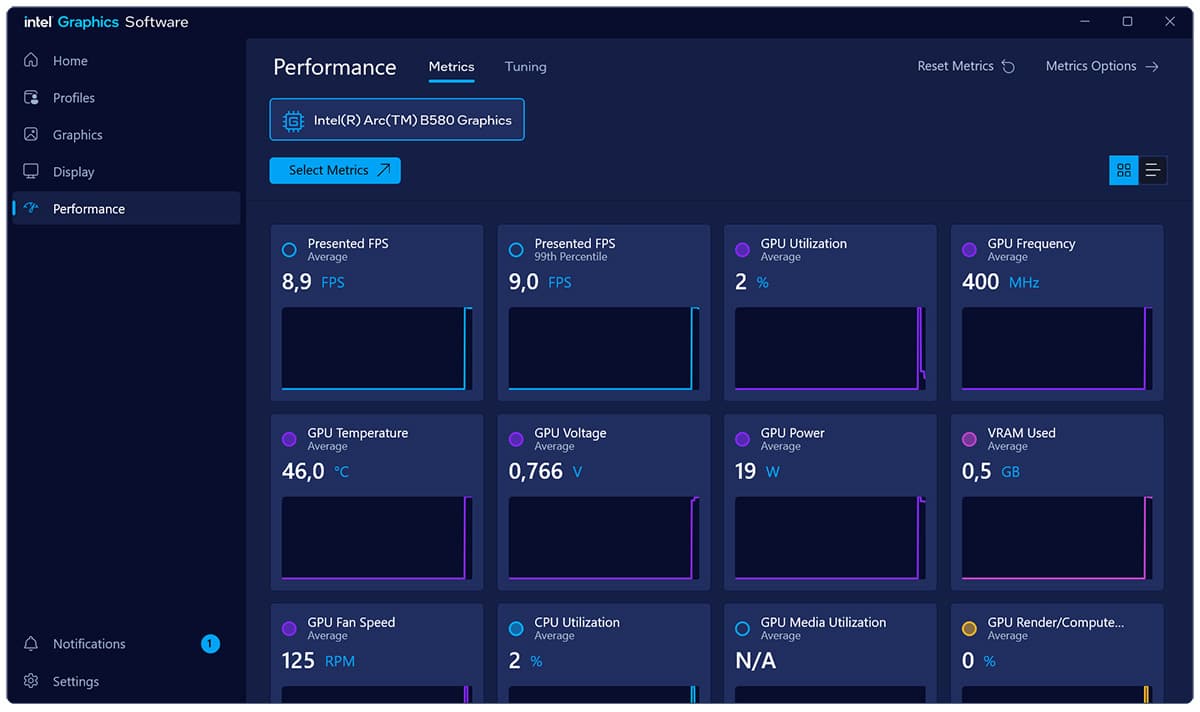
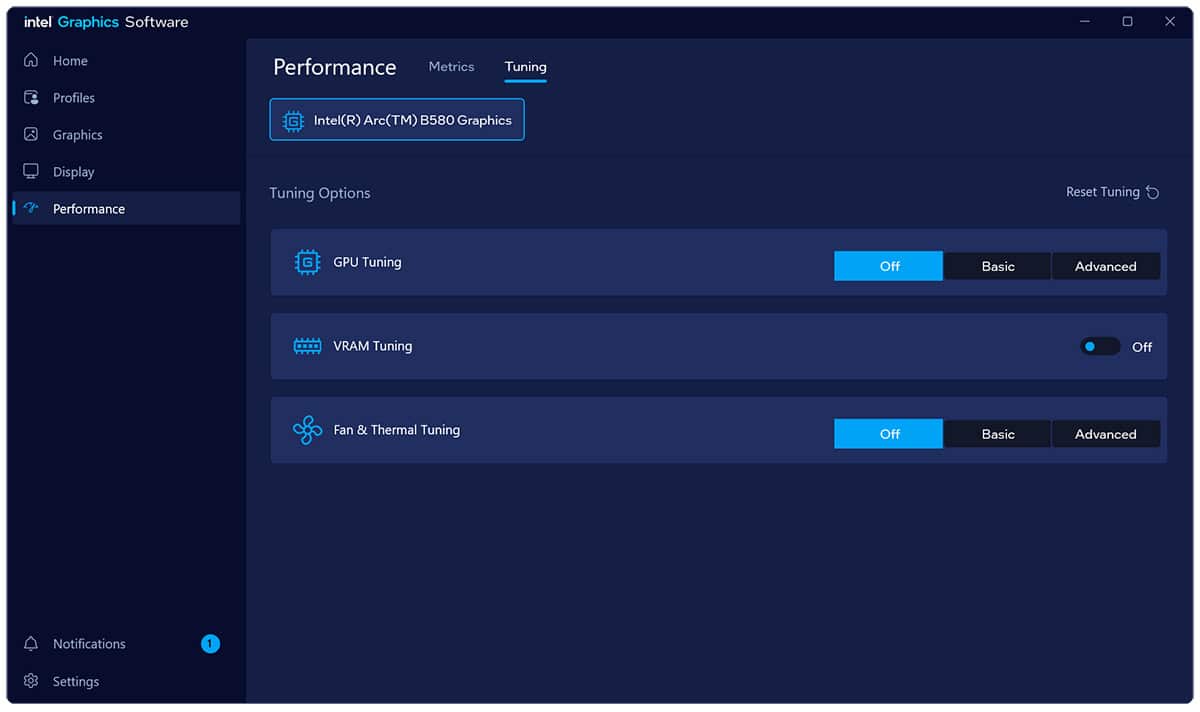

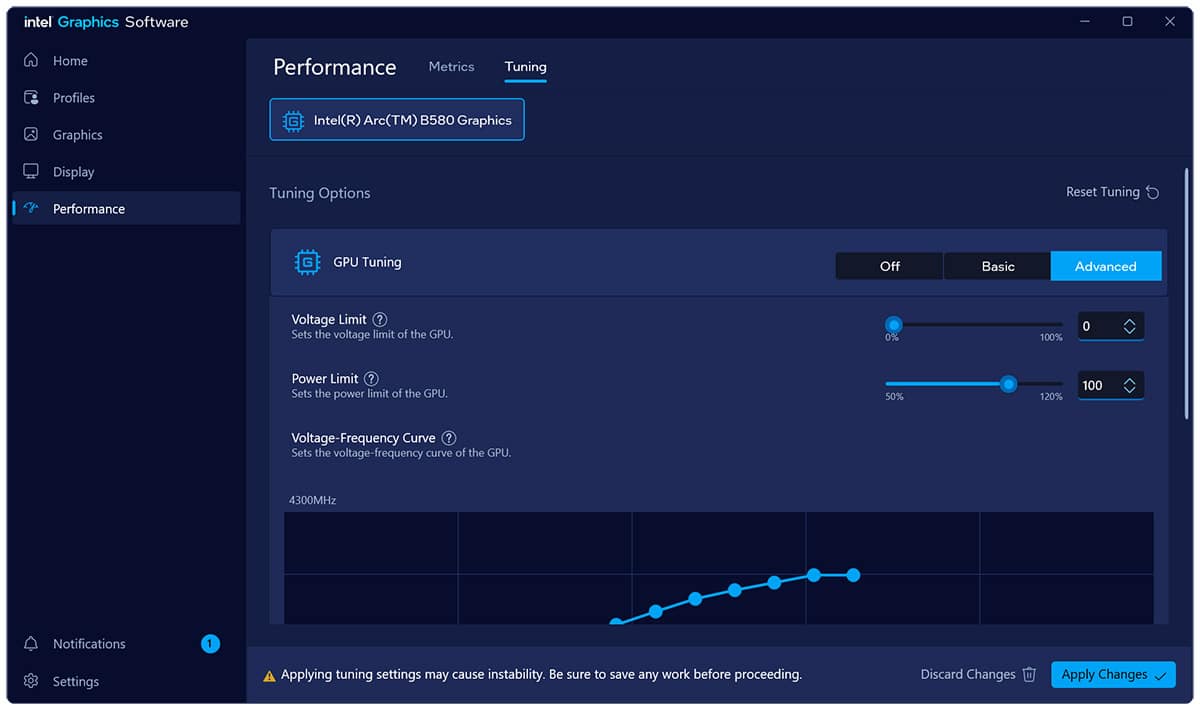
First, we’ll need a reference score, i.e. a score achieved from stock, without any modification to the card’s parameters. We’ve chosen Time Spy as the benchmark so that you can compare it with your own score. Here, we obtain an overall score of 13805 points and a GPU score of 12851 points.

After a few modifications to the power limit, voltage and memory frequency, and by pushing the cooling a little, we were able to obtain an overall score of 14776 points (7%) and a GPU score of 13855 points (7.8%).

We’ll be coming back to the overclocking of the B580 in the weeks to come, and why not include a short run under DOD.
[nextpage title=”The last word: “]
What do we think of this ASRock B570 Challenger OC?
We can’t do without comparing it to the superior model, the B580, which, let’s not keep the suspense going, we think is more interesting. The difference in performance between the two models is, quite logically, significant. The B570 does better than the previous generation, with the A750, and as well as the A770. At the time of writing this conclusion, we went back to look at the prices of the B580 models, and it’s clear that there are very few cards in stock, and often at prices around €380, or even flirting with €400. This price is obviously too high, and we’re afraid that the scenario will be repeated with the B570s, when Intel’s MSRP is $219. NVIDIA models, such as the RTX 4060, are likely to see their prices fall in order to clear stocks, with a view to the imminent arrival of the RTX 5000, even if RTX 5060 models are not yet on the agenda.
Now, we were talking about an entry-level card, before our article appeared, but is it really one? If we go back a decade or so, entry-level cards were models running at 60 FPS, sometimes with compromises on graphics options and running at 1080p. Now, demand has shifted to 1440p, with the certainty of being able to benefit from 60 FPS, even with very high graphics options. Here, our ASRock B570 Challenger OC does the job perfectly in 1080p and manages in 1440p with upscaling. If this model can sell for around €260, then it really could be a good opportunity. But as always, we’ll have to wait and see, as prices will also depend on supply and demand.
The XeSS 2: great promise for the future
Intel has given us a glimpse of things to come with the second generation of XeSS, which will bring two new features to compete with NVIDIA and AMD: Xe Frame Generation (XeSS-FG) and XeSS Low Latency (XeLL). Unfortunately, only ten games are currently compatible with XeSS 2. As for the first generation of XeSS, it will fluctuate depending on the game. Sometimes it’s generous in terms of FPS, sometimes less so in ‘balanced’ mode. It will also be interesting to compare the quality of images after upscaling, between FSR, DLSS and XeSS, but that’s for another issue.
Improved power consumption :
Power consumption is much improved compared to the ARC A750 and ARC A770, but still not up to the level of NVIDIA‘s RTX 4060 and RTX 4060 Ti. On this point, it’s the green ones that are the best, and which retain the advantage in terms of energy efficiency.
Our final word doesn’t really change what we said about the B580. In our opinion, Intel has made a huge leap forward with these two new cards. Not everything is perfect yet, but we can only applaud the work of the engineers, who are now in direct competition with the two current market leaders. Intel is also upgrading its in-house upscaling to include XeSS-FG and XeLL. It remains to be seen what prices retailers will be offering for these B570 models. If you can find models for around 250 euros, this could be a good choice for those on a tight budget who don’t want to go second-hand.
This new generation augurs well for the future:
 For us, Intel has made a huge leap forward with this second generation. So, yes, not everything is perfect, but we can only applaud the work of the engineers, who are now in direct competition with the two current market leaders. Intel is also upgrading its in-house upscaling to include XeSS-FG and XeLL. We’re now eagerly awaiting the arrival of more Xess 2-compatible games and regular driver updates. Thanks to Intel France and ASRock for making this ASRock B570 Challenger OC sample available.

