





The ROG Astral LC RTX 5090:
Architecture:
As a reminder, this ROG Astral LC RTX 5090 is a custom model, i.e., a board offered by an NVIDIA partner that benefits from a brand-specific PCB and cooling system, in this case from ASUS. NVIDIA partners offer their own models.
This RTX 5090 benefits from the Blackwell architecture and retains a 4-nanometer etching finesse, but switches to the TSMC N4P process, enabling higher transistor density and improved energy efficiency. This architecture features new 5th-generation Tensor Cores and 4th-generation Ray Tracing Cores. The 5th-generation Tensor Cores will bring support for the FP4(Floating Point 4 bit) format, which will double the computational performance of neural models while halving the memory footprint. We’ll be coming back to this development in the course of our tests with UL Procyon software, which we’ve been using for several weeks now.
Of course, DLSS 4 support is a must. This new NVIDIA RTX 5090 is NVIDIA ‘s new flagship, with 92 billion transistors and 21,760 CUDA Cores.


There’s more to come on the memory front too, with 32 GB of GDDR7 memory (30 Gbps). But let’s move on to discovering the new packaging for this ASTRAL series.
The ROG Astral LC RTX 5090 bundle:
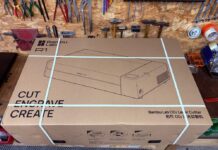
As ASUS points out, this new ROG Astral range has been inspired by the limitless expanse and beauty of the cosmos, and demonstrates an unwavering dedication to exploring and defining new frontiers. The box thus offers a new identity, and as you might expect, it’s quite imposing. The front panel is quite sober, with a visual of the graphics card on a black background. The green NVIDIA color code is repeated, along with the GeForce RTX 5090 model number.
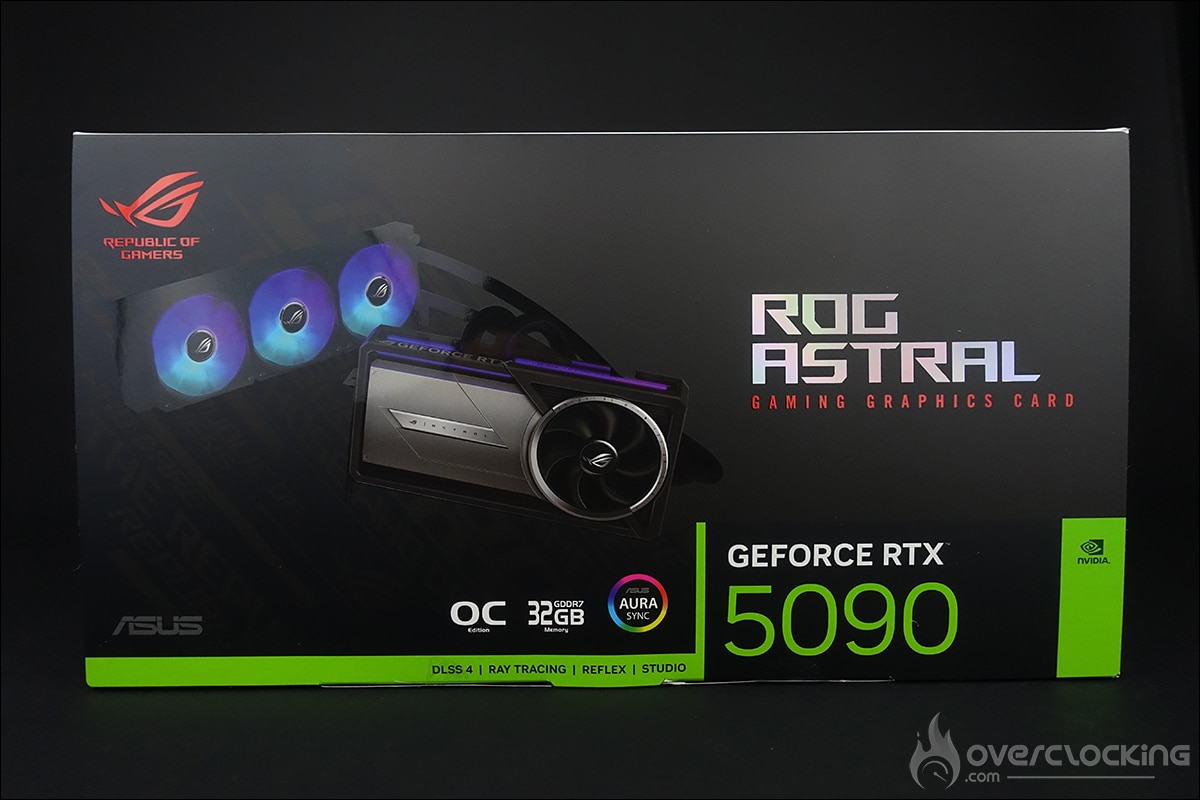
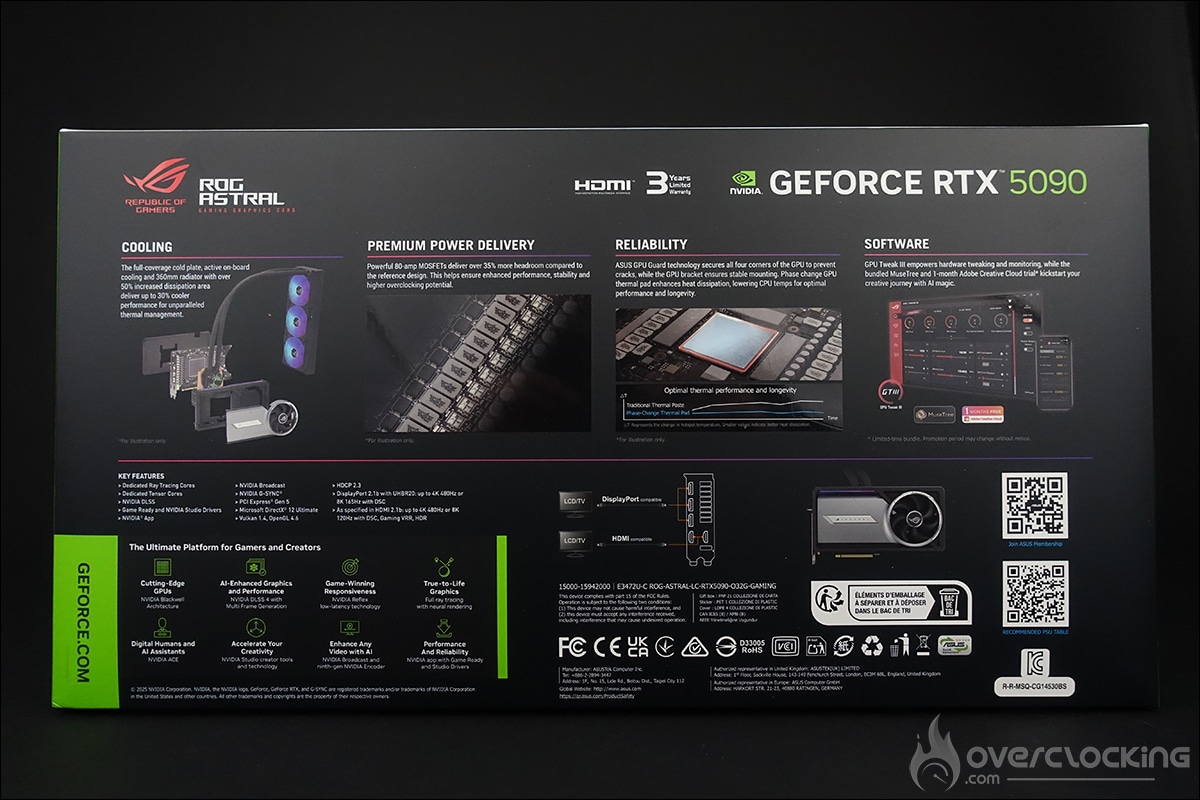
Included in the bundle are a quick-start manual, a ROG graphics card holder, ROG velcro for attaching cables together, a ROG magnet, a ROG ruler, a thank-you card and finally a 4 x PCIe 8-pin power adapter. ASUS has provided a series of plastic films to protect the various components of the graphics card, as well as the 360 mm radiator.
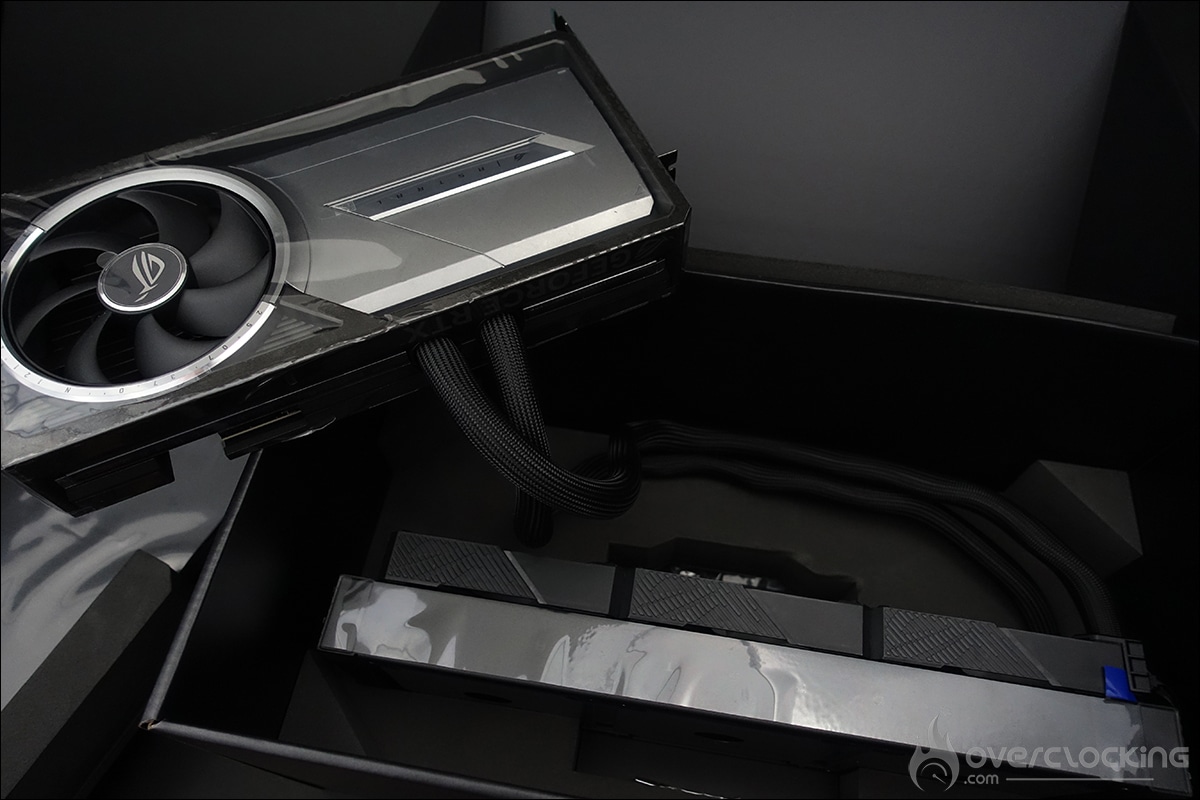
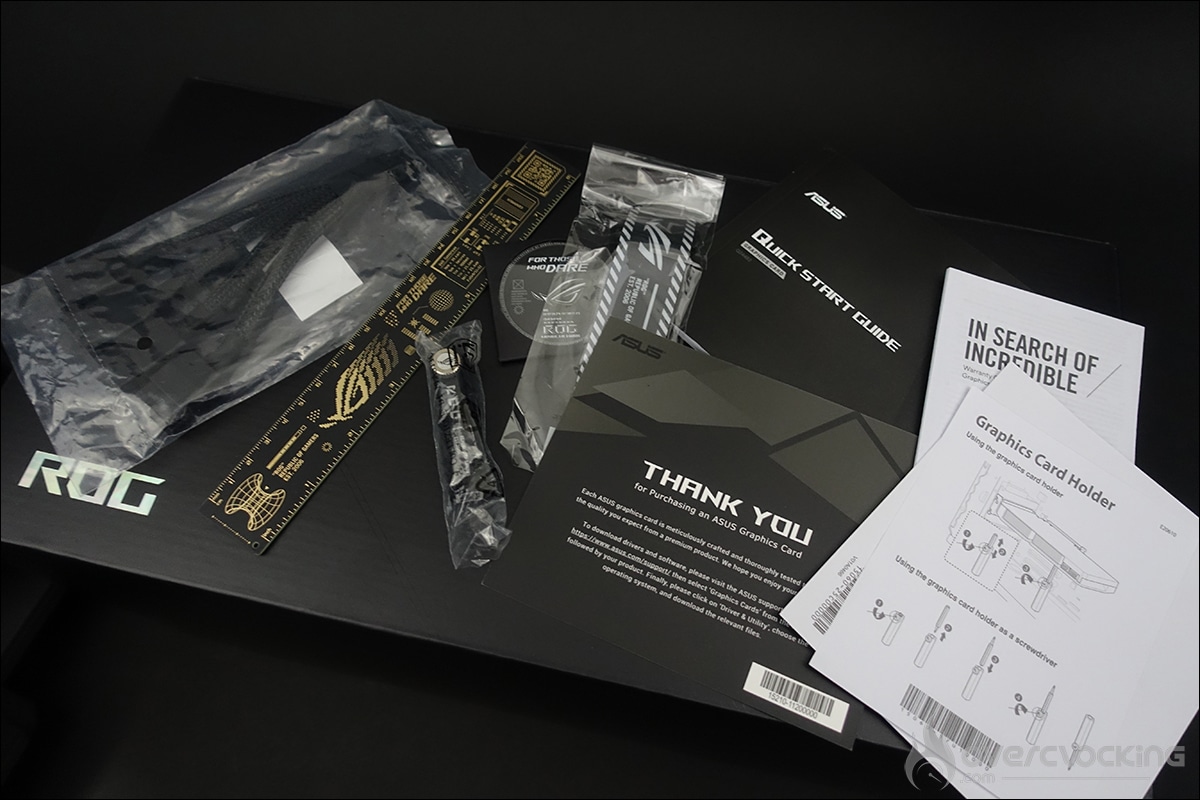
This isn’t the first time we’ve tested an ROG Liquid Cooling model, even if it’s already a little dated, with the ROG Strix LC RX 6800 XT OC Edition. So this will be an opportunity to see how this model, which uses a liquid cooling system, evolves.
Cooling :
Let’s start with the size of our sample of the day, here we’re talking only about the graphics card, whose dimensions are 288.46 x 153.7 x 48 mm and those of the radiator, 400 x 120 x 65mm. We can see straight away that ROG has gone to great lengths to offer a card with cooling worthy of the name, since the radiator is a 360mm version. This is the second time we’ve had a graphics card from the ROG Astral series in our hands, and the feeling is the same as for the RTX 5080: the finish is superb and the casing of the pipes is much improved, but we’ll come back to that later.
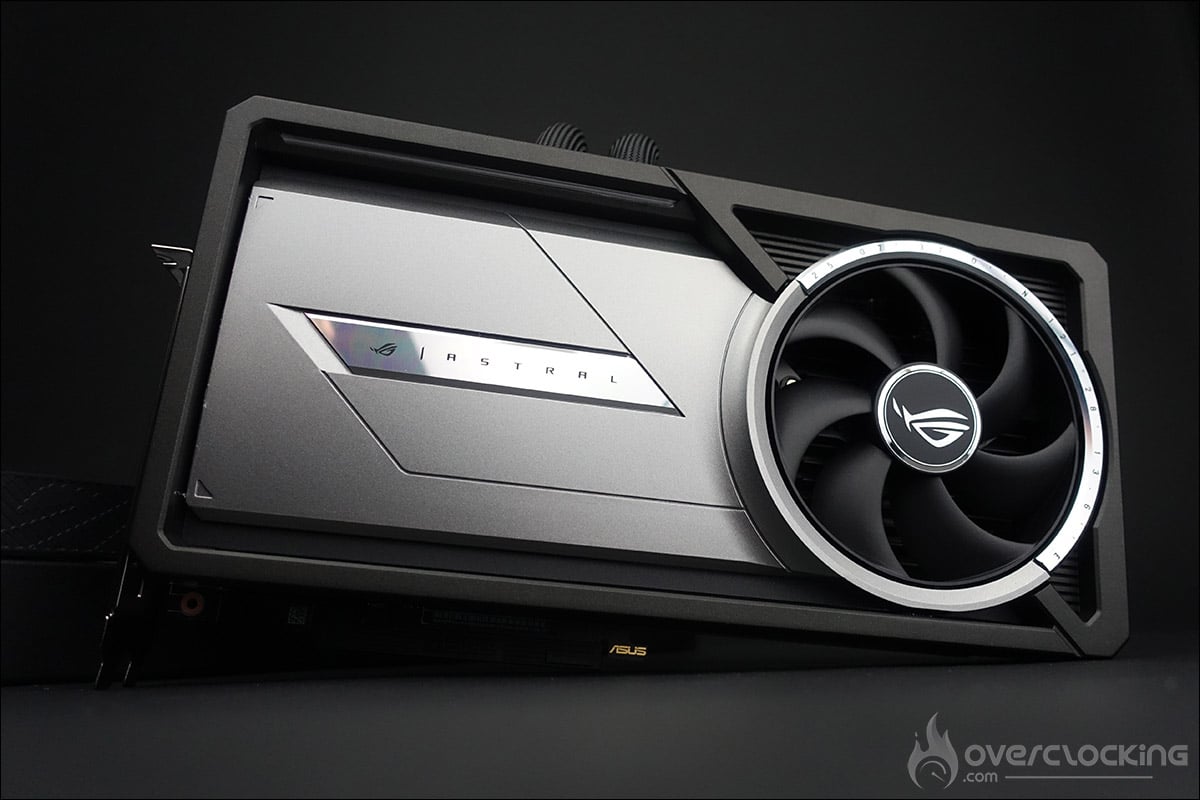
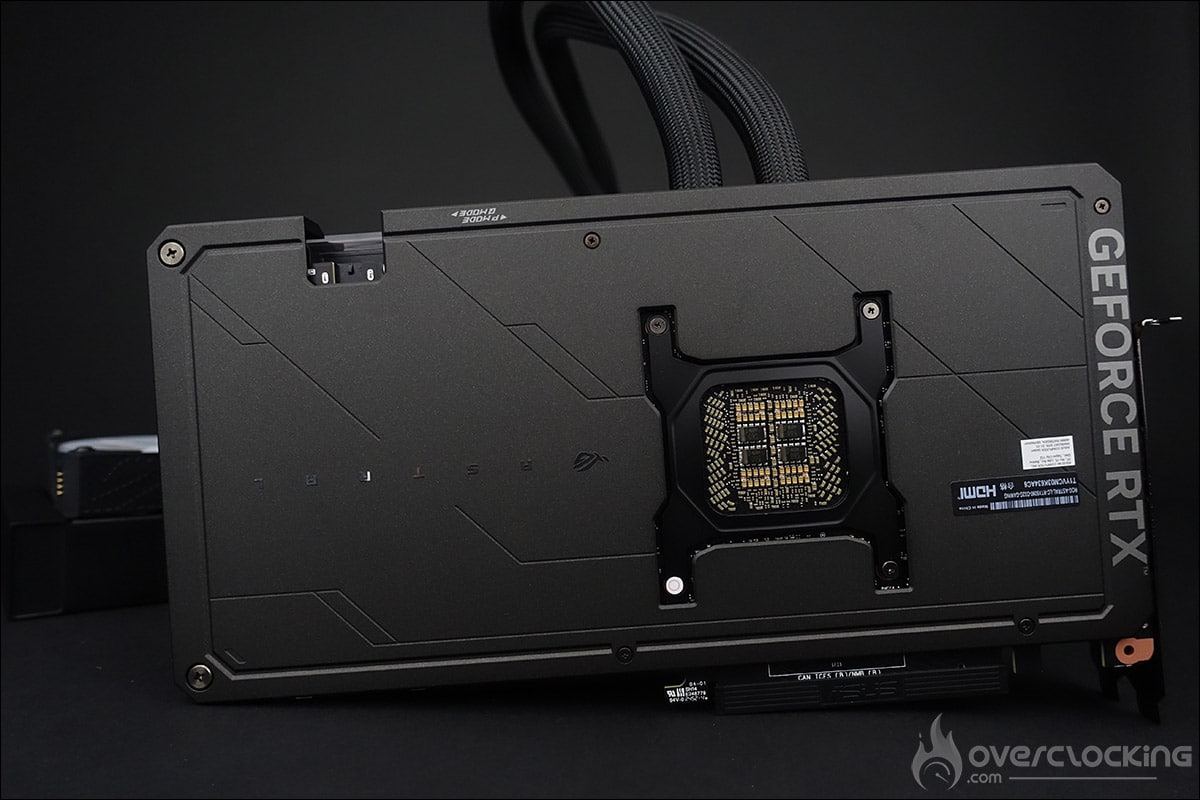
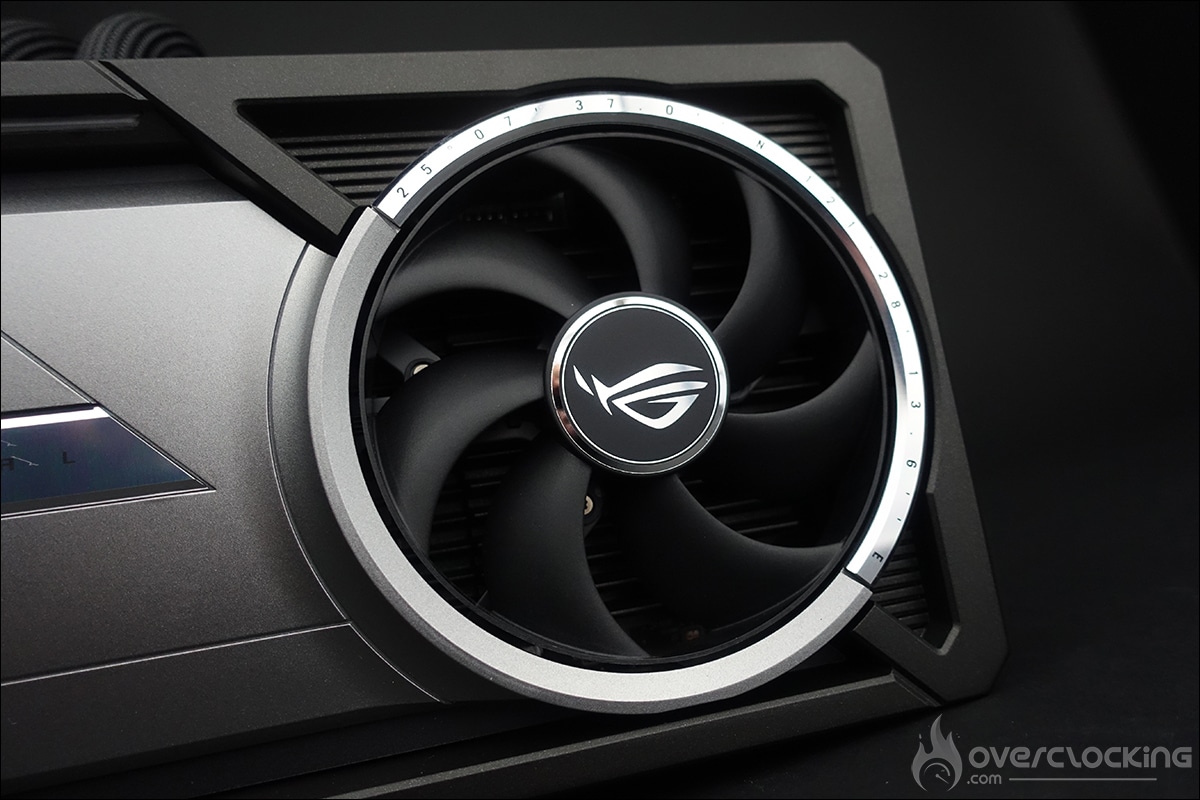
Let’s start with the front end, where we discover a fairing made of steel and plastic parts. The imposing axial fan in charge of keeping the power stage cool is a 105 mm model with 7 blades. The fan stops when the GPU temperature drops below 50°C and restarts at 55°C, with a balanced speed curve to minimize noise pollution. This model also benefits from dual BIOS: Pmode (performance) and Qmode (quiet).
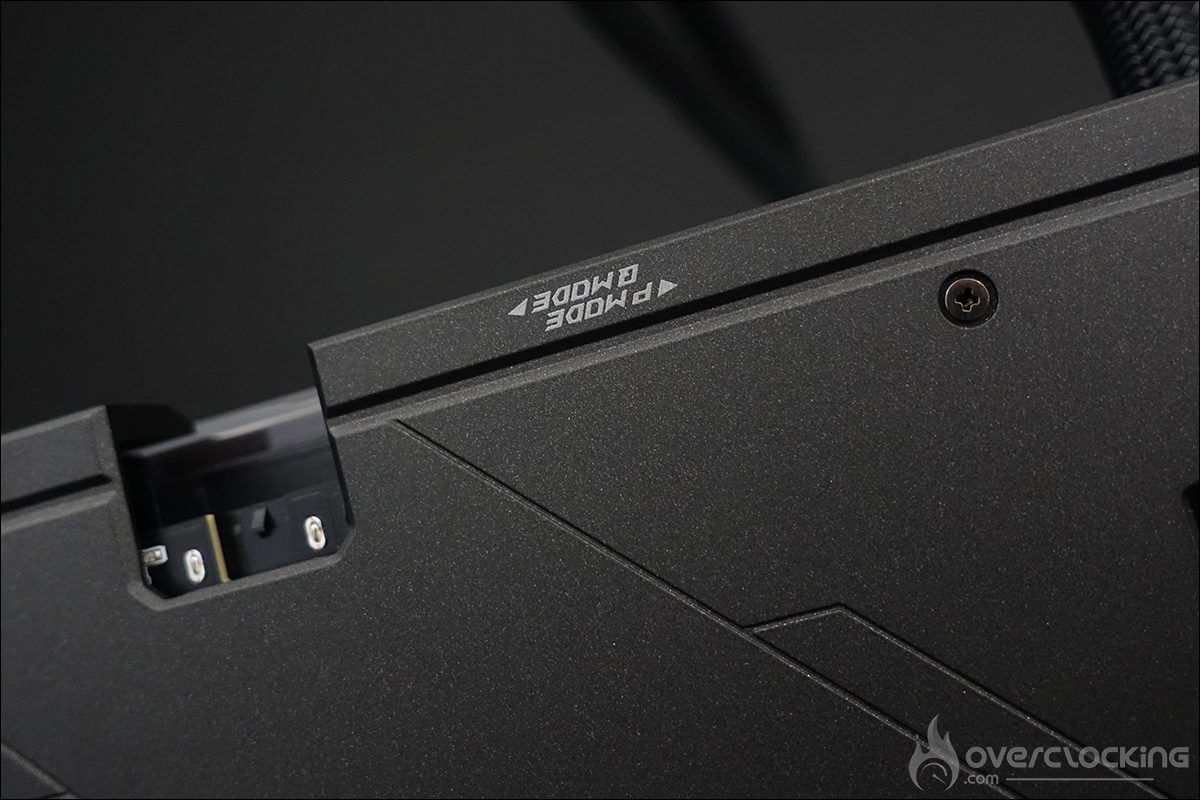
The back of the system, where the backplane is located, is quite sober, with a single cutout at the rear of the graphics chip. This ROG Astral LC RTX 5090 benefits from a cooling system we call “hybrid”. The term hybrid is used to designate a system that combines liquid and air cooling.
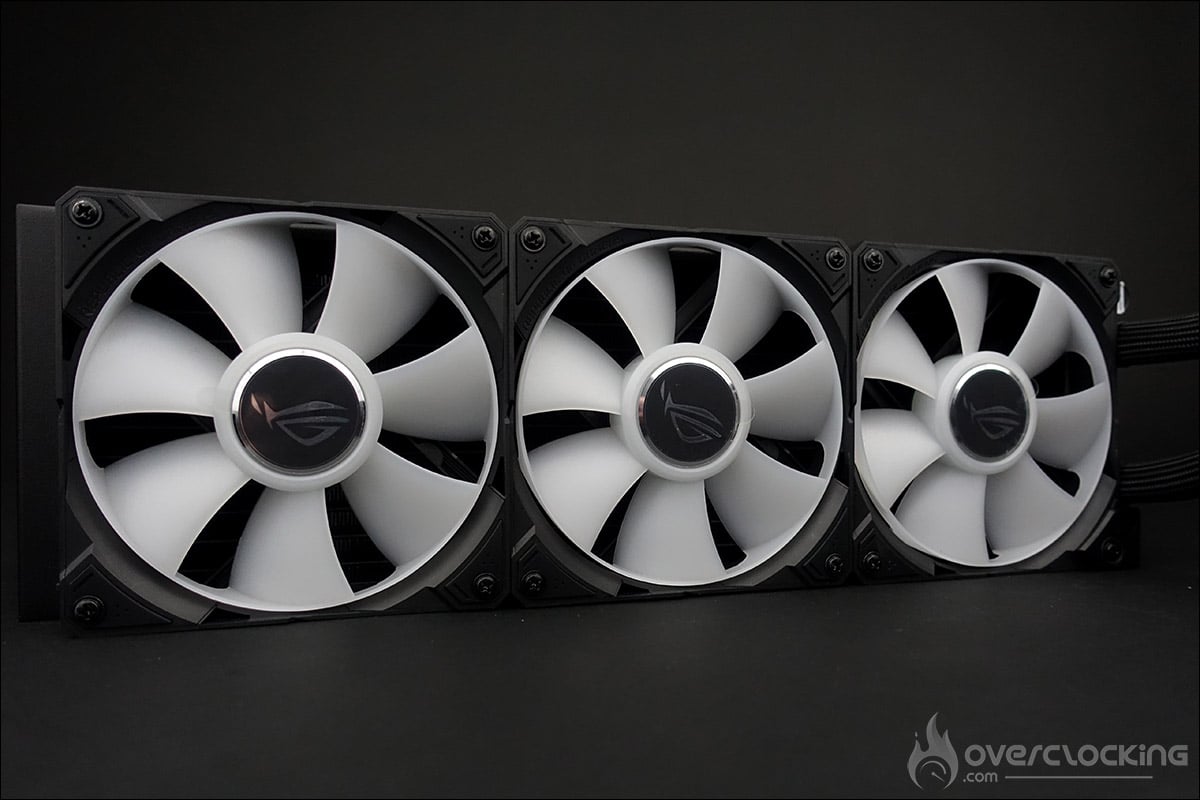
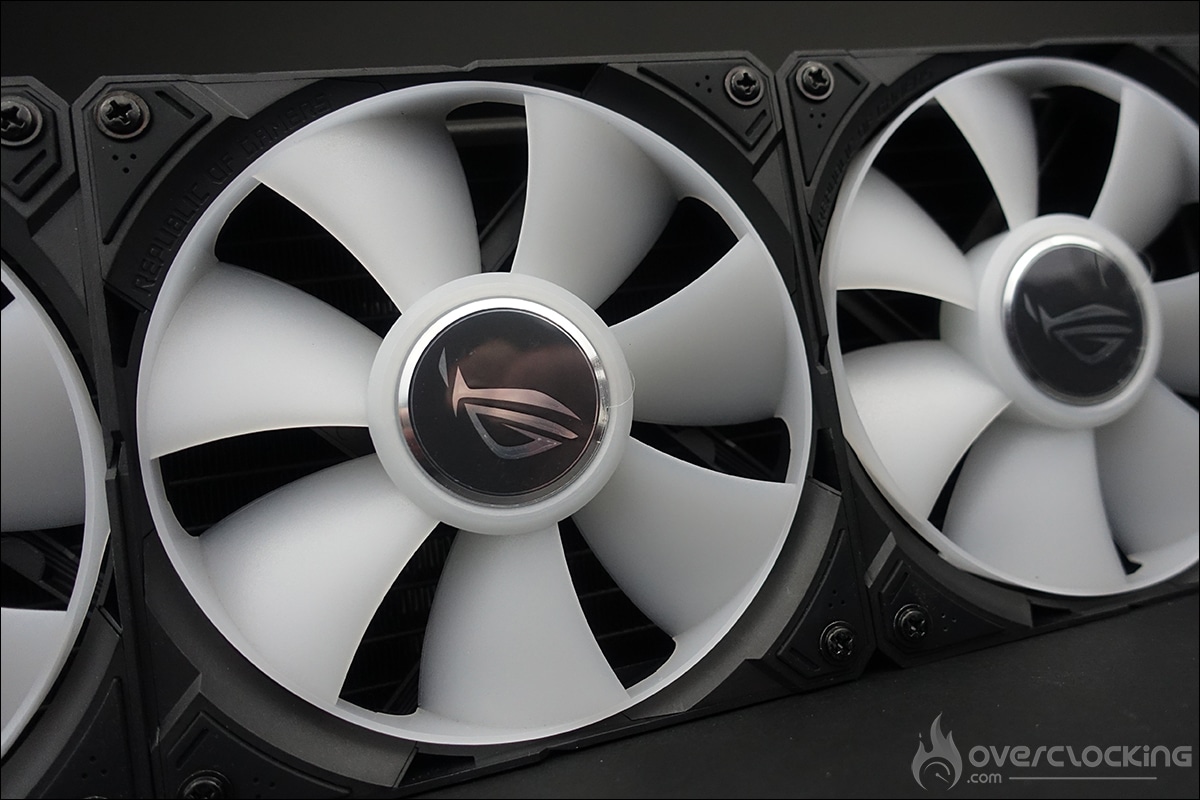
As we said, the radiator in charge of keeping your graphics and memory chips cool is a 360 mm model, 38 mm thick. It is topped by three 120 mm fans. Although ASUS doesn’t provide any information on these fans, they look exactly like those fitted to the ROG Ryujin III 360 ARGB Extreme, but 25 mm thick. The good news is that they snap together quickly, thanks to special magnets that reduce the number of cables. In fact, there are no visible cables at all.
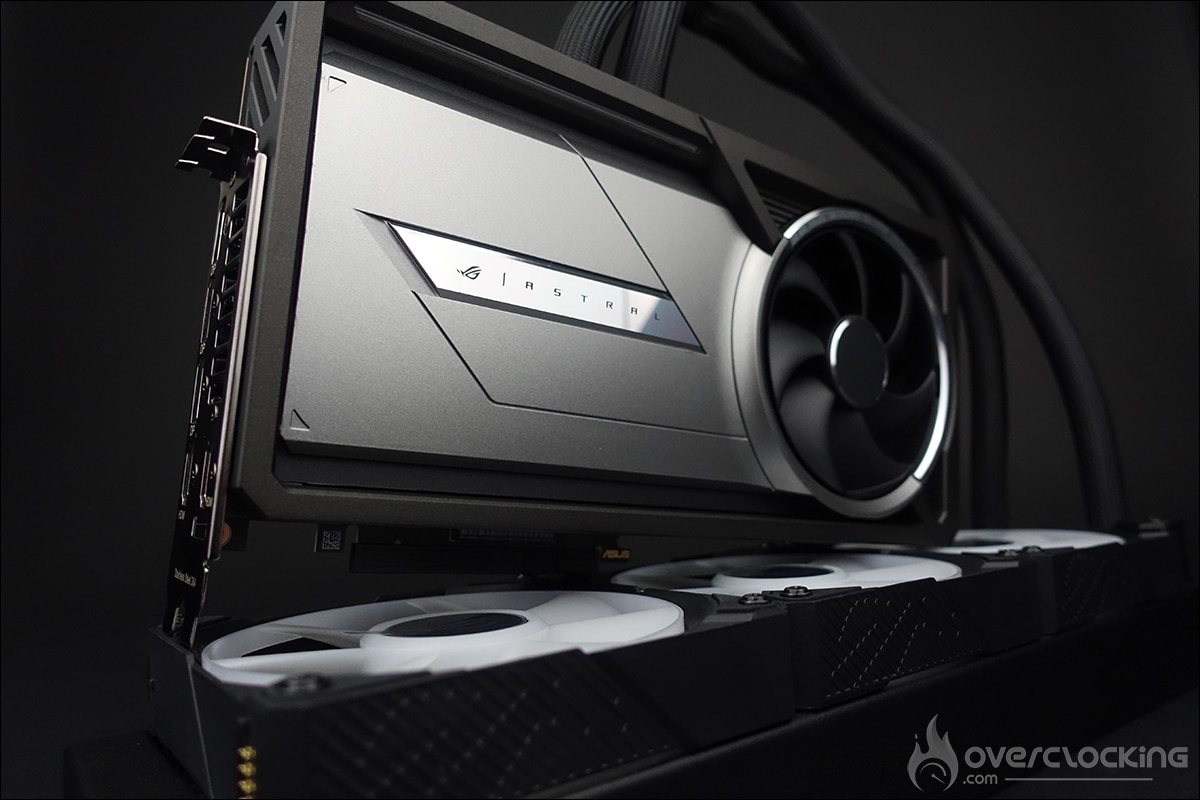
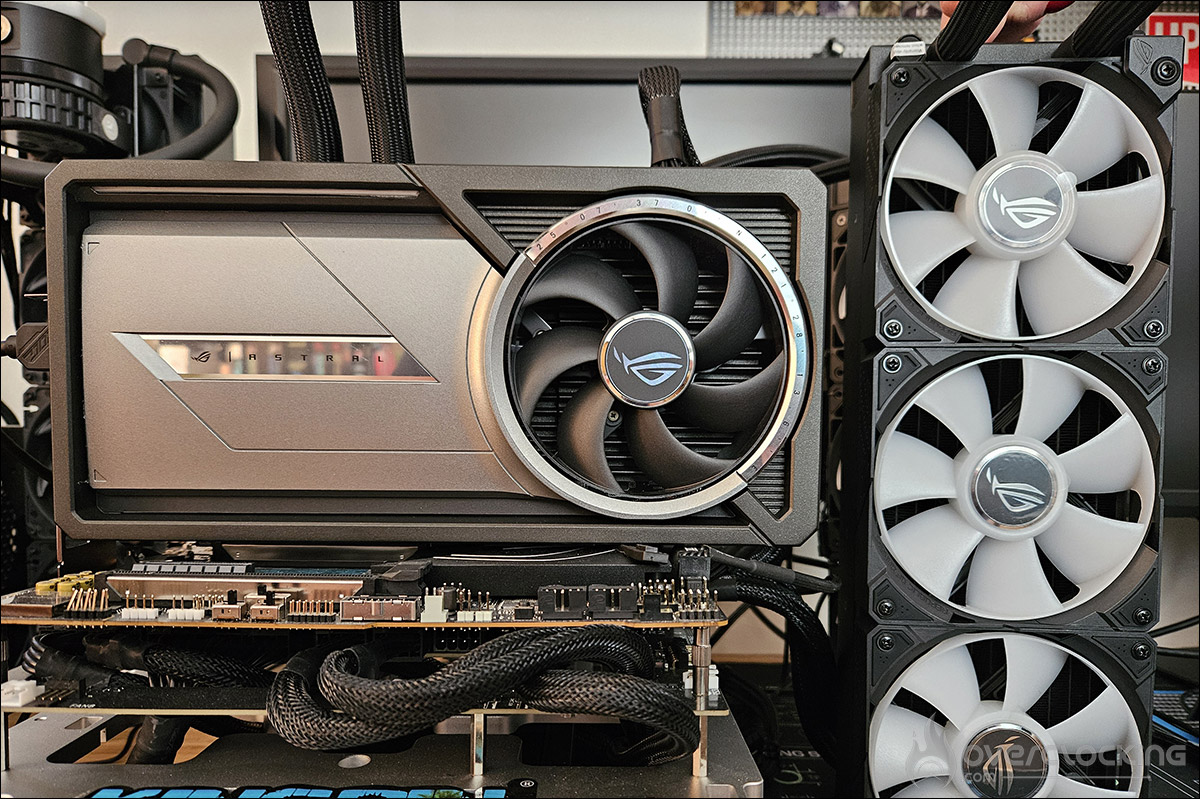
The hoses are much improved, with a length of 600 mm, they are flexible enough to guarantee easy installation. Don’t forget that you’ll need to provide a space for the radiator inside your case.
The PCB of this ROG Astral LC RTX 5090:
We haven’t disassembled our copy, as it will be leaving for other colleagues, and on these Astral models, ASUS uses a thermal pad that should improve heat exchange and, above all, won’t disintegrate over time. We’ve already had the opportunity to test this type of product and were quite satisfied. Unfortunately, once disassembled, it’s impossible to put back in place, and we would have had to replace it with thermal paste, which will distort the thermal performance of future tests by our colleagues. We hope to see this board again in the future, for a series of cold tests.
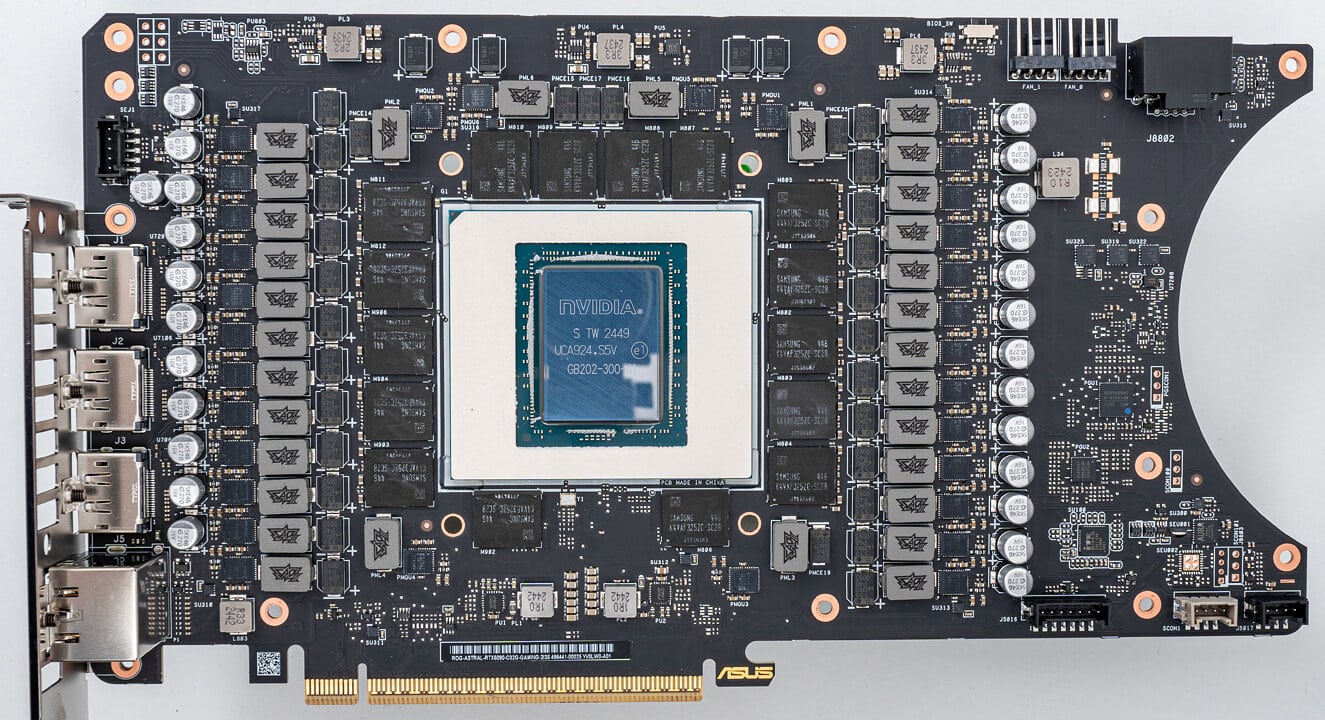
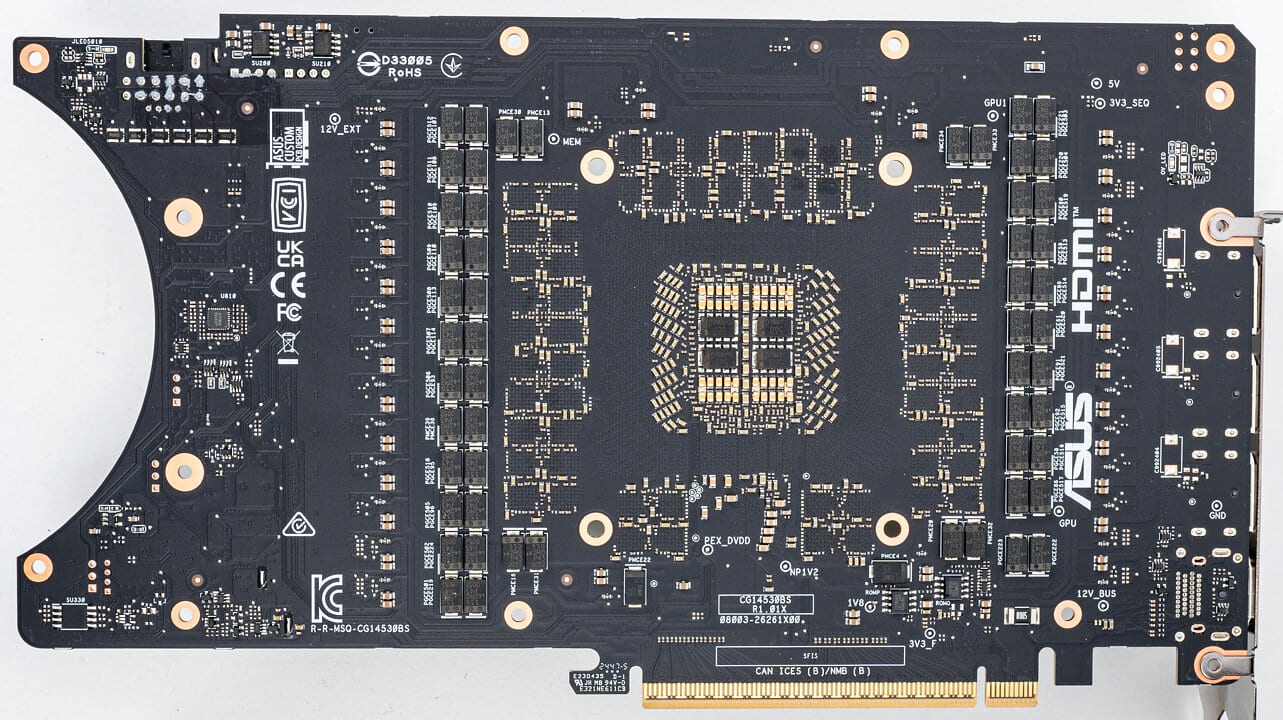
Here’s what the PCB looks like, thanks to photos from TechpowerUP. We’ll be back with more details in a special feature.
Connectors :
To power this ROG Astral RTX 5080 OC Edition, there’s a single 12V-2×6 connector, but you can use the 4 x PCIe 8-pin adapter supplied in the bundle, if your power supply doesn’t have this connector. Finally, the card’s video outputs include three DisplayPort 2.1b and two HDMI 2.1b.
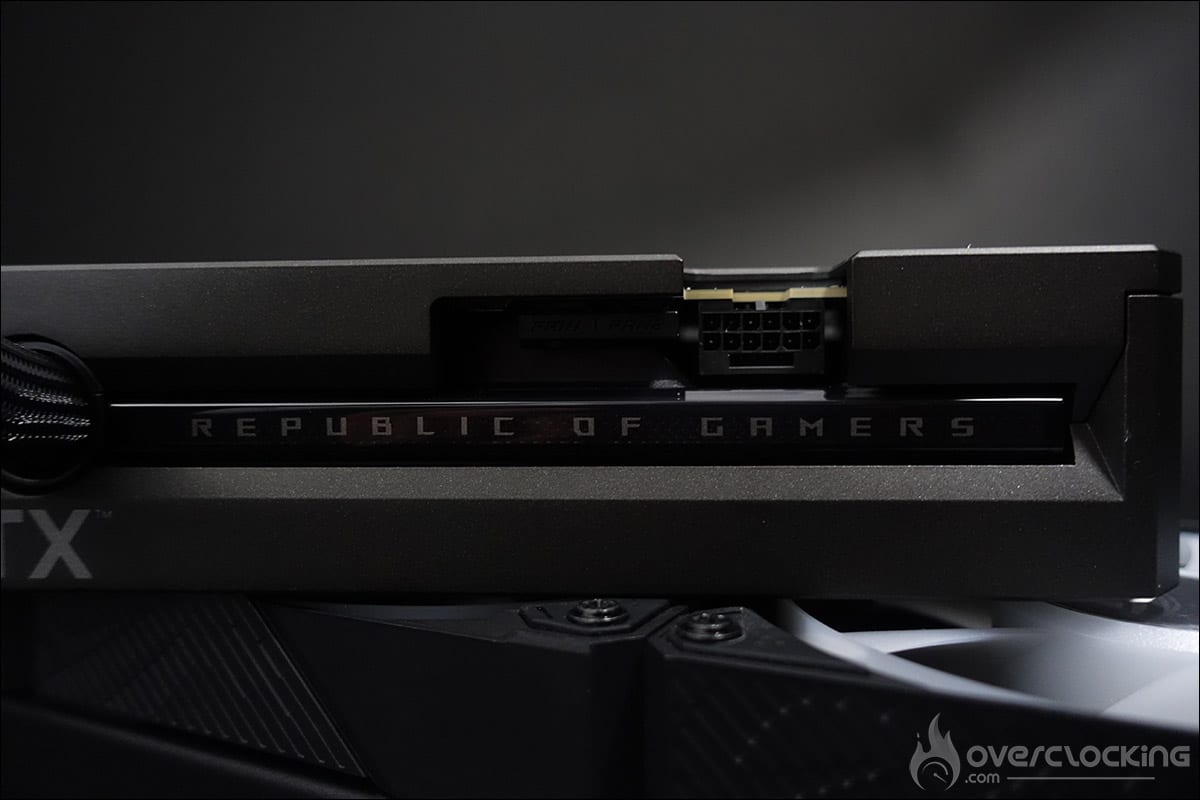
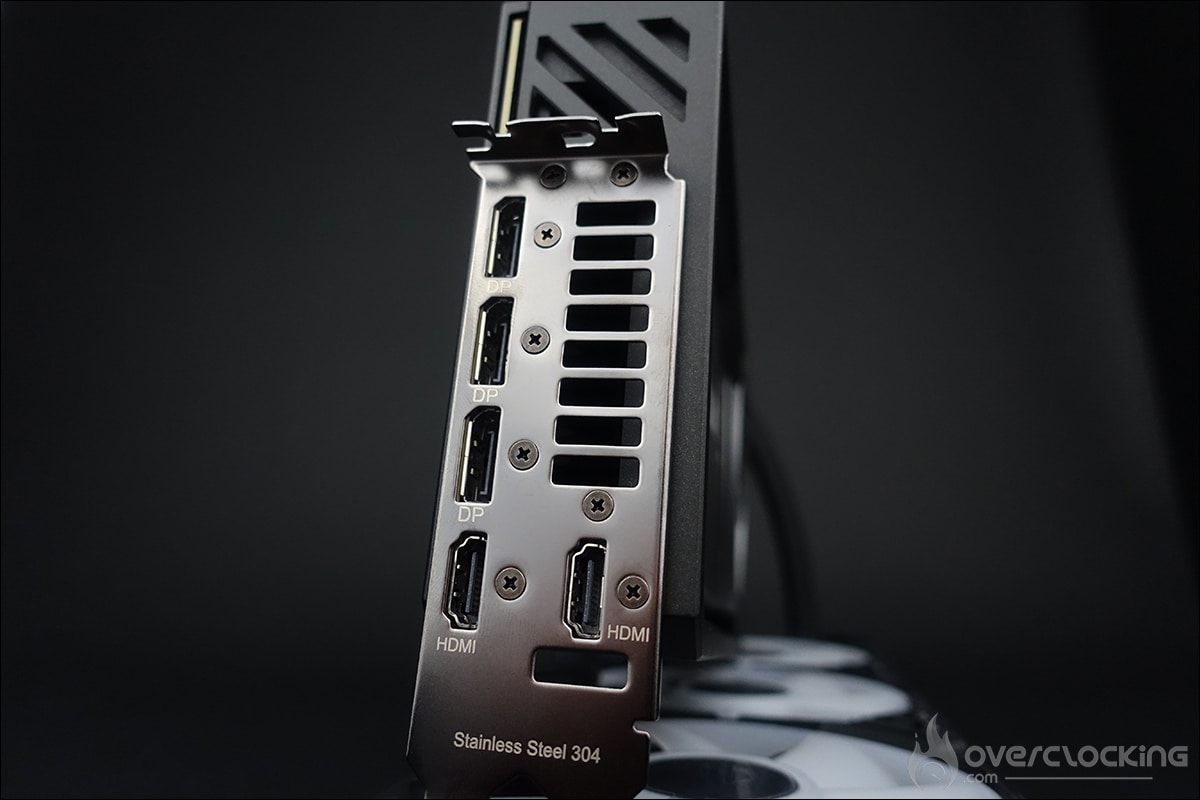
ASUS has also retained the two 4-pin connectors for connecting two fans to your graphics card, located next to the power connector. The fans connected to these connectors will act in the same way as those on your graphics card: if the GPU temperature rises, they will be triggered to optimize cooling inside your case. Finally, the radiator fans feature customizable ARGB backlighting.
Which power supply for this ROG Astral LC RTX 5090?
It’s only logical to ask what kind of power supply you’ll need to build a new configuration around this ROG Astral LC RTX 5090 graphics card. There are several ways of doing this, such as referring to NVIDIA’s recommendations, or using the online tool that lets you calculate the power you’ ll need to power your configuration. Simply specify the model of your processor and graphics card. You’ll then have a recommended power rating, as well as the option of indicating that you intend to overclock your configuration, thereby increasing the power of the power supply.
We’ve calculated the power required, and this ROG Astral LC RTX 5090 combined with our Intel i9-14900K processor requires a 1200 watt power supply. If you want to overclock your configuration, ASUS recommends a 1,600-watt model.
How about a 1,600-watt ROG Thor III power supply with 80 Titanium certification? With this, these units benefit from a particularly meticulous design. As you can see, they also feature a small OLED display on the side that can be repositioned according to the orientation of the block.
Internally, the brand relies on quality components such as gallium nitride MOSFETs, claimed to be more efficient. Otherwise, GPU-FIRST technology will enable the block to deliver power according to GPU and not CPU activity. This makes it possible to better anticipate power consumption peaks, for example. Naturally, cable management is fully modular, with connectors featuring high-quality copper contacts.