

The RAM sector is experiencing a period of structural strain that, according to top industry officials, shows no signs of abating. SK Hynix, one of the world’s leading manufacturers of DRAM and NAND, recently confirmed that this shortage is expected to persist until the end of 2030. This announcement, made by CEO Kwak Noh-Jung during the groundbreaking ceremony for the company’s new packaging facility in Indiana, marks a significant extension of the company’s previous forecasts.
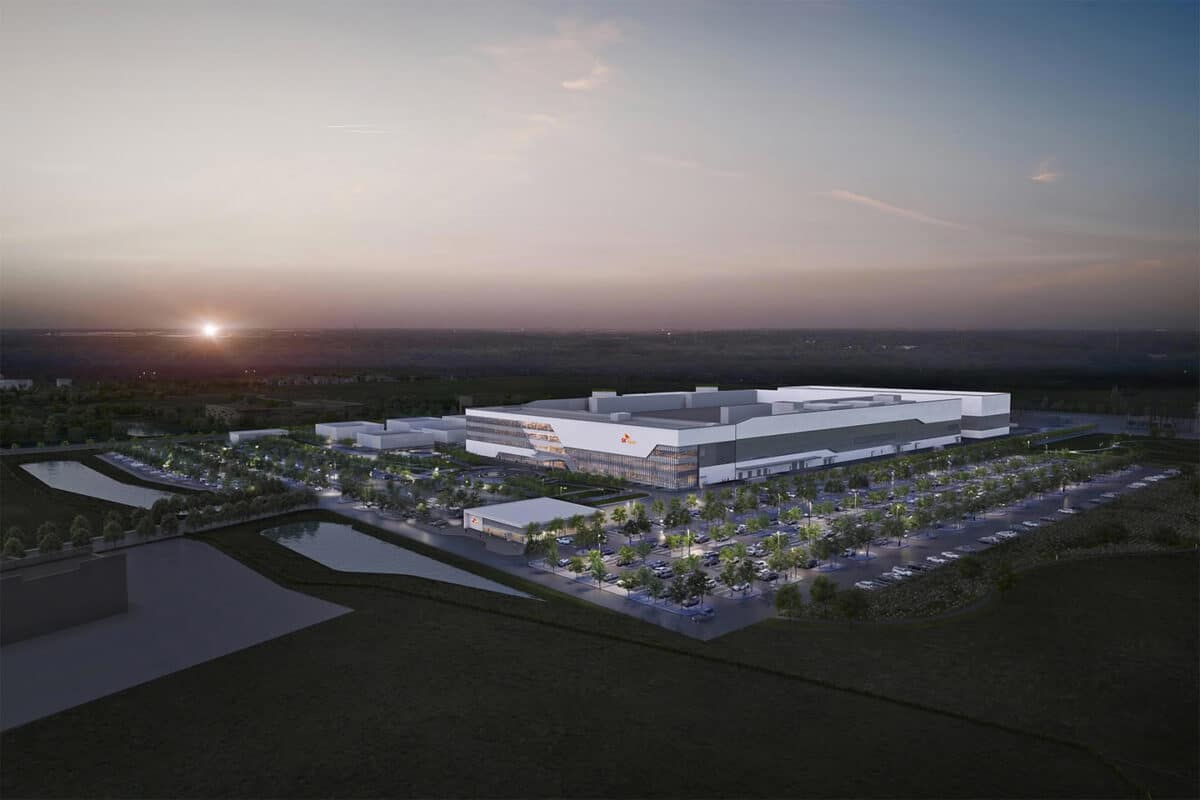
Kwak Noh-Jung explained that there are no signs of a slowdown in demand yet. He noted that, should a decline in activity occur in the future, it would likely take the form of a gradual slowdown rather than the sharp price drops seen in the past. This outlook is consistent with previous warnings issued by SK hynix, which had already indicated that supply constraints for commodity-grade DRAM would extend through 2028. The new estimate therefore pushes back the timeline for this supply constraint by several years.
The End of the Purely Commodity Era
The fundamental reason cited by the SK hynix executive to justify this prolonged period of supply constraints lies in the profound transformation of the market. Memory products are no longer viewed as mere standardized components. The massive rise of artificial intelligence has changed customer purchasing habits, with customers now favoring custom configurations.
This shift toward customized DRAM memory and specific HBM (High Bandwidth Memory) configurations allows manufacturers to better anticipate future demand. This increased predictability significantly reduces the risk of the market suddenly shifting toward overproduction—a phenomenon that had triggered previous market crashes. AI-driven demand thus creates a more stable market dynamic, but one that is also more demanding in terms of production capacity.
A “logistical” role for the new facility in Indiana?
It is important to note that the facility opened in Indiana is not intended to increase wafer production capacity. It is exclusively a site dedicated to chip packaging and testing.Wafer manufacturing remains in South Korea, where they are then shipped to the United States to undergo HBM4E packaging operations.
Operations in the clean rooms at this new facility are scheduled to begin in the second half of 2028. Full-scale production, meanwhile, is targeted for the third quarter of 2029. This infrastructure is therefore designed to support the downstream supply chain without altering upstream manufacturing capacity.
As a direct result of these factors, consumers and manufacturers should not expect DRAM and NAND prices to drop significantly in the near future. The costs associated with memory for personal computers, graphics cards, and video game consoles are expected to remain high throughout the next decade. The shortage is therefore not a temporary phenomenon, but a lasting feature of the current technology market.