

The arrival of Chinese memory chip manufacturers has been talked about here for some time. Many are hoping for it, given what happened on the DDR3 and DDR4 markets when the arrival of chips from the Middle Kingdom drove prices down. But this time, speculation is out of the question. The images leaked by wxnod show a Corsair Vengeance DDR5 module featuring ChangXin Memory Technologies (CXMT) DRAM chips. This specific module is a 16 GB DDR5-6000 array, referenced CMK5X16G3E60C36A2-CN, with advertised timings of 36-44-44-96, a voltage of 1.35 V, as well as advertised support for Intel XMP and AMD EXPO profiles. This is not an isolated sample, but a product that is clearly a genuine, modern Corsair Vengeance, suitable for today’s DDR5 platforms and ready for the market.
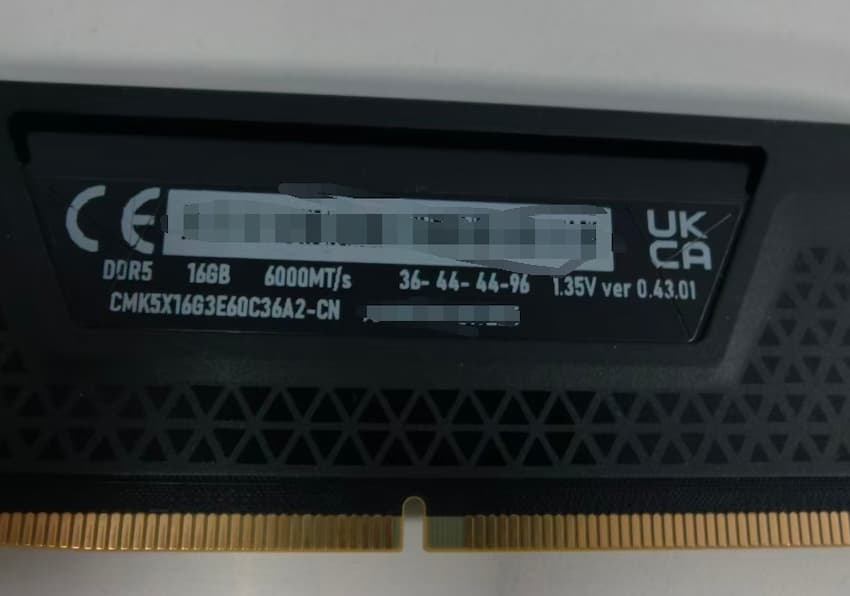
A Corsair DDR5 unit equipped with CXMT RAM chips.
The arrival of these memories represents a significant milestone, as it marks the integration of Chinese memory chips into the products of a major global player in PC components. While Samsung, SK Hynix and Micron are focusing primarily on HBM memory to feed the AI market, CXMT is working to establish itself in the consumer market. Until now, the question marks have not been about the quality of Chinese chips, but about CXMT’s ability to deliver volume. Many thought that Chinese RAM chips would only be absorbed by their own domestic market, but in recent months events have accelerated. In January, HP announced major LPDDR5 orders from CXMT for its ultraportables. In April, Qualcomm began working on custom DRAM with the Chinese manufacturer for its entry-level Snapdragons. ASUS, Acer and Dell have also approached CXMT. Given the growing number of names teaming up with CXMT, the use of its chips no longer seems taboo, including for American brands.
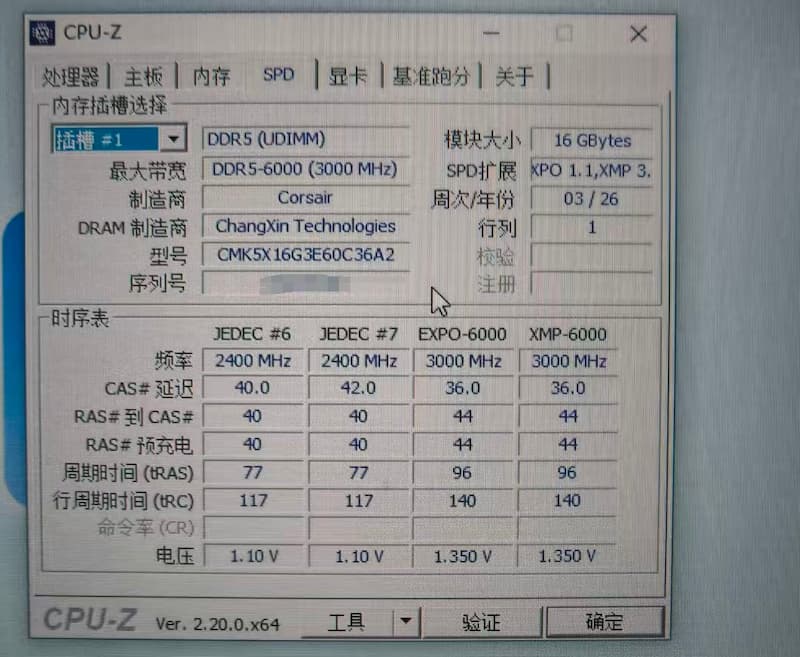
However, if CXMT is not blacklisted by the US administration, the company seems to be on a knife-edge. Factually, CXMT is not officially included in the blacklist, unlike SMIC or YMTC. However, earlier this year, a document from the Bureau of Industry and Security was published, only to be withdrawn a few hours later. In other words, the situation remains rather nebulous. Another important point is that the “-CN” in the reference suggests initial production for the Chinese market…which could end up being blocked for the US market, but would have no difficulty travelling to Europe.
Is the European market safer than the US for the Chinese?
What conclusion can we draw from this story? Quite simply that the Chinese industry has realized that there is an opportunity , as it did with DDR4 some time ago. This year, the memory production capacity of its Chinese companies has increased considerably. CXMT and YMTC will respectively double their production. What seemed almost impossible a few months ago, now seems unavoidable. Chinese RAM chip manufacturers now seem in a position to meet their own domestic demands, while offering a more affordable option with similar features to foreign memory stick manufacturers. If access to the US market is uncertain, the European market seems to offer a more stable framework. We’ve already seen this for a number of PC component brands arriving in Europe in recent months. Computex should confirm this trend.