
[nextpage title=”Introduction: “]
After being announced by NVIDIA at CES 2025, we have just received a sample of the new NVIDIA RTX 5090 Founders Edition. We’d like to take this opportunity to thank NVIDIA for making this sample available to us. We haven’t yet had the opportunity to receive any RTX 5090 partner boards, but we can already tell you that we’ll be bringing you a test of the ROG RTX 5090 Astral Liquid Cooling at a later date. The new top-of-the-range model from the Greens will be available from January 30 at a price of €2,349 for Founders Edition. Partners will also be offering their own models, announced at CES 2025. No tests yet, so we’ll have to wait and see, but we can already offer you an unboxing of this superb RTX 5090 Founders Edition.
[nextpage title=”The NVIDIA RTX 5090 Founders Edition: “]
Architecture:
As a reminder, the “Founders Edition” series cards are unique models offered by NVIDIA. The main advantage of these boards is that they are offered at a “locked-in” price, which will not change in the coming weeks or months, unless the price goes down. NVIDIA partners will also be offering their own models. Visually, NVIDIA has radically changed its design, moving to a 2-slot wide SFF-Ready board. We’ll be coming back to this new design in detail later in this article.
This RTX 5090 Founders Edition benefits from the Blackwell architecture, retaining a 4-nanometer etching finesse, but switching to the TSMC N4P process, enabling higher transistor density and improved energy efficiency. This architecture features new 5th-generation Tensor Cores and 4th-generation Ray Tracing Cores. The 5th-generation Tensor Cores will bring support for the FP4(Floating Point 4 bit) format, which will double the computational performance of neural models while halving the memory footprint. We’ll be coming back to this development in the course of our tests with UL Procyon software, which we’ve been using for several weeks now.
Of course, DLSS 4 support cannot be overlooked. This new RTX 5090 is NVIDIA’s new flagship, with 92 billion transistors and 21,760 CUDA Cores.


There’s something new on the memory front too, with 32GB of GDDR7 memory offering a 78% increase in bandwidth over the previous generation. It’s important to remember that this NVIDIA RTX 5090 is also a card aimed at professionals. GDDR7 memory will have a visible impact in professional applications, such as video editing or 3D simulation.
As for the TDP, it’s announced at 575 watts, which makes the design of this Founders Edition model even more “disturbing”. But let’s move on to the discovery of NVIDIA’s new packaging!
The Founders Edition bundle :
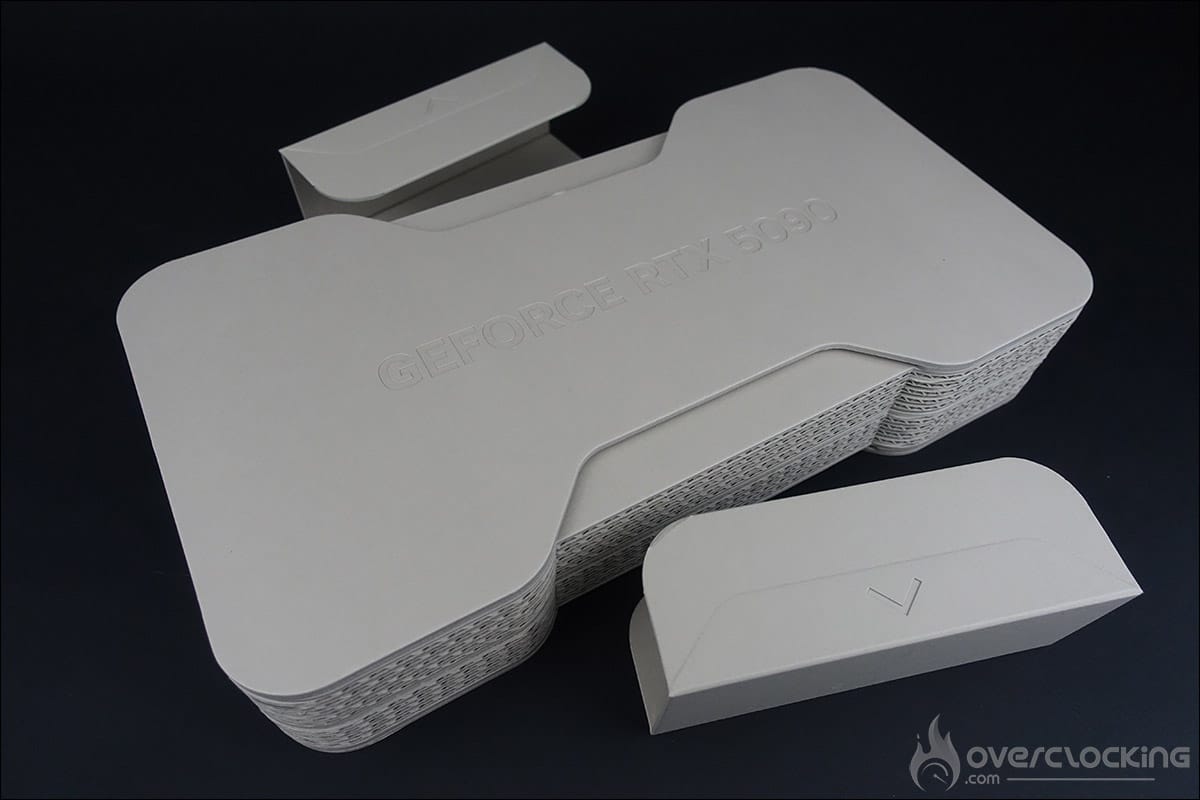
The first thing that strikes you is the size of the box, which is more imposing in terms of dimensions when compared to previous-generation cards. Despite this, NVIDIA says it has halved the packaging of this RTX 5090 Founders Edition compared with ADA Lovelace cards, because there’s a little surprise. As with the previous generation, the card arrives in a cardboard box, but here, this cardboard box is actually the packaging for our RTX 5090 FE, whereas with the RTX 4000s, the cardboard box was merely a protection before we discovered the graphics card’s “real box” (click here to remember).
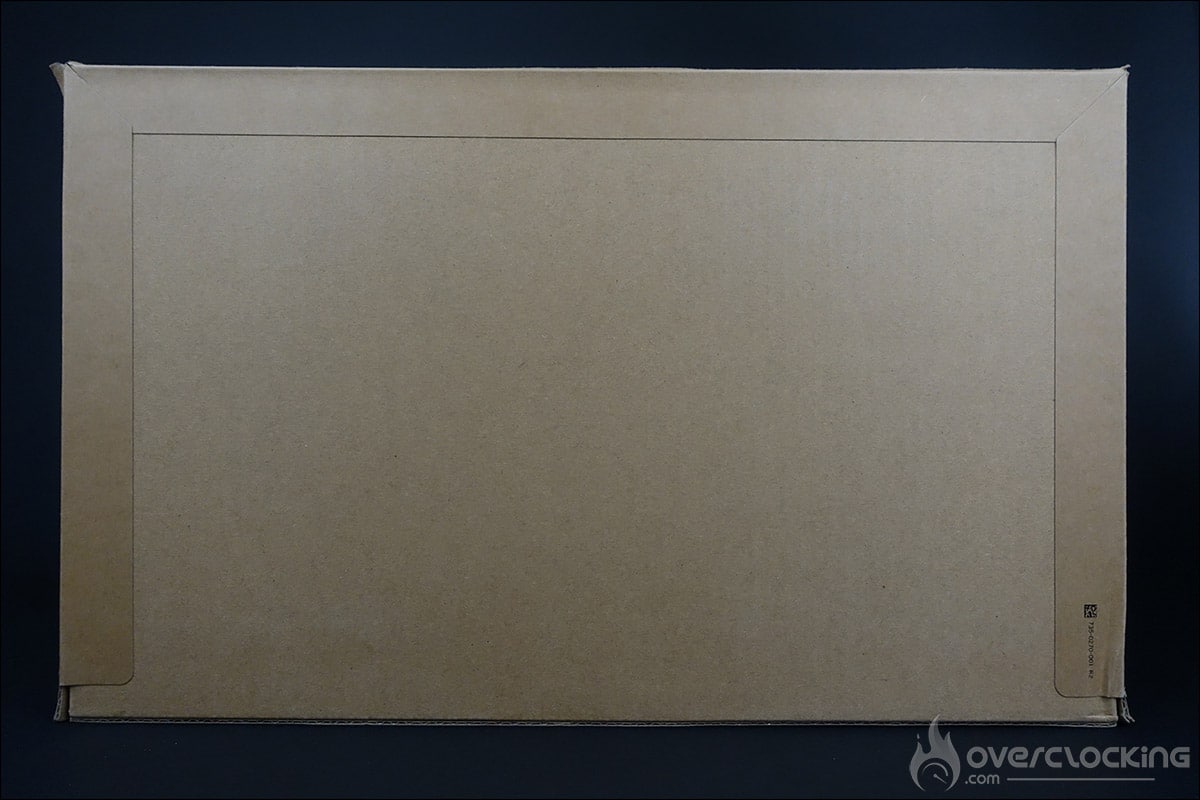
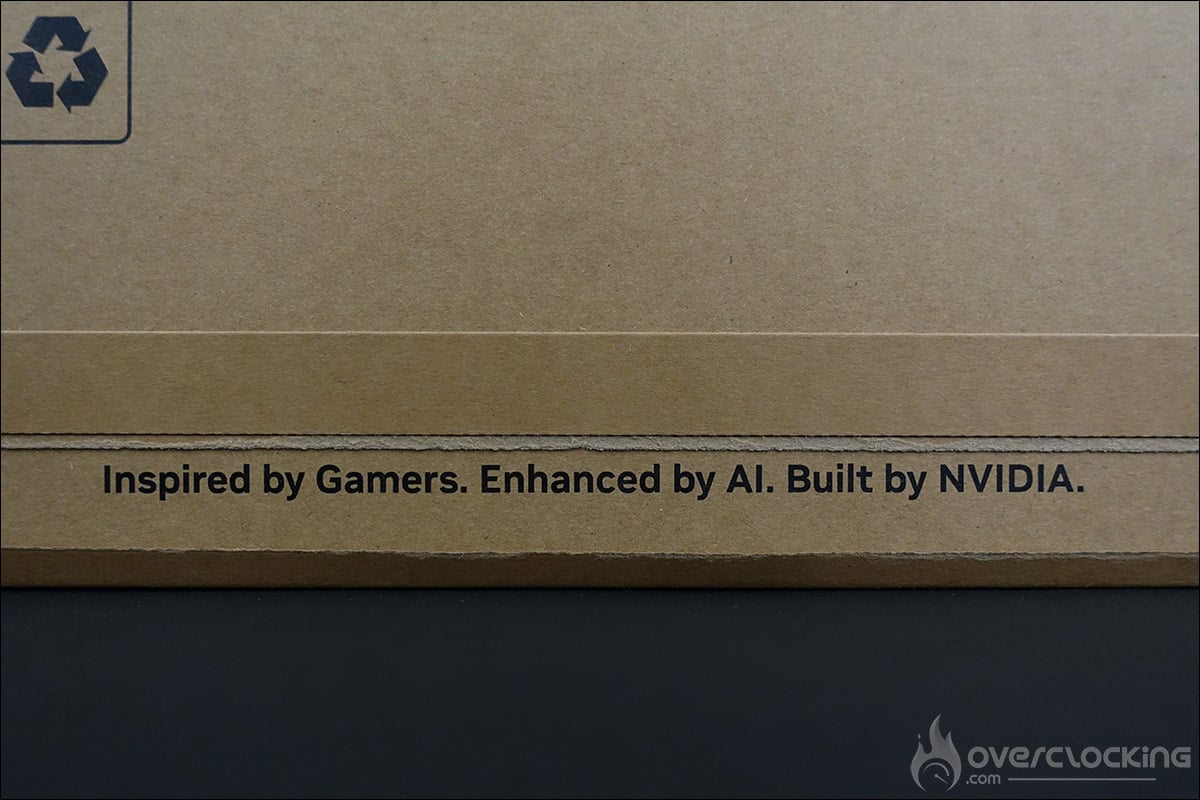
Ecologically, the first good point for the greens, and you’ll see that this isn’t the only effort made, since there’s no plastic and the whole thing is made of paper fibers. The cardboard tab that seals the box reveals the following annotation: ” Inspired by Gamers. Enhanced by AI. Built by NVIDIA “. It says it all: gamers, artificial intelligence and NVIDIA.
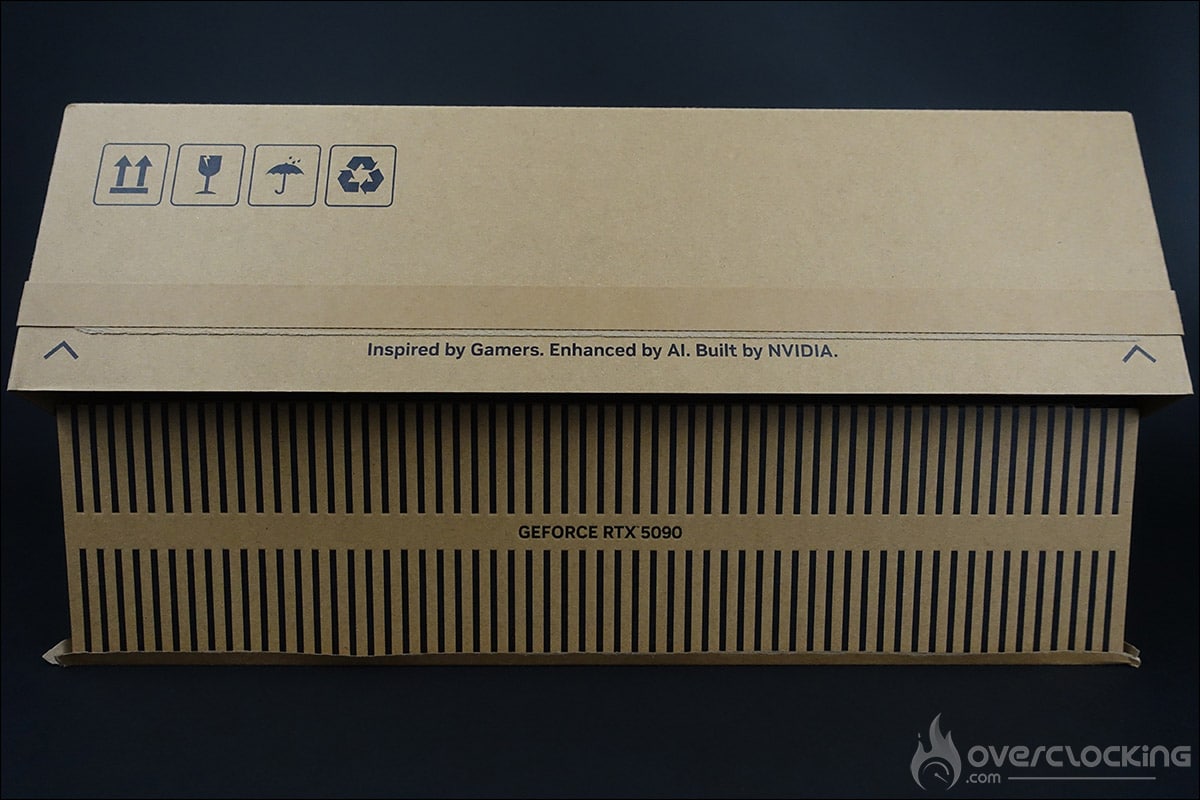
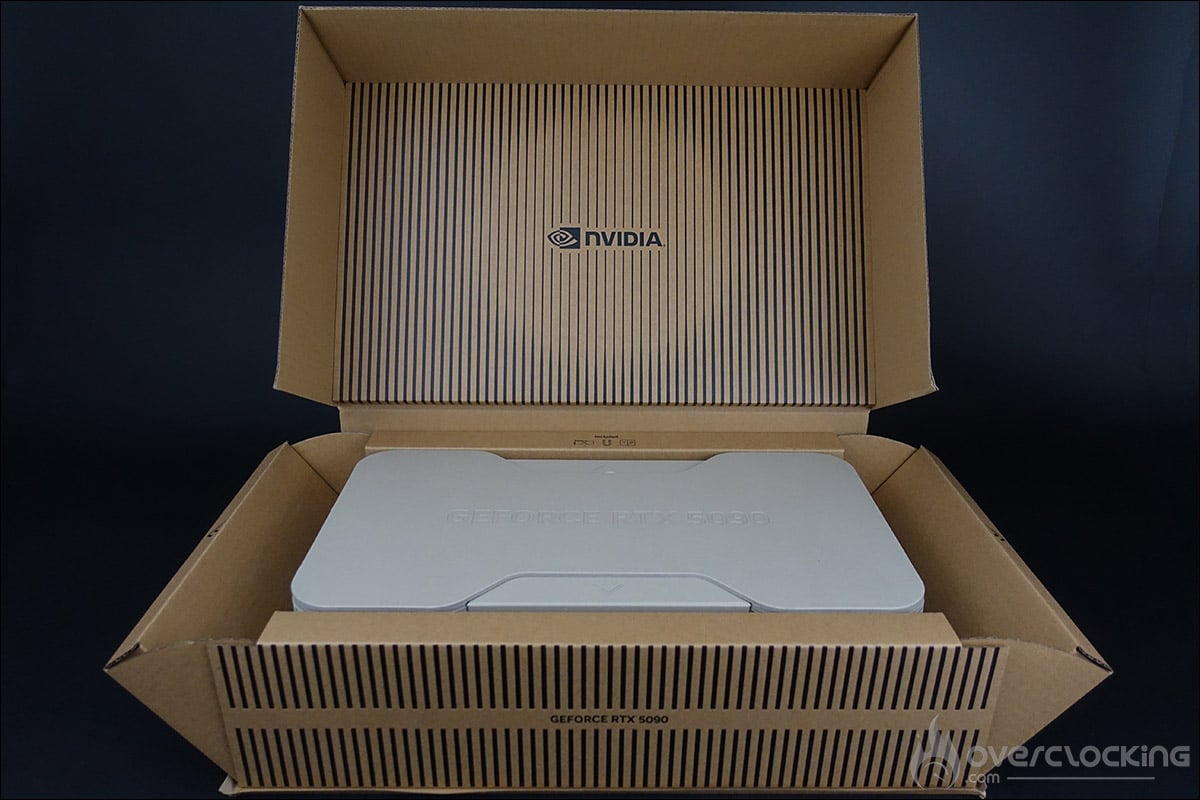
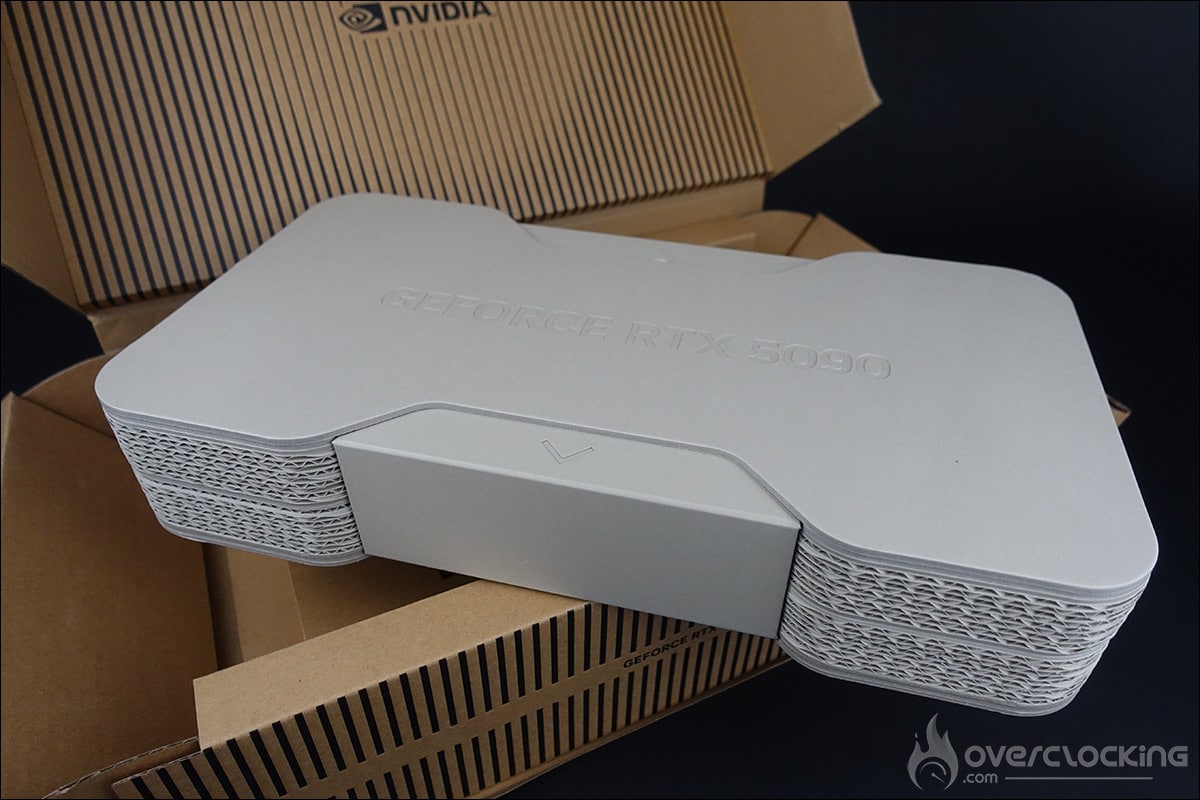
So what does this new box have in store for us? As usual, NVIDIA has taken great care with the packaging, offering a cardboard box in which to hide our copy of the RTX 5090 FE. It’s always exciting to discover the new packaging offered by NVIDIA when a new generation of cards arrives. The box opens from the front and conceals in its center: a second cardboard box, the top of which is engraved with the words “GeForce RTX 5090”.
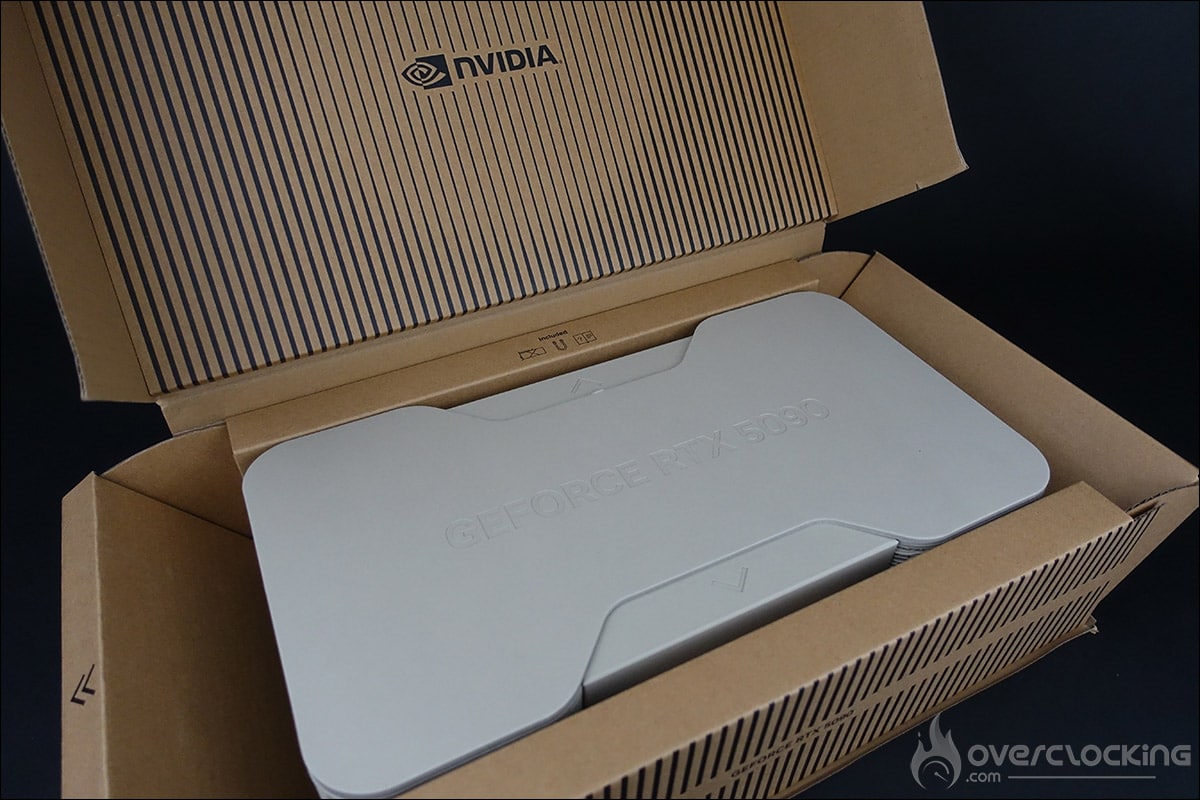
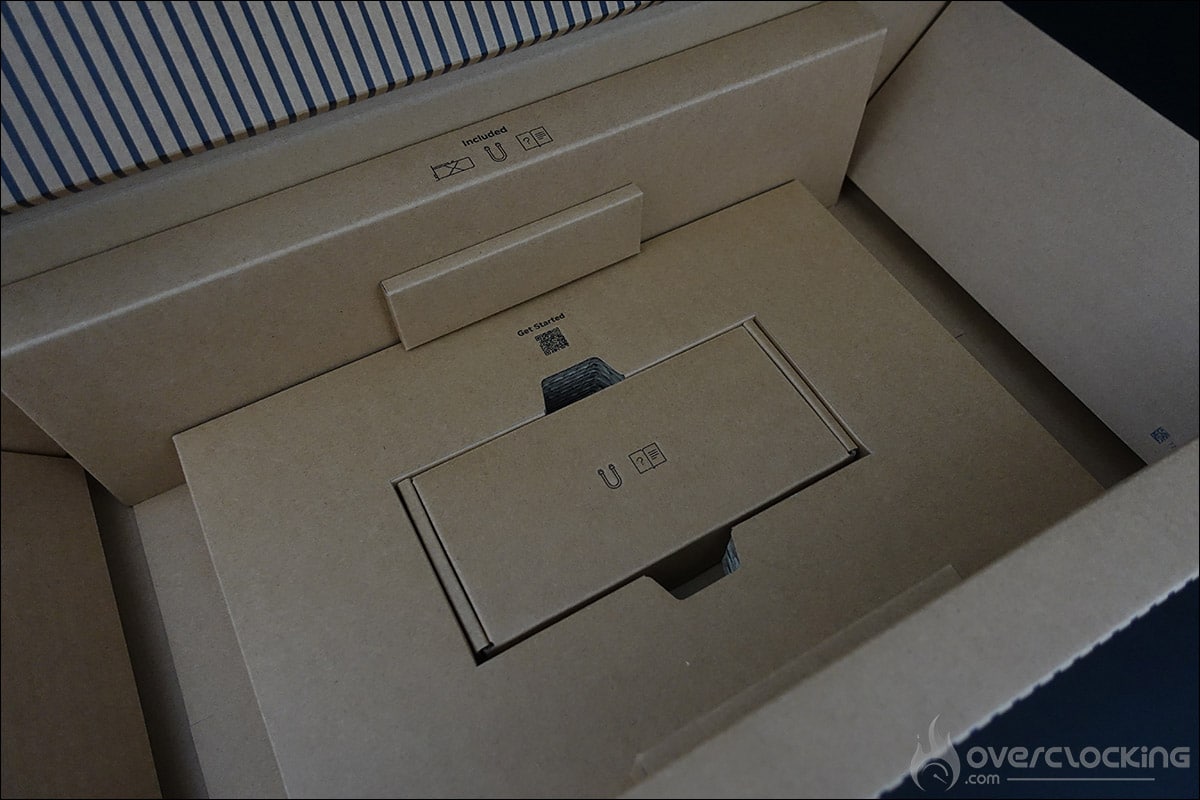
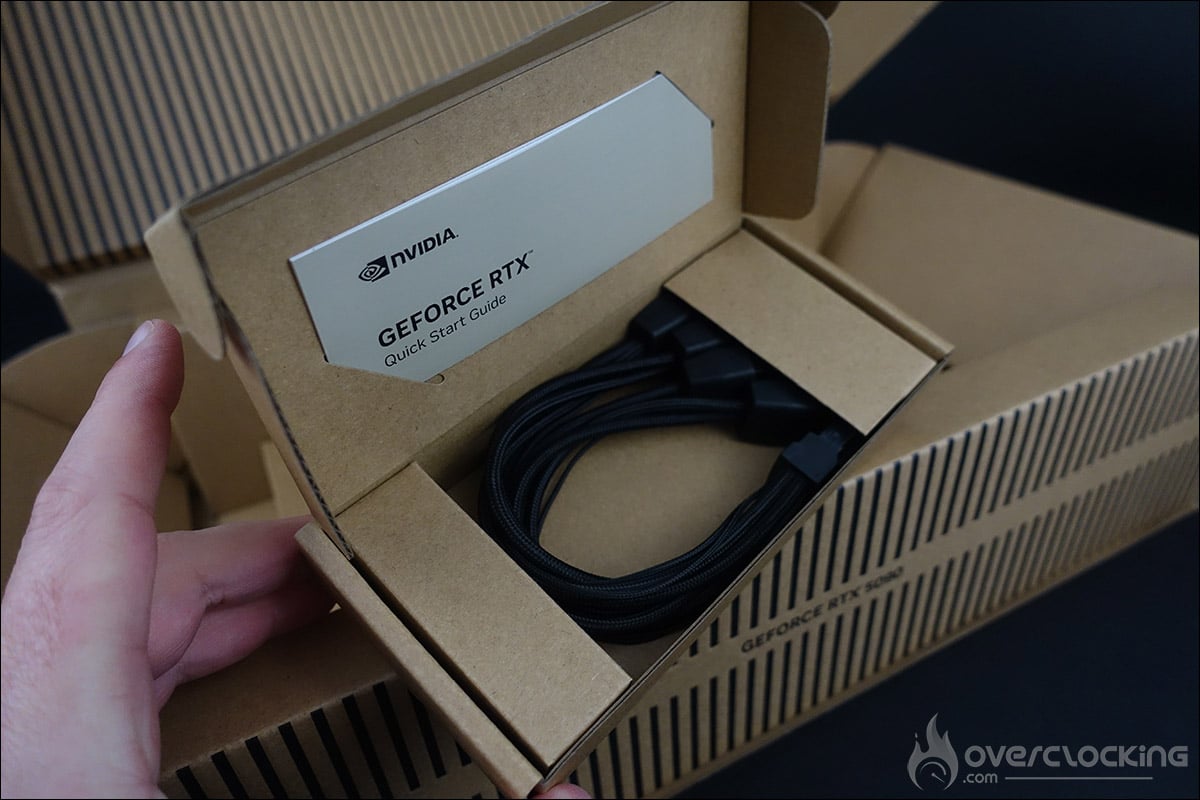
When this is removed, a small box is revealed, containing the adapter for the card’s power supply and a quick-start guide. Note that the adapter is a 4 x PCIe 8-pin model to be compatible with your power supply, if you don’t have the 12V-2×6 connector. NVIDIA recommends, as a minimum, a 1,000-watt power supply.
To access and discover our NVIDIA RTX 5090 Founders Edition, all you have to do is slide out the top and bottom cardboard boxes, which hold the two sides of the box together. NVIDIA is playing the eco-responsible card with the packaging of this Founders Edition, and we couldn’t agree more!
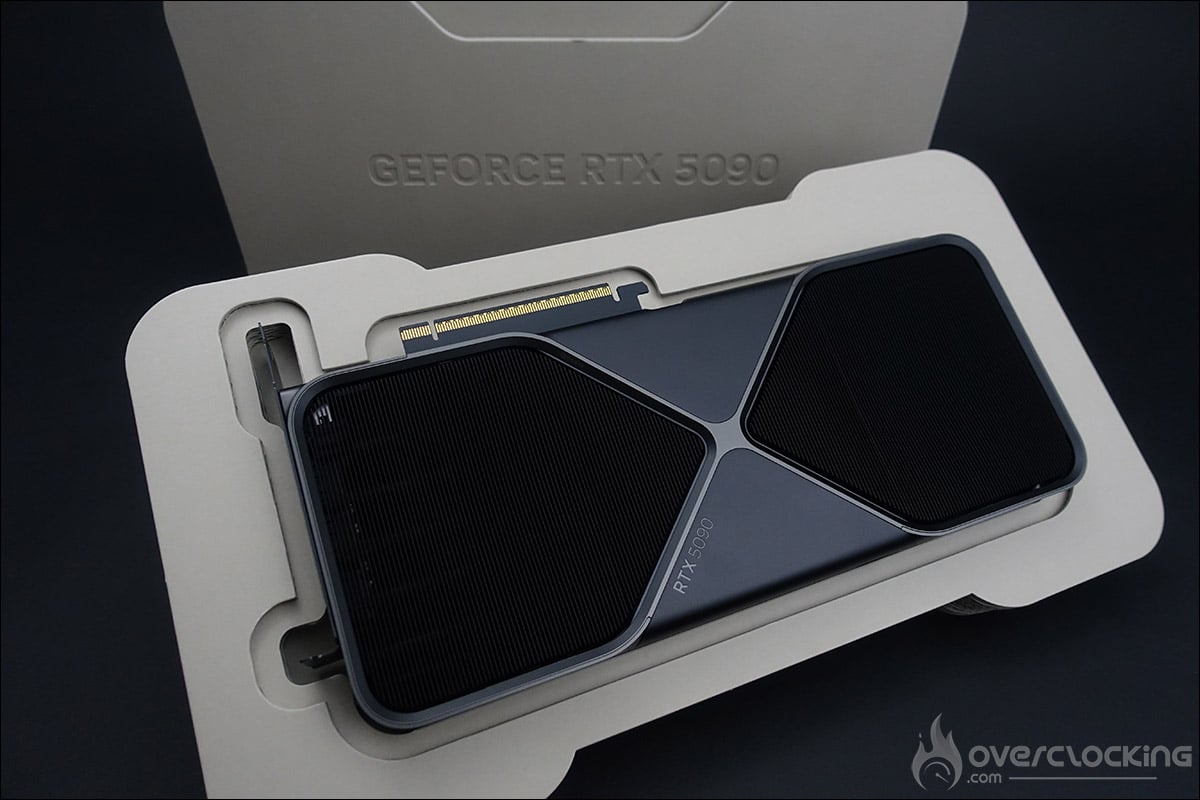
NVIDIA RTX 5090 Founders Edition:
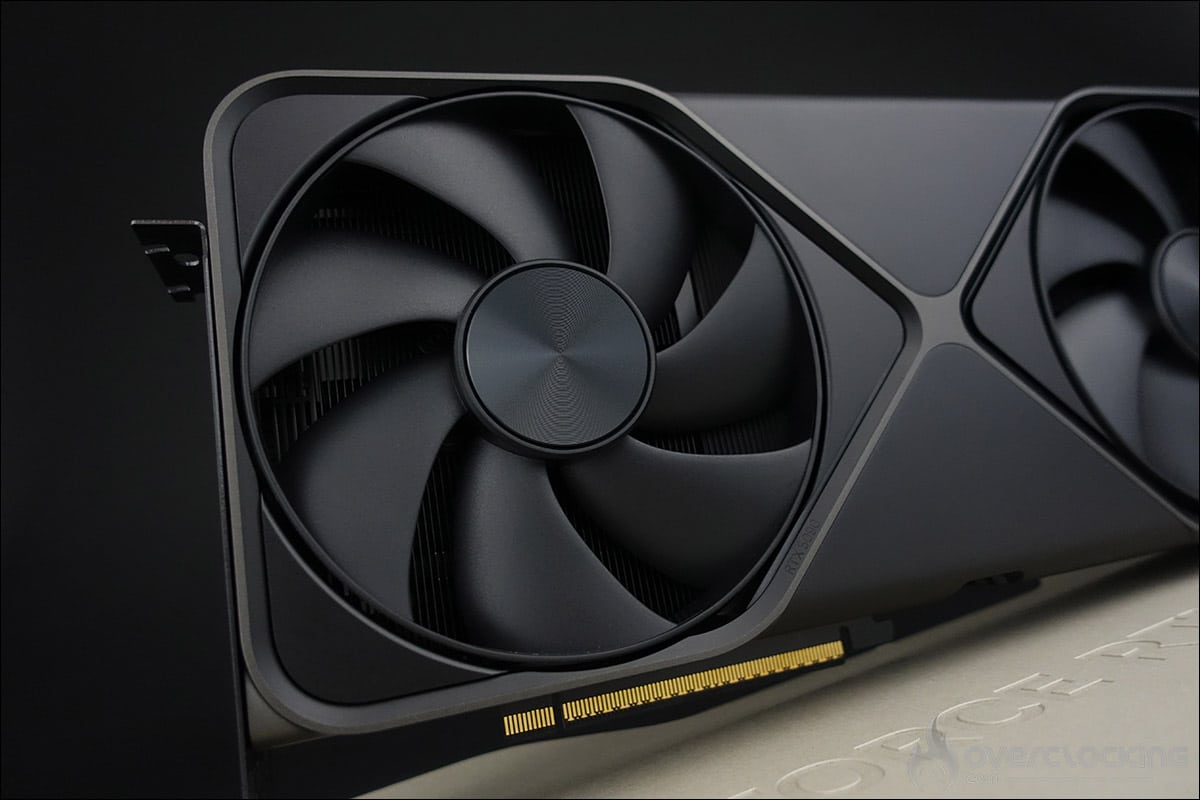
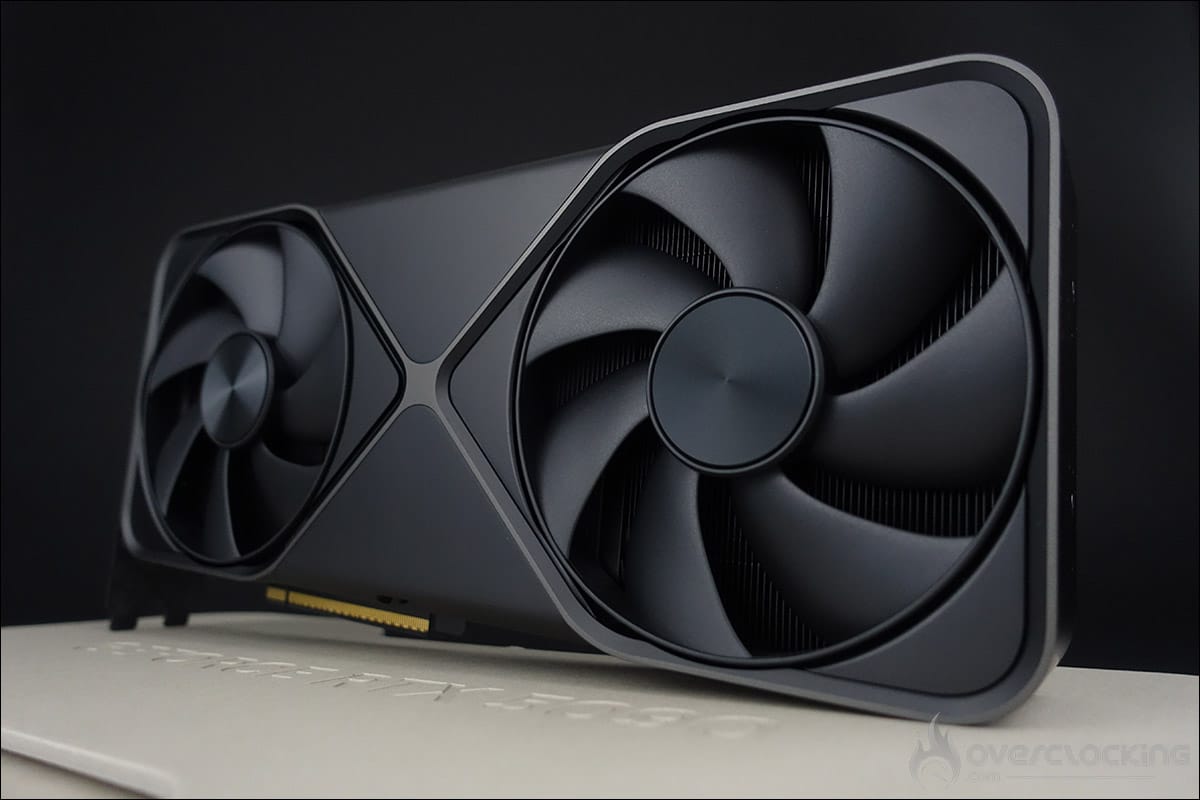
The card is 304 mm long, 137 mm high and 2 slots (40 mm) thick, making it SFF-Ready. This means it can be fitted into a case compatible with the Small Form Factor for those who want to design a compact configuration.
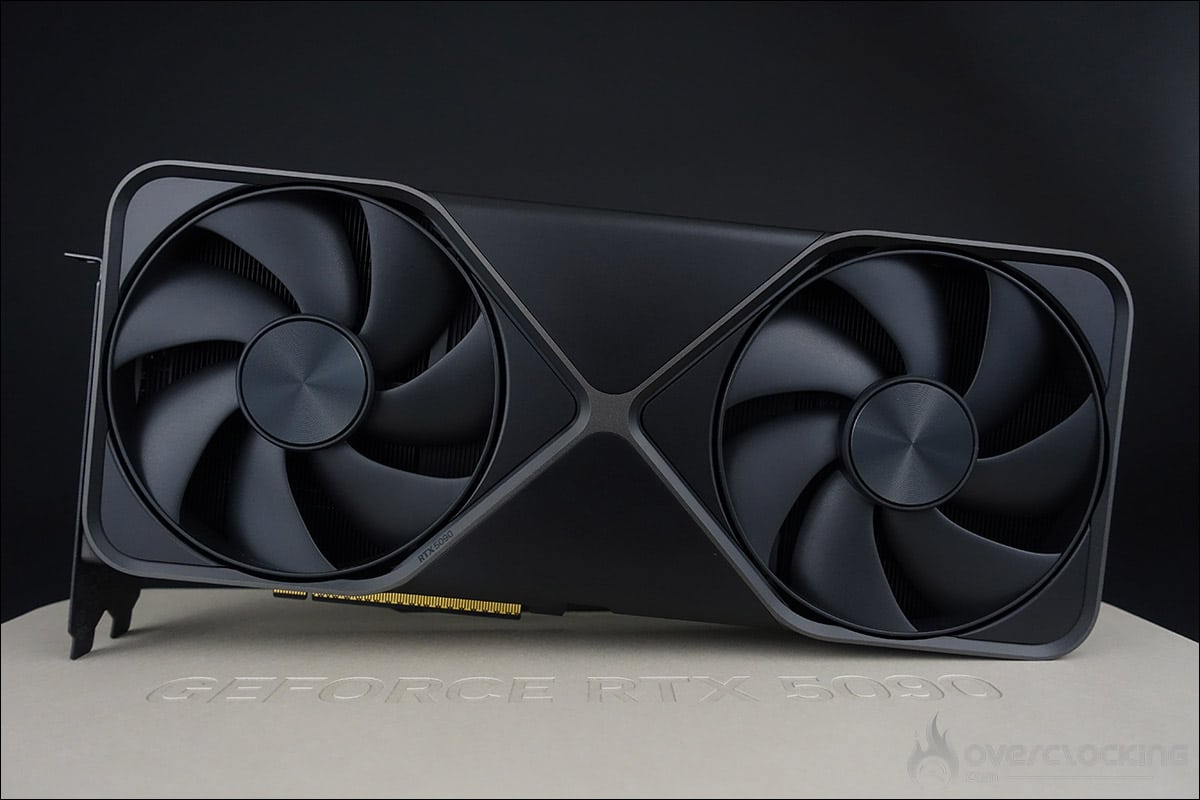
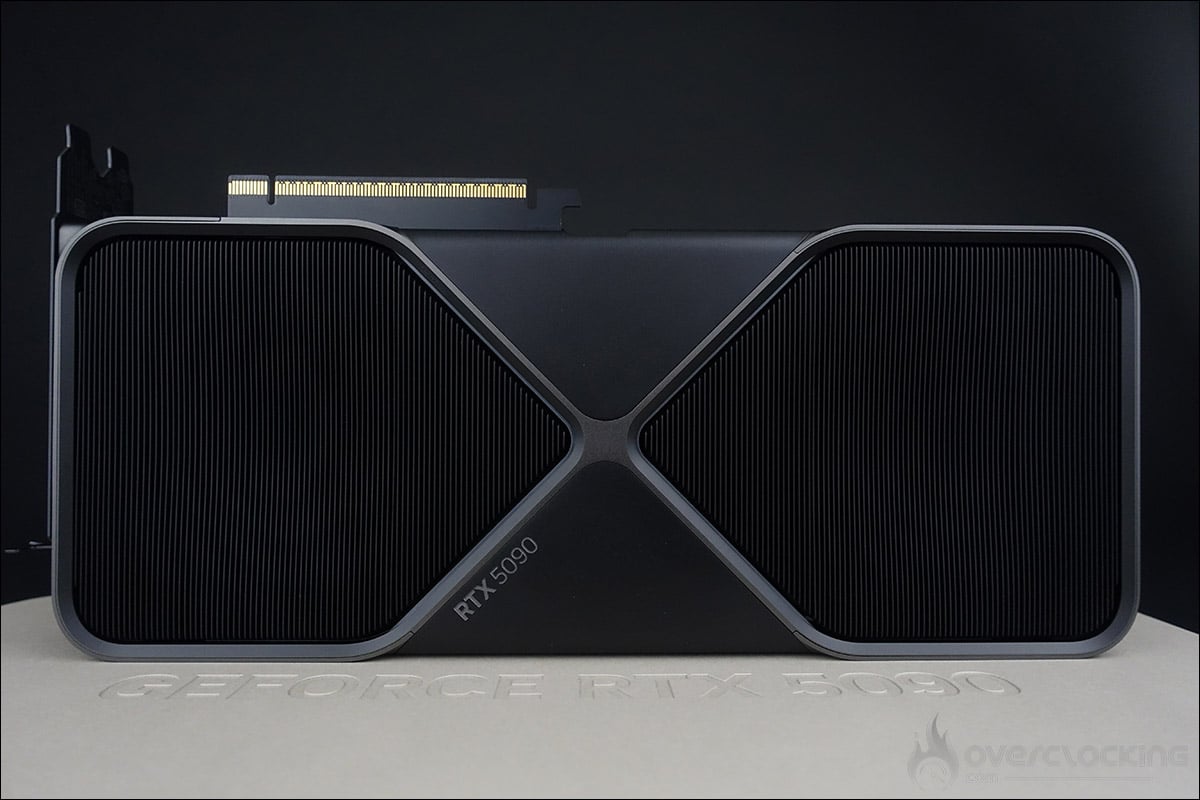
During the press presentation, NVIDIA went back over its new cooling system, which allows our NVIDIA RTX 5090 Founders Edition to be only two slots thick, while still being able to dissipate 575 watts, which is, let’s face it, a technical feat. Two 115 mm fans draw in cool air from the bottom of the case, which is then evacuated by fans at the top.
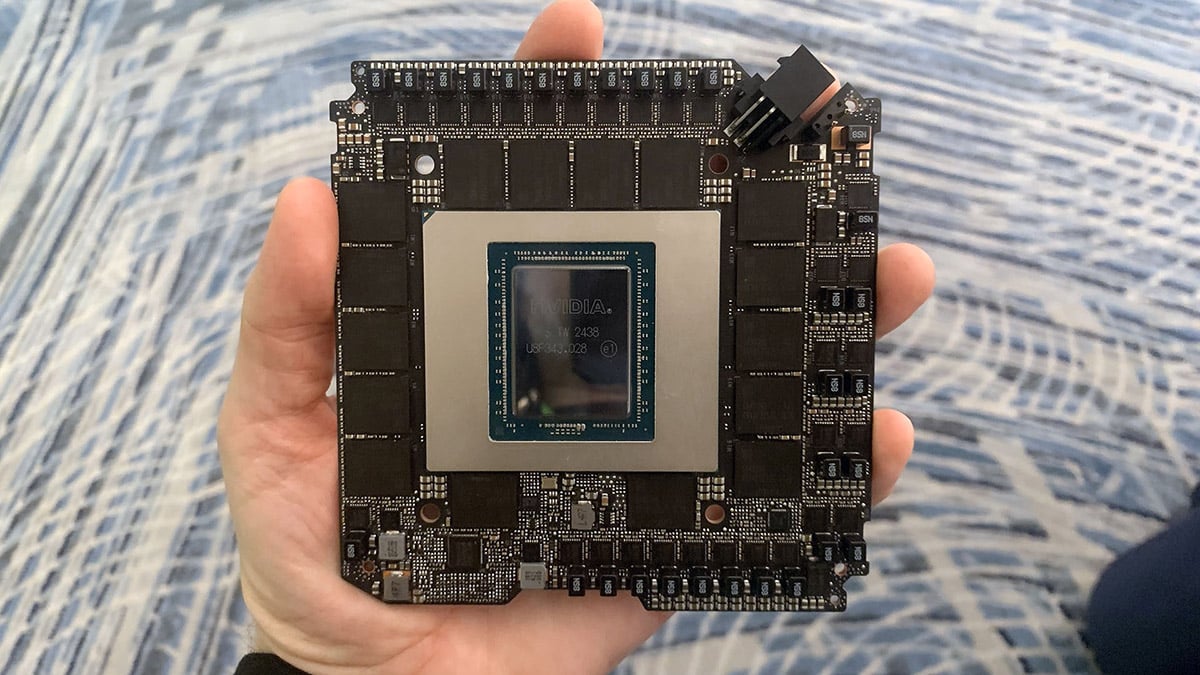
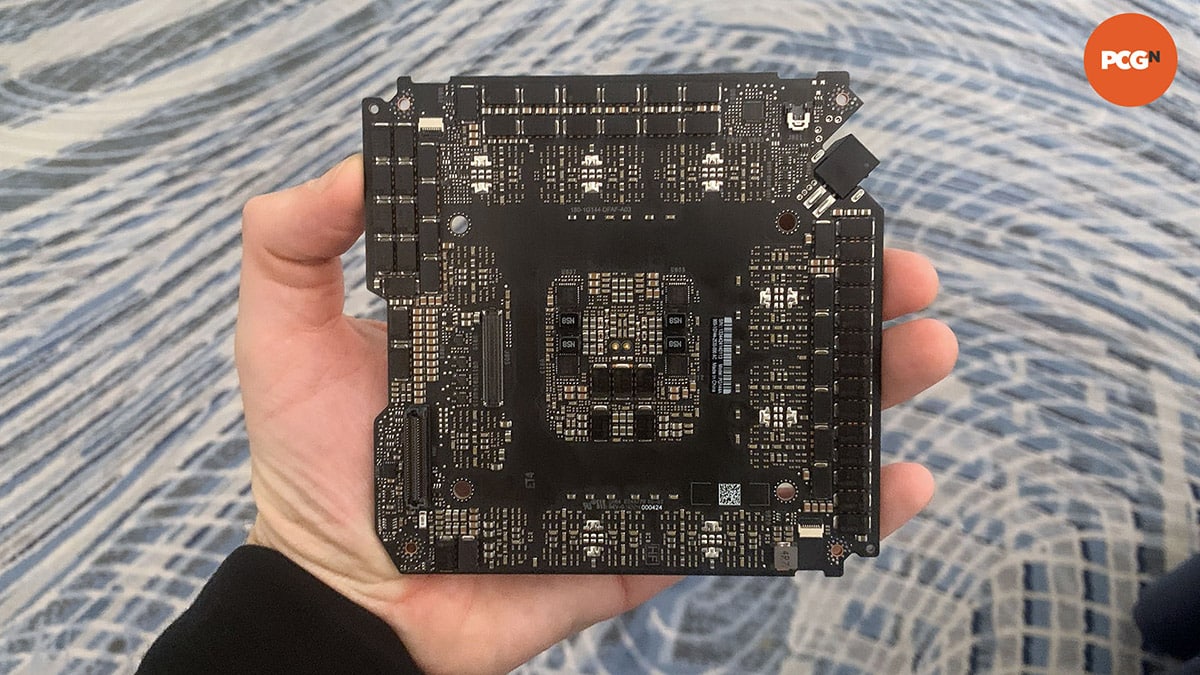
As we already hinted in this brief, the internal design is made up of three elements: the PCB with the graphics chip, memory chips and power stages, a PCB with the PCIe Gen5 connector and finally a PCB in charge of the video ports linked by a flexible cable to the central PCB. Our PCGamesN colleagues had the opportunity to see this PCB for themselves.
NVIDIA also took the opportunity to go back over the first generations of Founders Edition boards to show how the cooling system has evolved. And so we come to our RTX 5090 Founders Edition, which benefits from what we call dual-flow cooling. The two fans blow air directly through the radiator.
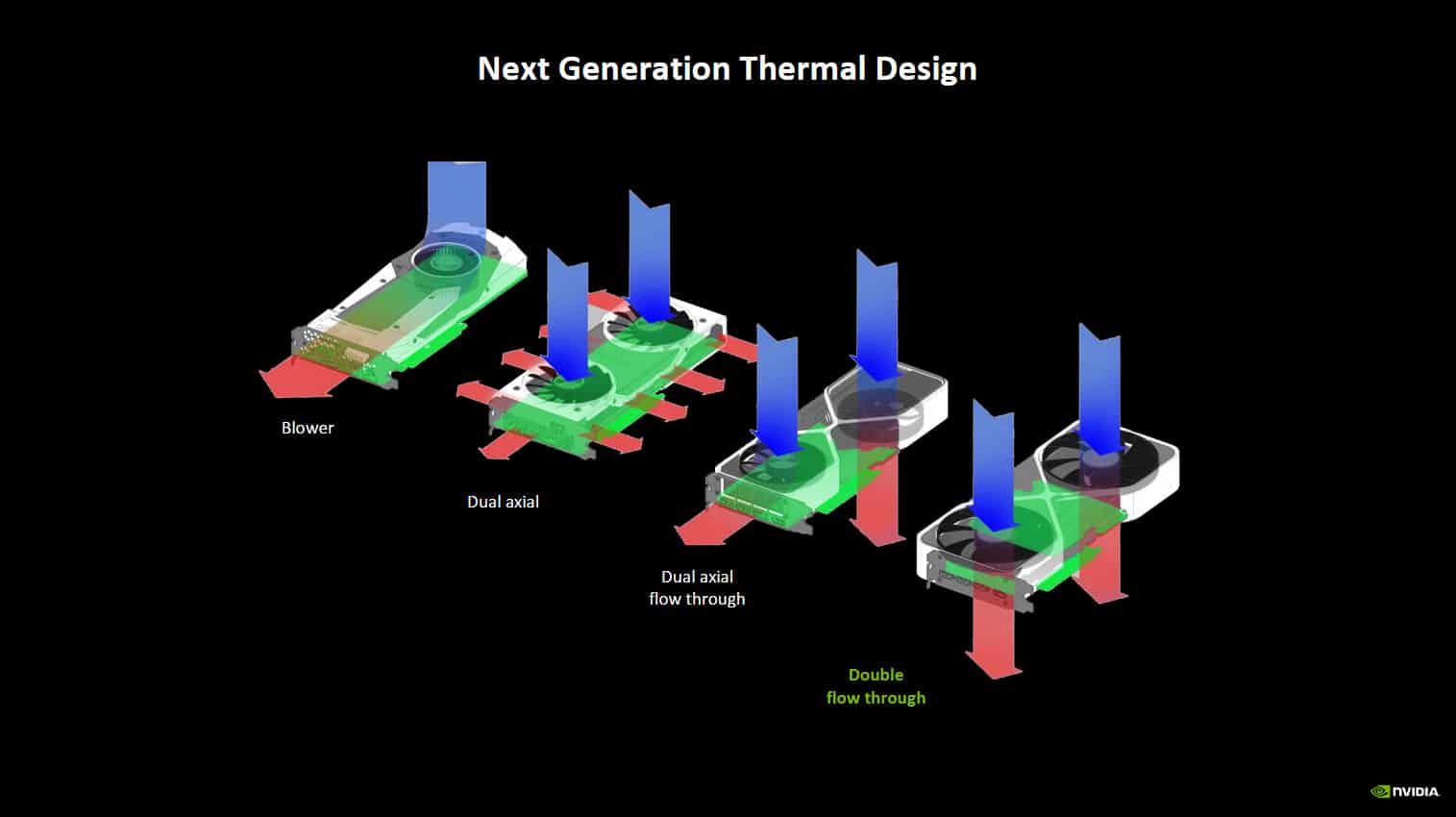
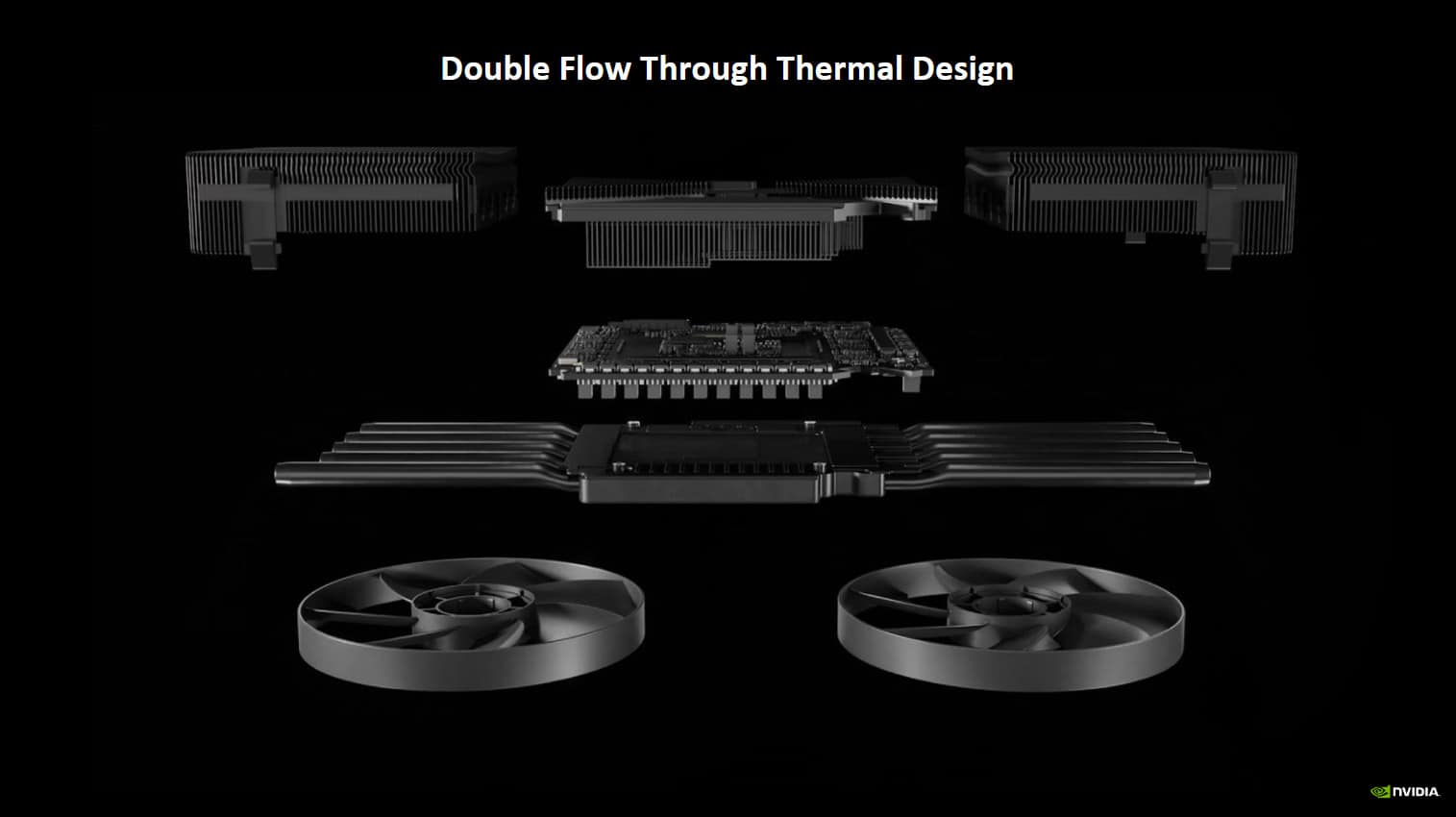
What’s important to understand is that the two fans blow air through the radiator, which is crossed by the heat pipes, which are inserted into the vapor chamber responsible for dissipating heat from the central PCB components. You can’t see it in our photos, but as der8auer noticed, the radiator fins are gradually curved to optimize airflow. This new cooling system has been completely redesigned and must have required many hours of testing.
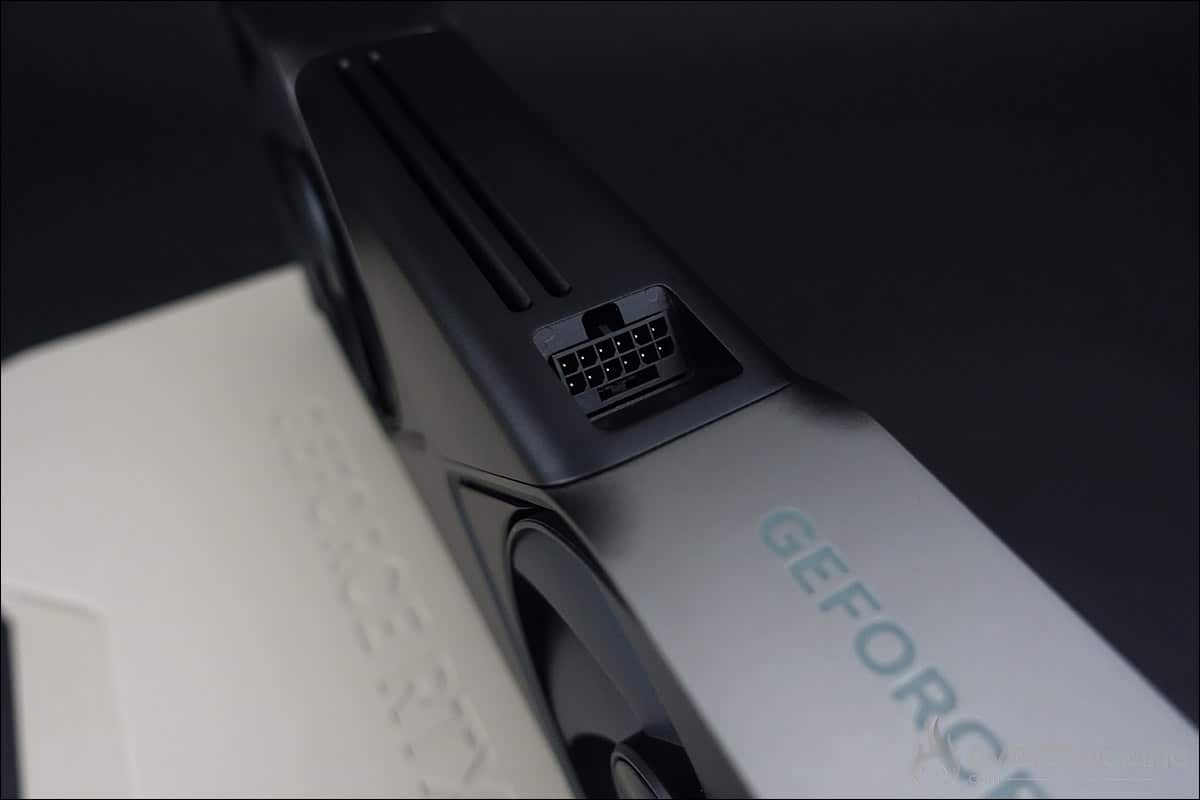
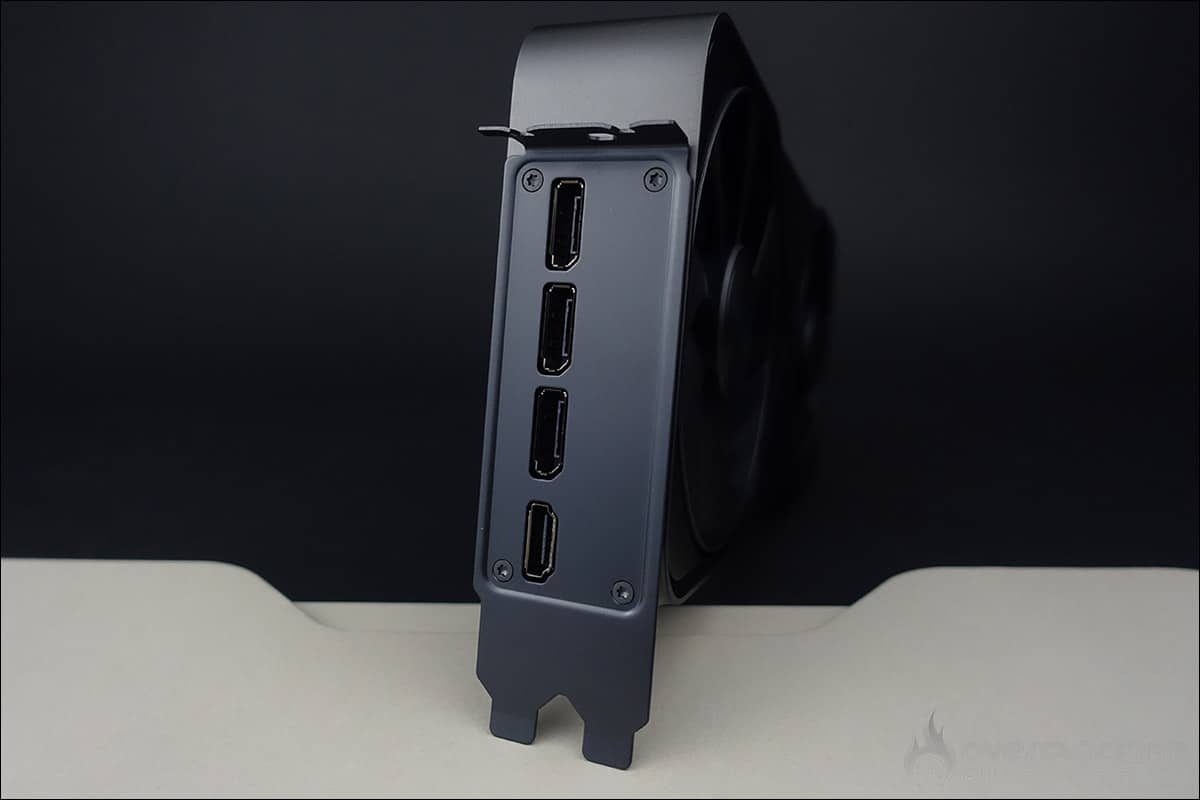
Finally, to power the card, there’s a single 12V-2×6 connector, but you can use the 4 x PCIe 8-pin adapter supplied in the bundle by NVIDIA. Note that its position has changed compared to the previous generation. Aesthetically, it will be more difficult to conceal the power cable. On the video front, you’ll find three DisplayPort 2.1b with UHBR20 and one HDMI 2.1b. NVIDIA has even gone so far as to offer a matte gray bracket, rather than a metallic one.
[nextpage title=”Full of new technologies:”]
DLSS4: what’s new?
With the announcement of its new range of graphics cards, the GeForce RTX 5090, RTX 5080, RTX 5070 Ti and RTX 5070, it was also an opportunity for the greens to announce the arrival of DLSS 4, the fourth generation of Deep Learning Super Sampling combined with Multi Frame Generation (MFG). As a reminder, the Blackwell architecture features new 5th-generation Tensor Cores and 4th-generation Ray Tracing Cores. It is these hardware innovations from Blackwell and DLSS that will enable MFG, which would have been technically impossible on the previous generation ADA Lovelace.
According to NVIDIA, Multi Frame Generation can deliver up to 8 times better performance in games like Cyberpunk 2077, compared with raw image rendering. Up to 15 of the 16 pixels per frame are generated by AI. The 240 FPS mark can thus be reached in 4K ray tracing, and path tracing can also be used in compatible games.

So, what does this new generation bring to the table? The main difference lies in Frame Generation. Where with the RTX 4000 series, DLSS 3 was able to insert an additional frame between two native frames, DLSS 4 will be able to insert up to three, hence the addition of the term Multi FG. You’ll have the choice of generating a single image (x2) for the RTX 40 and RTX 50 series, two images (x3) for the RTX 50 series or three images (x4) for the RTX 50 series.


It’s the AI that will generate up to three images, resulting in increased FPS, smoother gameplay and reduced memory consumption thanks to RTX Neural Shaders that can be used to compress textures. This new AI model is 40% faster, uses 30% less VRAM and only needs to run once per rendered image to generate multiple frames. The only downside is that these AI-generated images will add latency to the creation process, but NVIDIA will be introducing Reflex 2, which we’ll come back to later in this article.
One thing is certain: NVIDIA is reaping the benefits of having jumped on the AI bandwagon very quickly, and is now benefiting from its many years of research in the face of the competition. It’s important to realize that it’s no longer possible to increase raw performance by 25-30% with each generation of graphics cards – it’s the same problem faced by processors, for example. This is why NVIDIA has chosen to integrate AI into its cards in order to offer upscaling.

DLSS 4 is only compatible with this new generation of RTX 5000s, but the other accompanying technologies will have a positive impact on previous generations. The RTX 5000 and 4000 will also benefit from the improved Frame Generation, with gains of 5 to 10% according to NVIDIA, and lower memory consumption.
As soon as the RTX 5000s arrive, i.e. at the end of January, on the 30th to be precise, 75 games and applications will be compatible with DLSS 4 at launch, including Alan Wake 2, Cyberpunk 2077, Indiana Jones and the Great Circle, and Star Wars Outlaws.
The new “Transformer”:
DLSS 4 features an updated architecture for DLSS Ray Reconstruction, DLSS Super Resolution and DLAA. Previously, DLSS used convolutional neural networks (CNNs) to generate new pixels, which now becomes the new Transformer. This should offer greater stability, less ghosting, more detail on moving objects and smoother edges.

This could translate into the possibility of using a Performance mode for DLSS, which would no longer be visually average, but could approach the Balanced/Quality mode on the previous-generation CNN model. Of course, this will have to be tested and compared in terms of image quality between the RTX 4000 and RTX 5000. It will also be relevant to compare the different DLSS modes in terms of image quality.


The new Transformer will offer improved image quality in Ray Reconstruction, as seen, for example, in the image on the left, in Alan Wake 2 with the chain-link fence. The image on the right shows the improved detail between the CNN model and this new generation.
Reflex 2 technology:
As we said earlier, Multi Frame Generation will enable you to increase the number of FPS, but will add latency due to the creation process. NVIDIA will therefore be offering its version 2 for Reflex, which we have already had the opportunity to present to you here. These few milliseconds will make a real difference, especially in competitive games.


NVIDIA Reflex 2 will combine Reflex Low Latency mode with Frame Warp technology, and will be compatible with all RTX models. The idea, of course, is to reduce latency, i.e. the time that elapses between the moment you click your mouse button and its manifestation on the screen, by displaying a predictive image that is as close as possible to reality. Reflex 2 will be available in the coming weeks.
Override DLSS or the replacement for DLSS:
NVIDIA’s latest application, NVIDIA App, will enable games that have not yet been updated to the latest DLSS models and features to enable support via DLSS override. The version of the app we’ll be testing is a press version, and the DLSS replacement options are available in the Graphics > Program Settings screen under Driver Settings.

We’ll of course be testing Override DLSS during our test of the NVIDIA RTX 5090 Founders Edition, to see how easy it is. We’ve taken a first look at these new technologies, even if we haven’t gone into detail about everything the new RTX 5090 has to offer: it features three 9th-generation encoders and a new 6th-generation decoder. The three encoders should logically accelerate rendering speed.
[nextpage title=”A little more patience:”]
Now that we’ve taken a look at all these new technologies, we’ll make up our own minds when we test this NVIDIA RTX 5090 Founders Edition. The promise is tantalizing, so see you in a few days’ time for our full test. We’ll also be sharing our impressions of the smoothness of gameplay, which was sometimes lacking with DLSS 3. NVIDIA recommends opting for a 4K display with the highest refresh rate, such as the new 240Hz 4K displays. For our part, we’ll be using our copy of the ROG Strix XG27UCS 160 hz.
It will also be important to judge the visual quality of the upscaling, which should improve even further with this new generation. And for fans of rasterization, we’ll of course be assessing the gain over the previous generation, even if, as we’ll explain in our article, things are changing and evolving.

Thanks to NVIDIA for making this Founders Edition copy of the RTX 5090 available. Please let us know in the comments what you think of this new addition to the green range.

