
[nextpage title=”Introduction:”] For some years now, we’ve been eyeing Seasonic power supplies, without even being able to test them, but recommending them on the basis of the often flattering feedback from members of our community. Now we’re finally on the testers’ side, with 3 models available. The model we’re testing today, the Prime TX-1300, is much appreciated by our German overclocker friends, so let’s see if it lives up to its reputation.
This Seasonic Prime TX-1300 is available, at the time of writing, at around 420-440€. The price positioning is clearly premium. The standard 1300 W and 1600 W versions are of little interest compared with the Noctua version at less than €500 in 1600 W.

We’d like to thank Seasonic for providing the sample for this test [nextpage title=”Unpacking and bundle”]
The Prime TX ATX 3.1 range:
Seasonic’s new Prime TX ATX 3.1 range is an update of the previous ATX 3.0 range. In fact, nothing has changed except the 12VHPWR connector, which has been upgraded to the 12V-2×6 standard. Power ratings remain the same at 1300W and 1600W for prices ranging from €442.99 to €494.99, with even a Noctua edition at €499.
Unpacking:
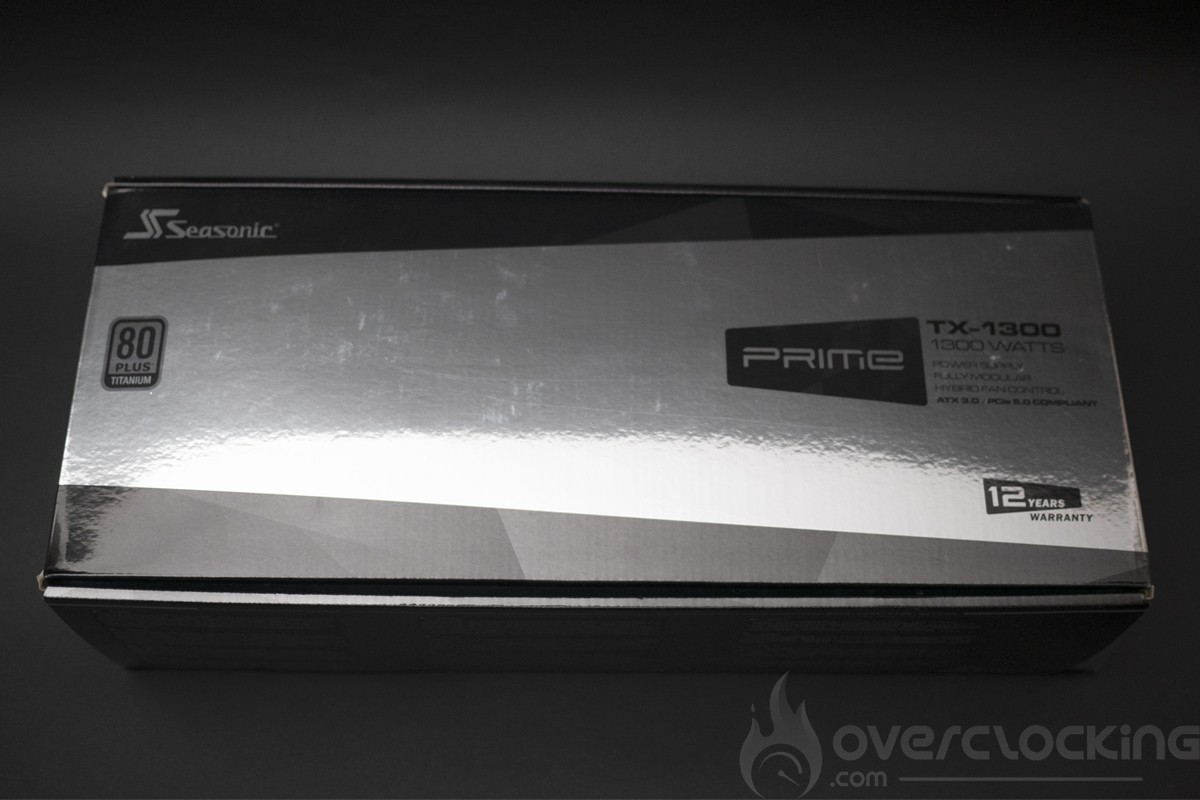
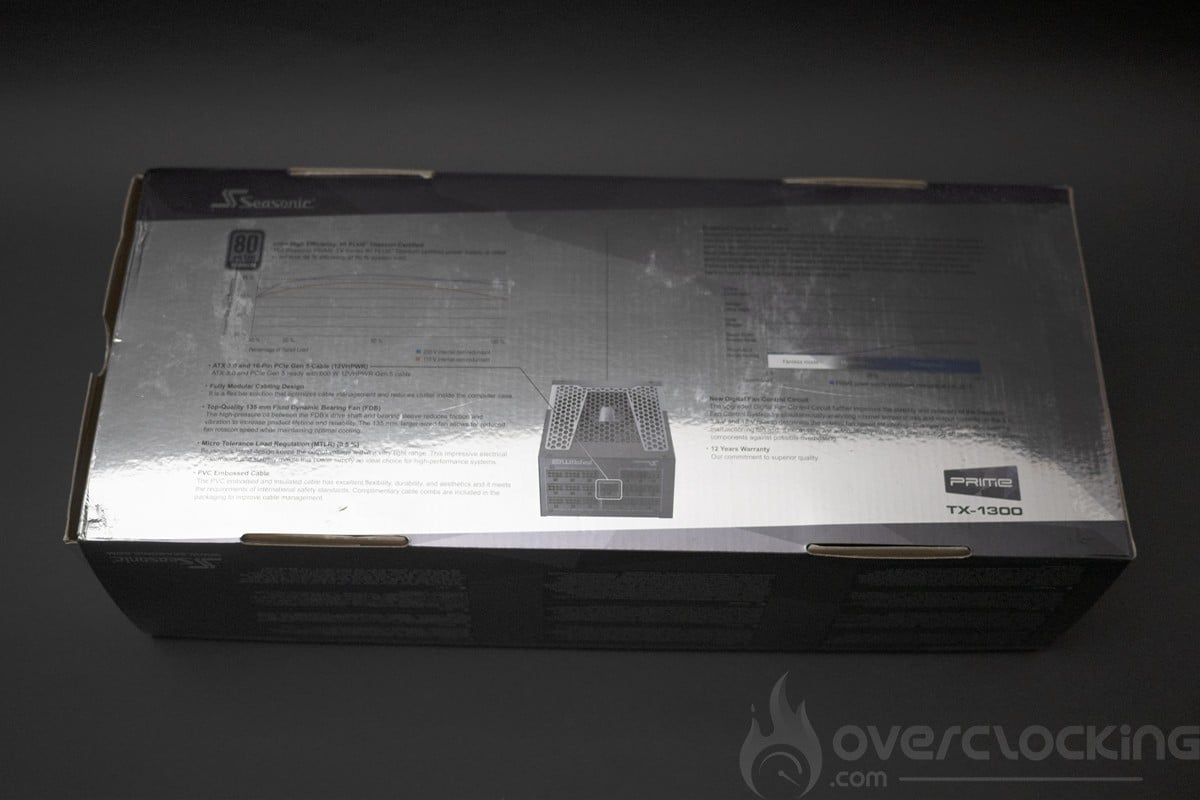
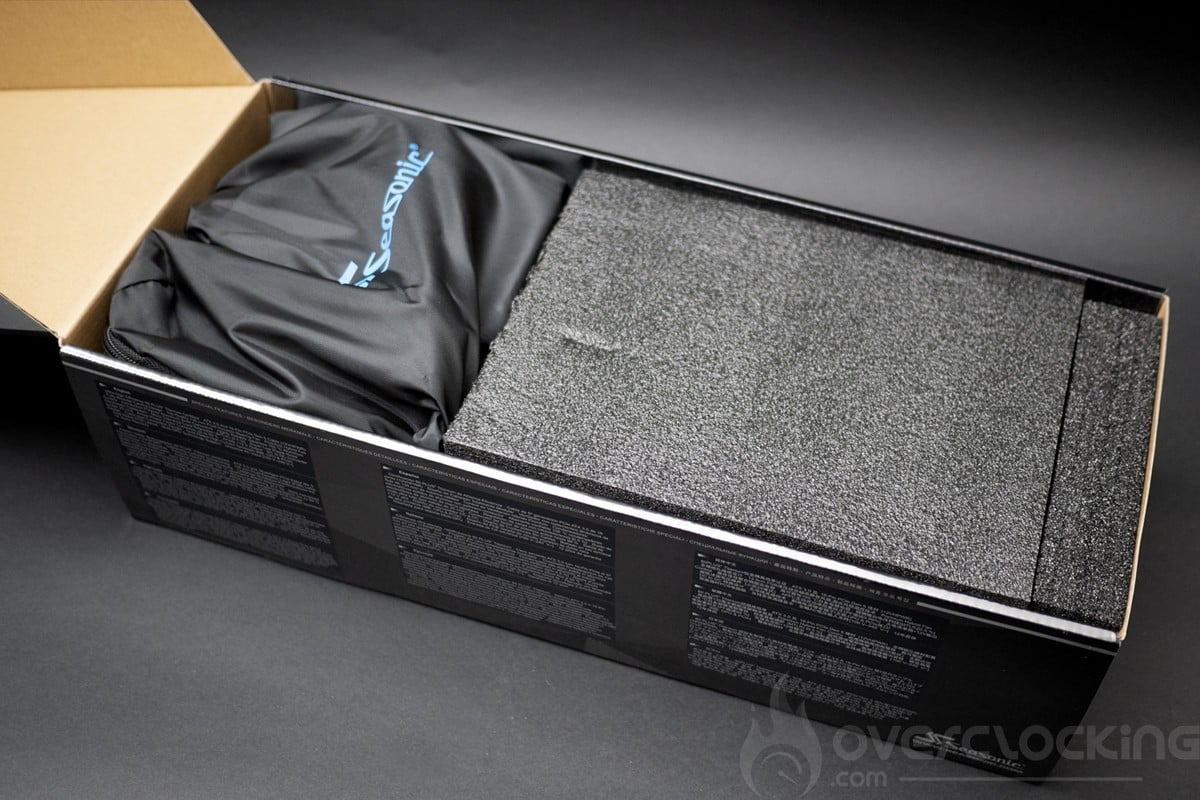
The packaging of this power supply is relatively simple and doesn’t seem to have changed since the first Prime range. My first Prime GX-850 power supply already used this packaging. On the back we have some information about the contents of the box and the model’s specifications.
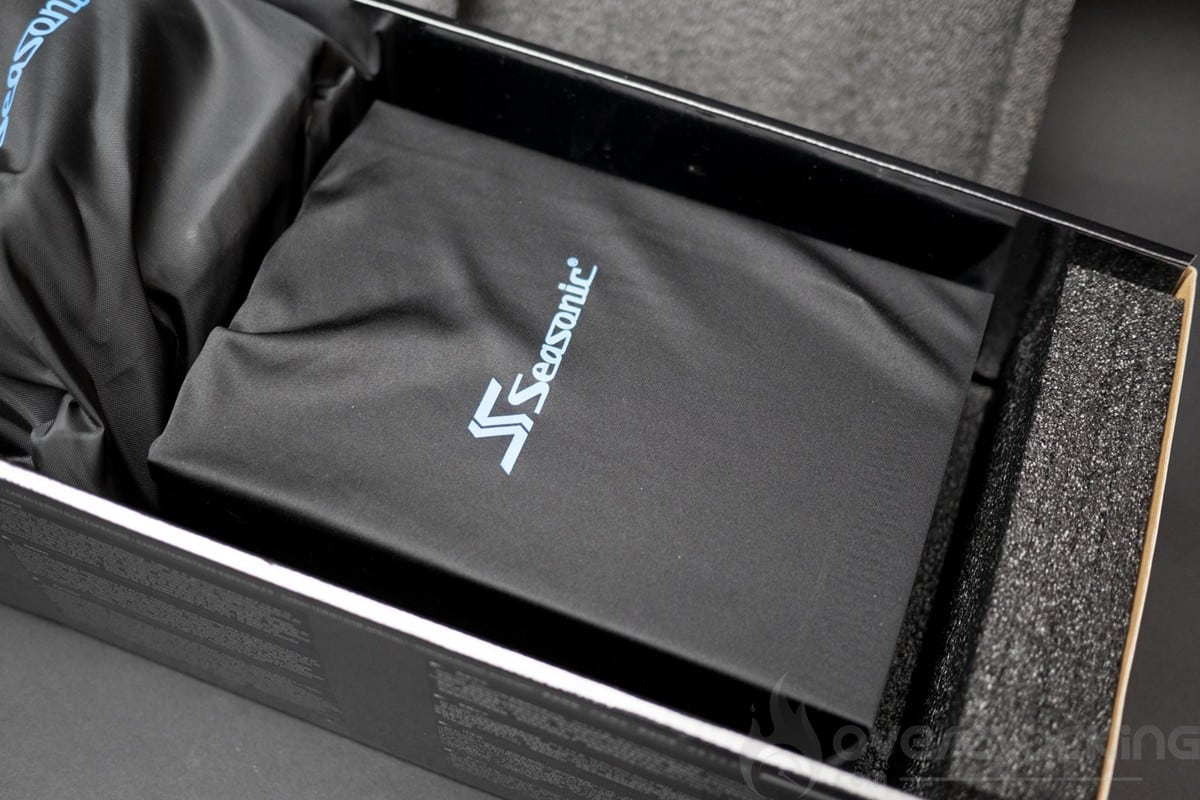
Inside, the power supply is on the right, wrapped in foam and encased in a black fabric cover. Cables and accessories are placed to the left of the power supply in a zipped fabric bag. No individual plastic packaging here.
As far as the warranty is concerned, we’re still talking about a 12-year guarantee, which is now the norm for high-end power supplies.
Cables and bundle :
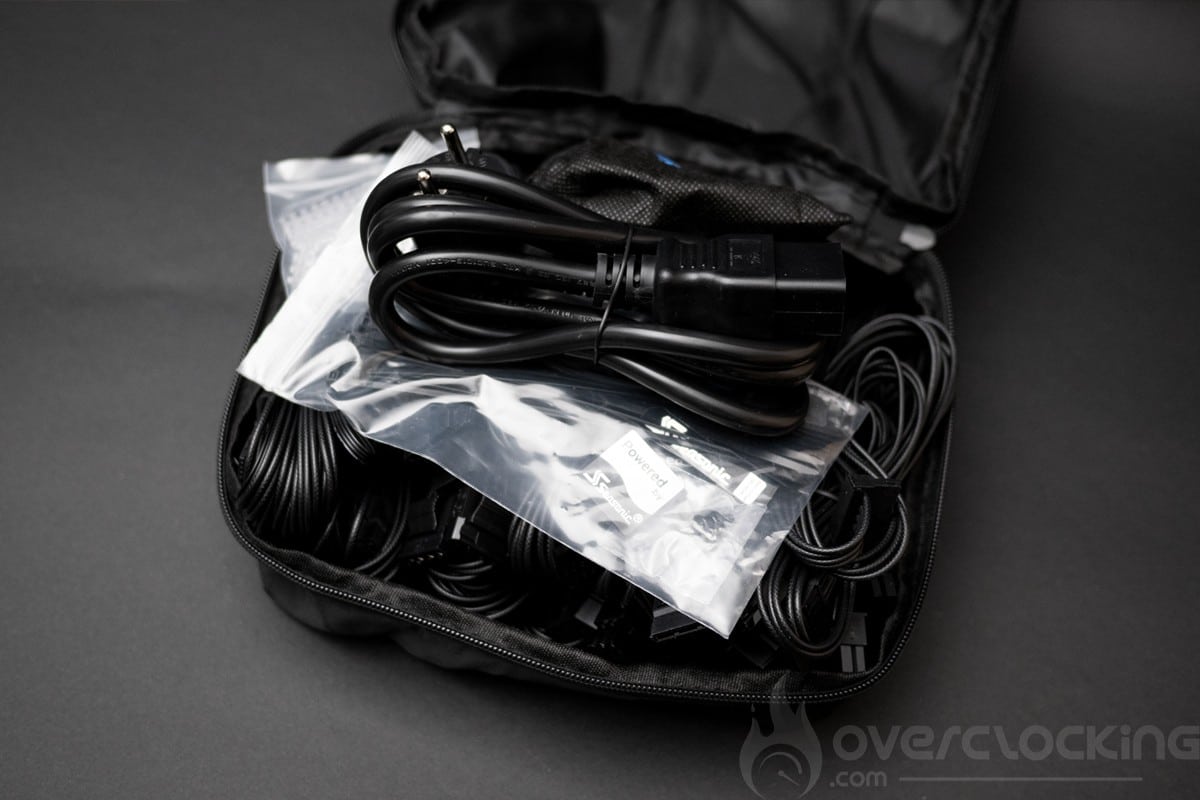
Seasonic offers the following accessories:
- Multi-language manual
- Four classic 6-32 screws for case mounting
- Five velcro cable ties
- Ten zip ties
- Power cable with C19 plug
- 4 Seasonic metal stickers
- Angled 24-pin ATX adapter including test function
- Cable management combs
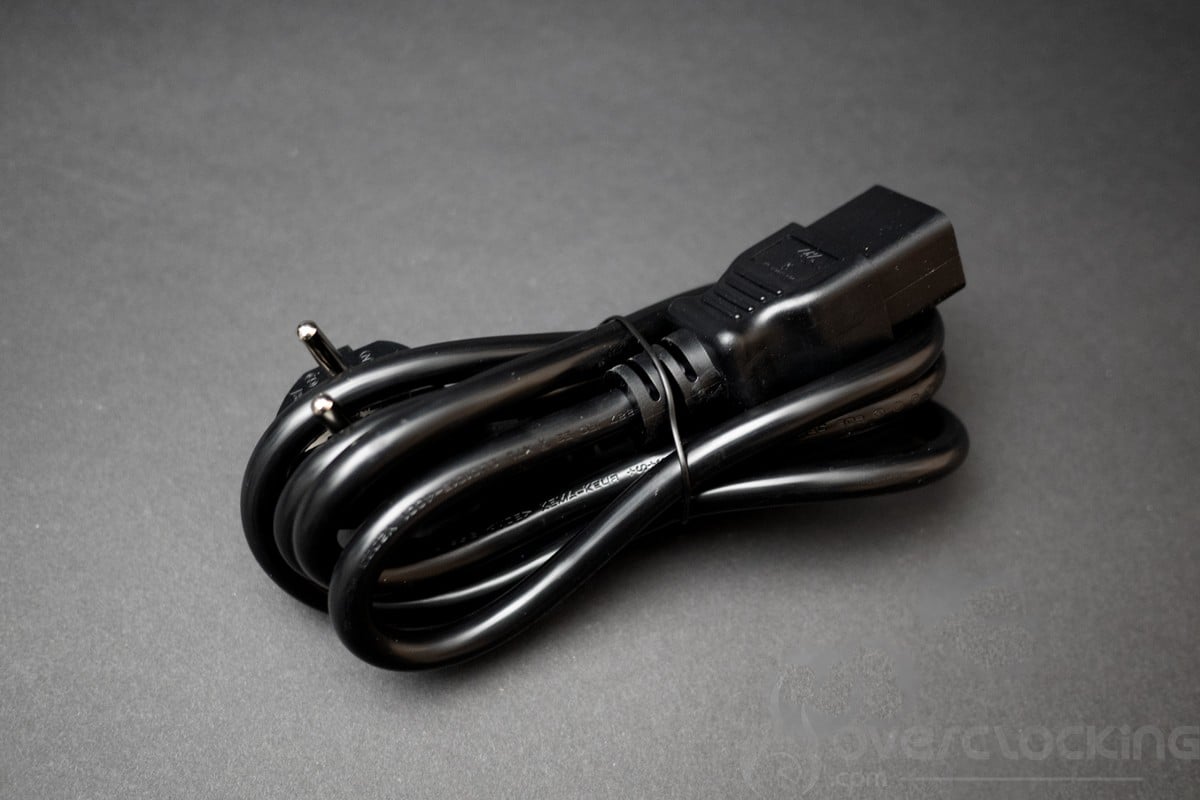
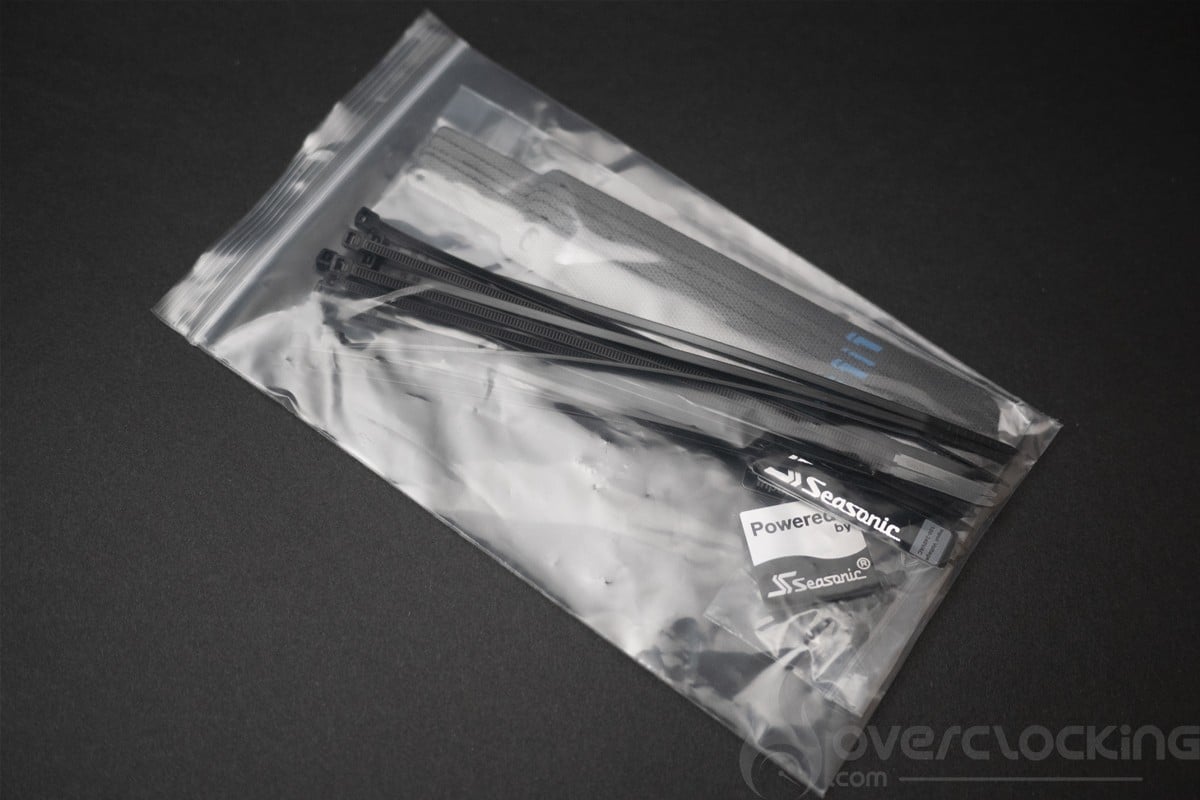
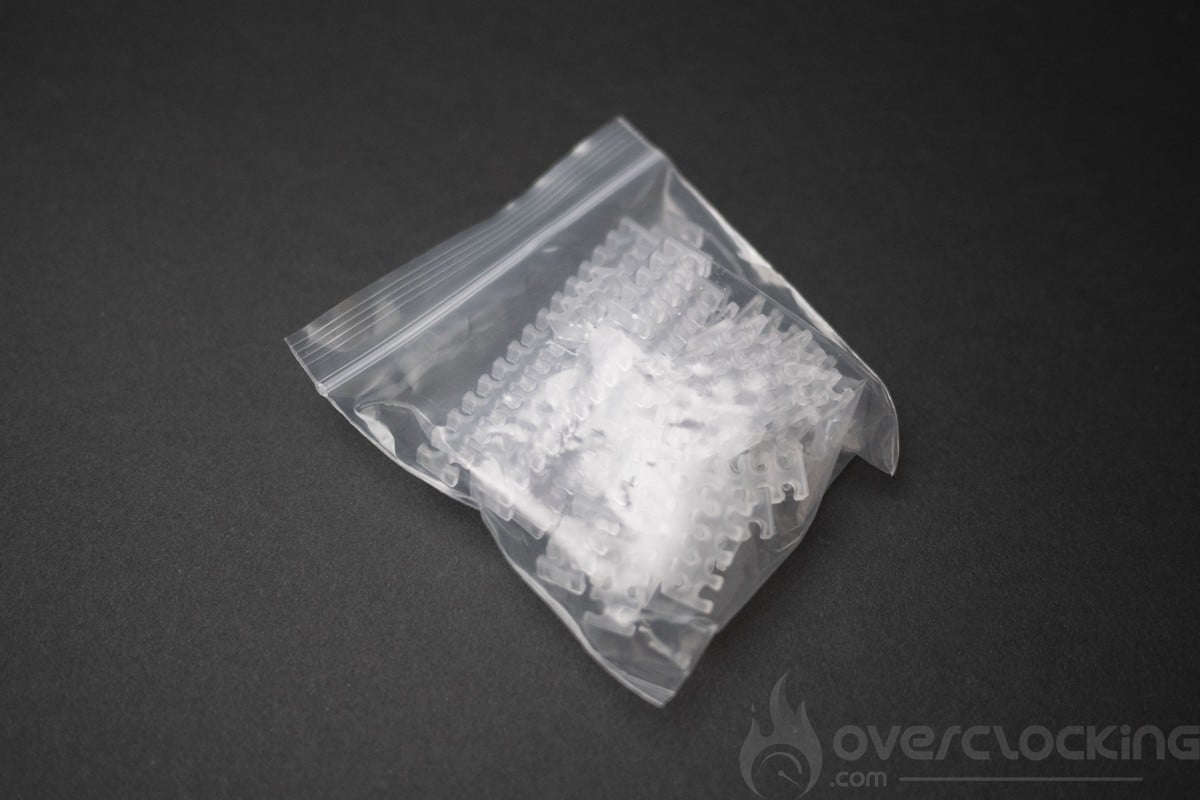
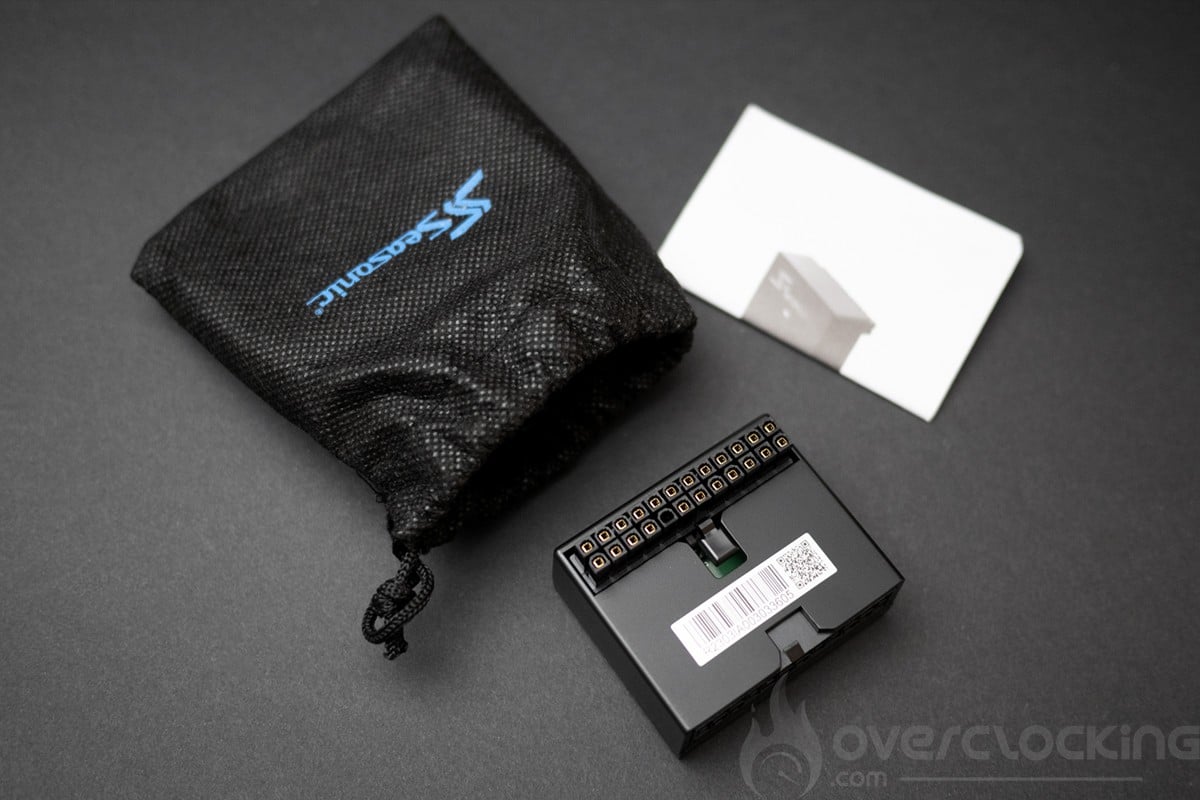
The little bonus of this bundle is the angled 24-pin ATX connector, which also allows you to test your power supply. This dual-purpose accessory is very useful for custom watercooling systems, when you need to power up the pump when filling without powering the entire configuration.
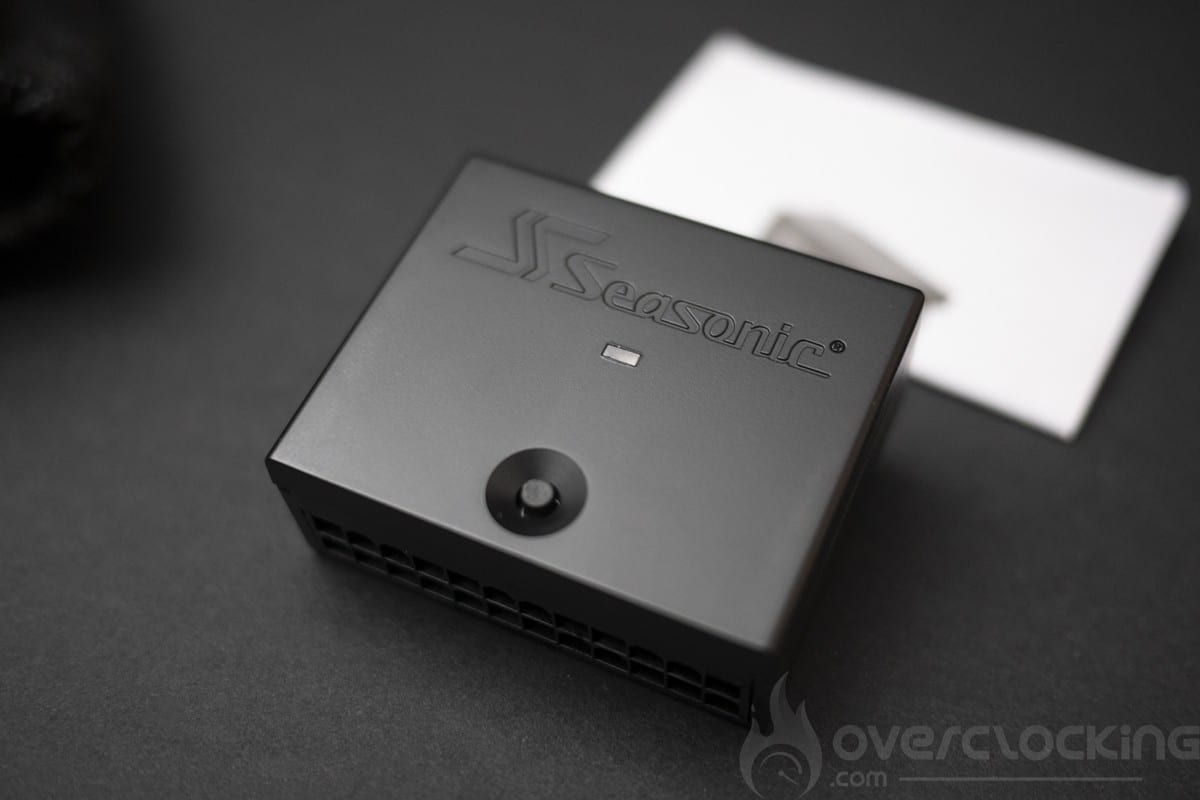
Let’s move on to the cables:
- 1x 610 mm ATX 24-pin connector (one cable)
- 3x 700 mm EPS12V 4+4-pin connectors (two cables)
- 6x 750 mm PCIe 6+2-pin connectors (6 single cables)
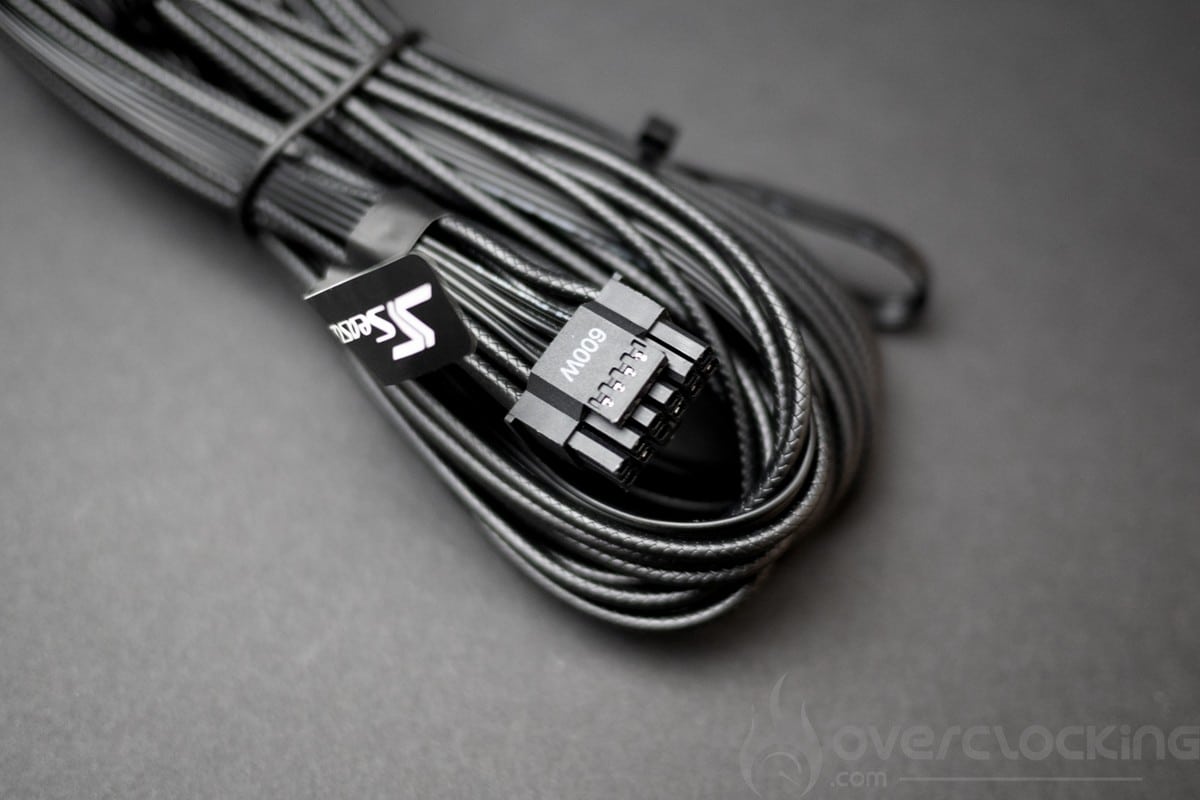
- 1x 700 mm PCIe 5.1 (12V-2×6) connector (one cable)
- 16x SATA connectors (on four cables)
- 2x SATA 3.3 V connectors (one cable)
- 3x Molex connectors (one cable)
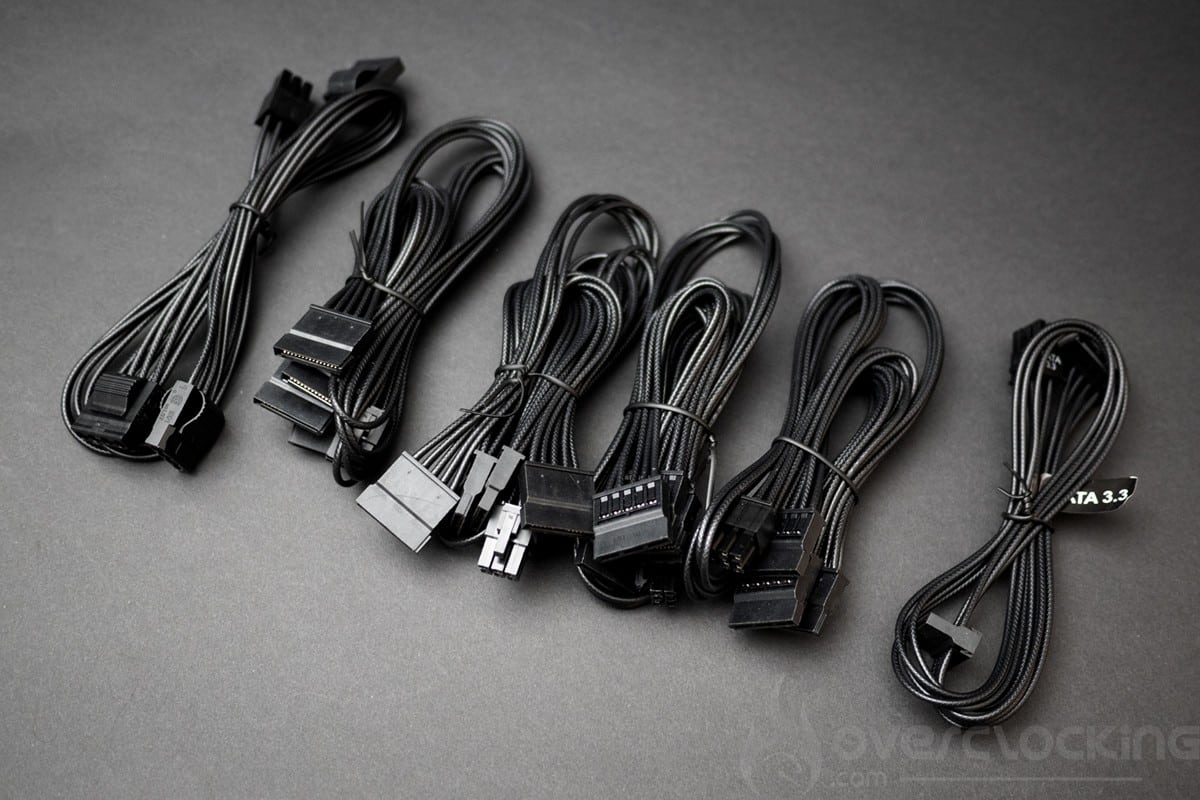
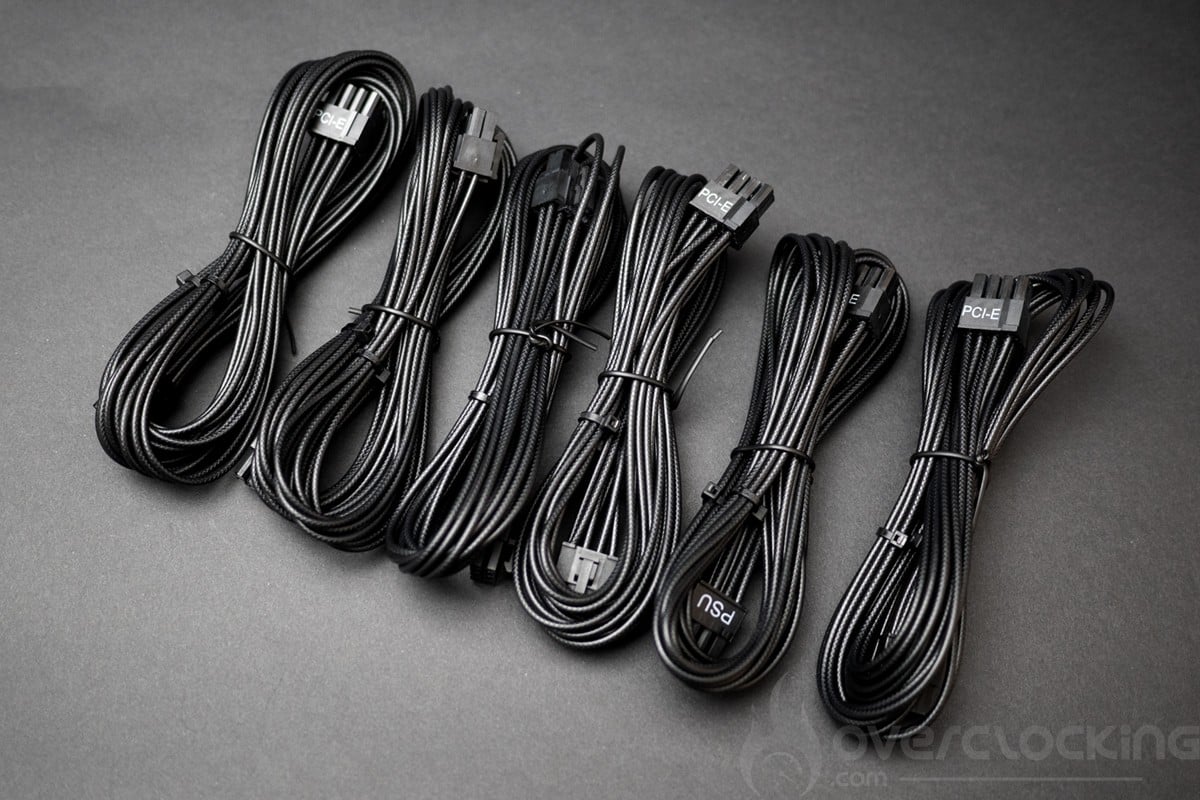
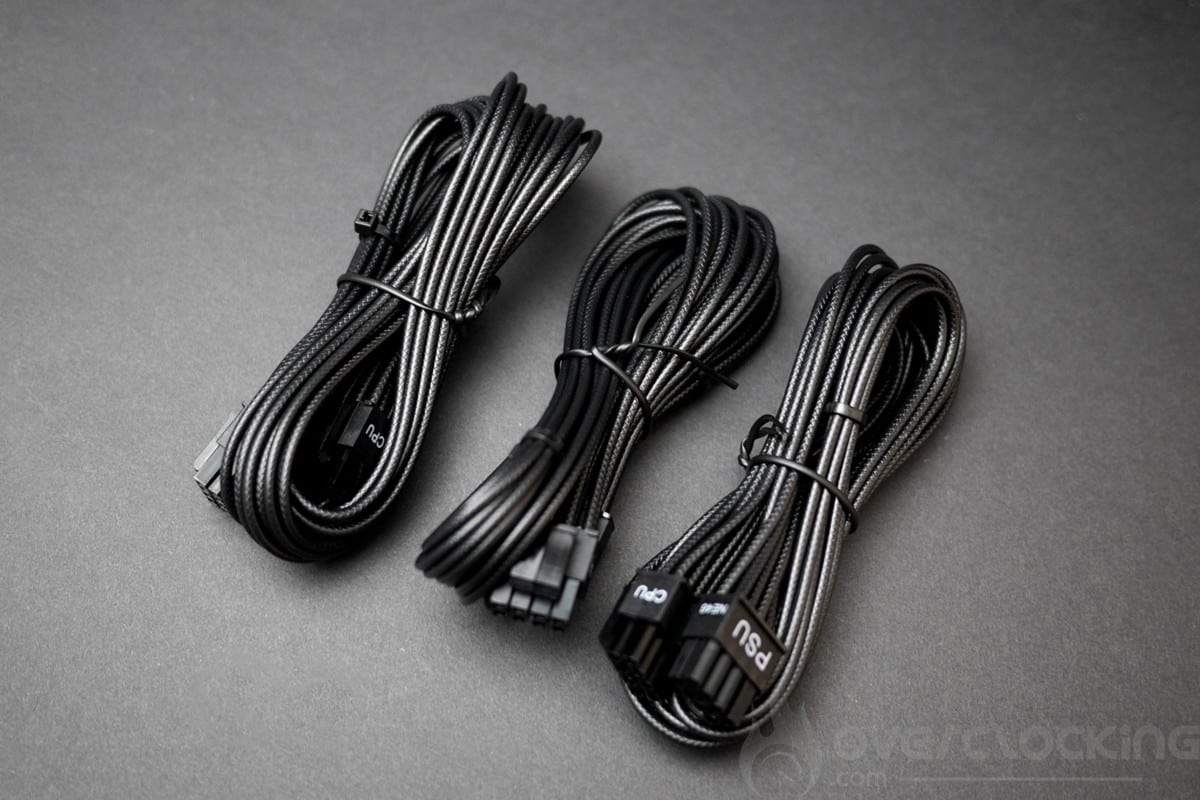
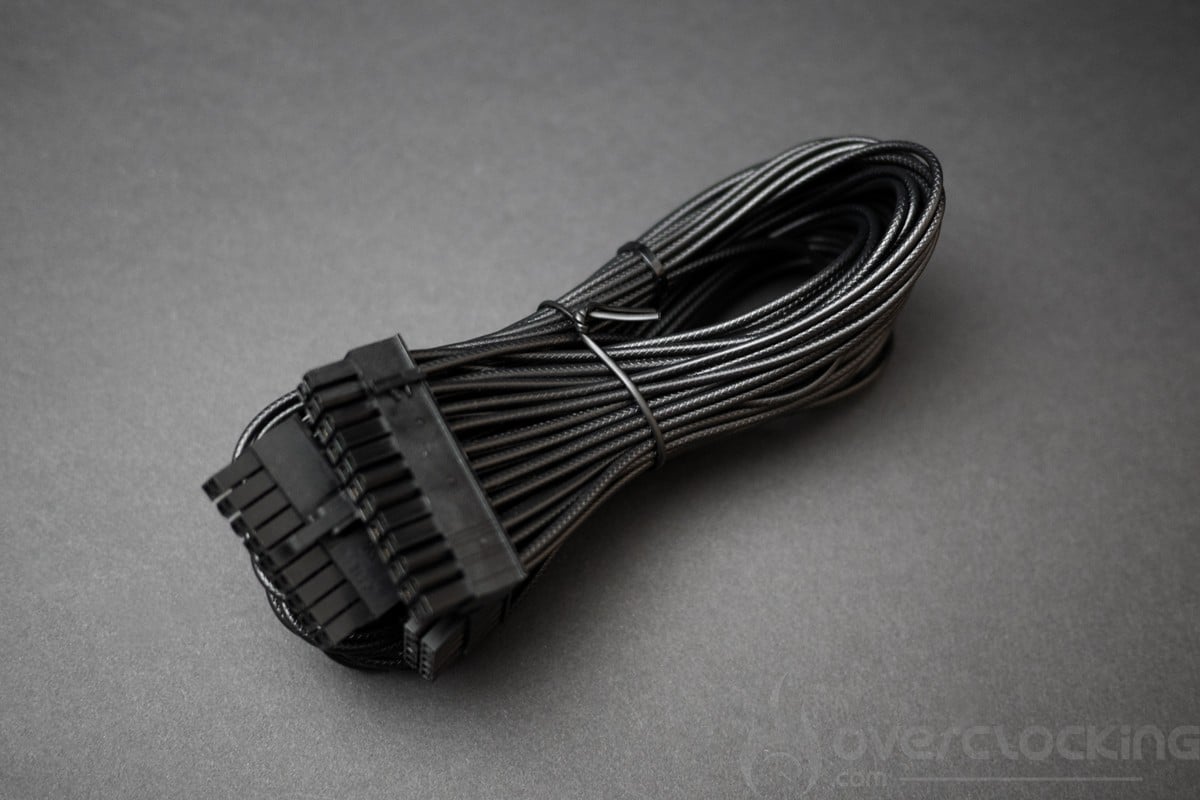
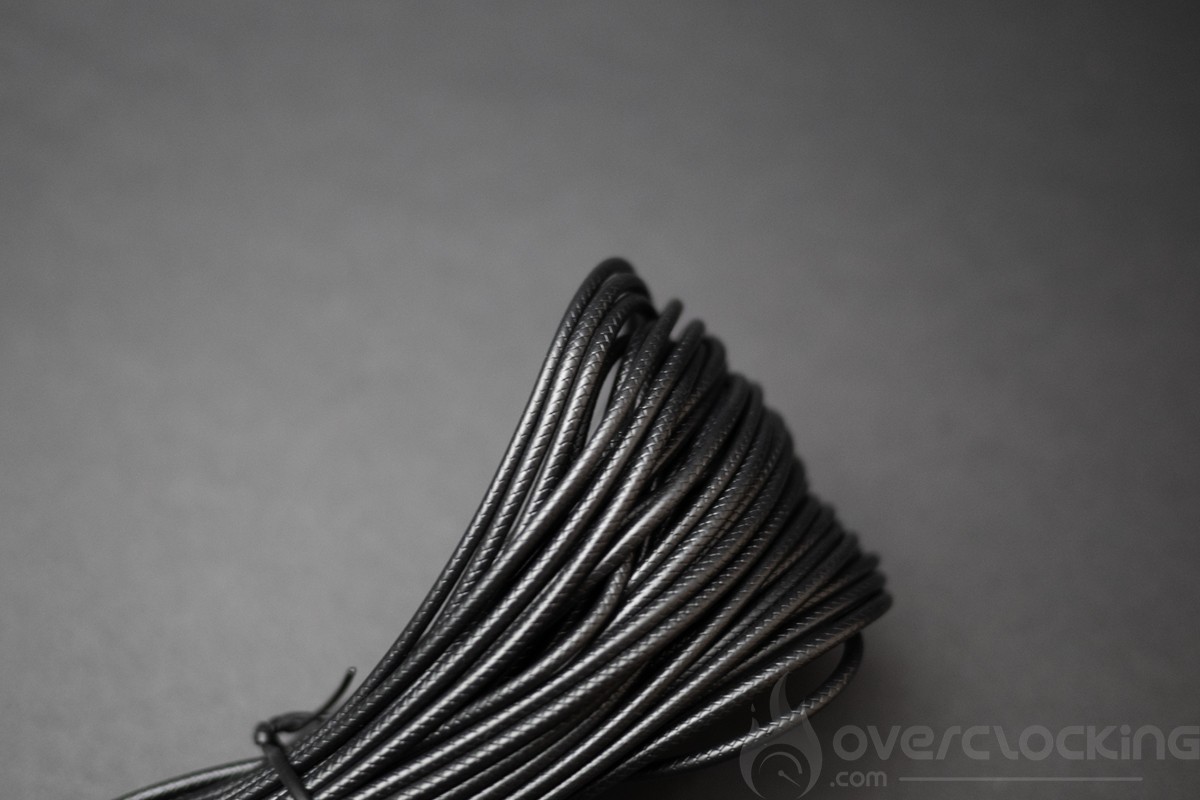
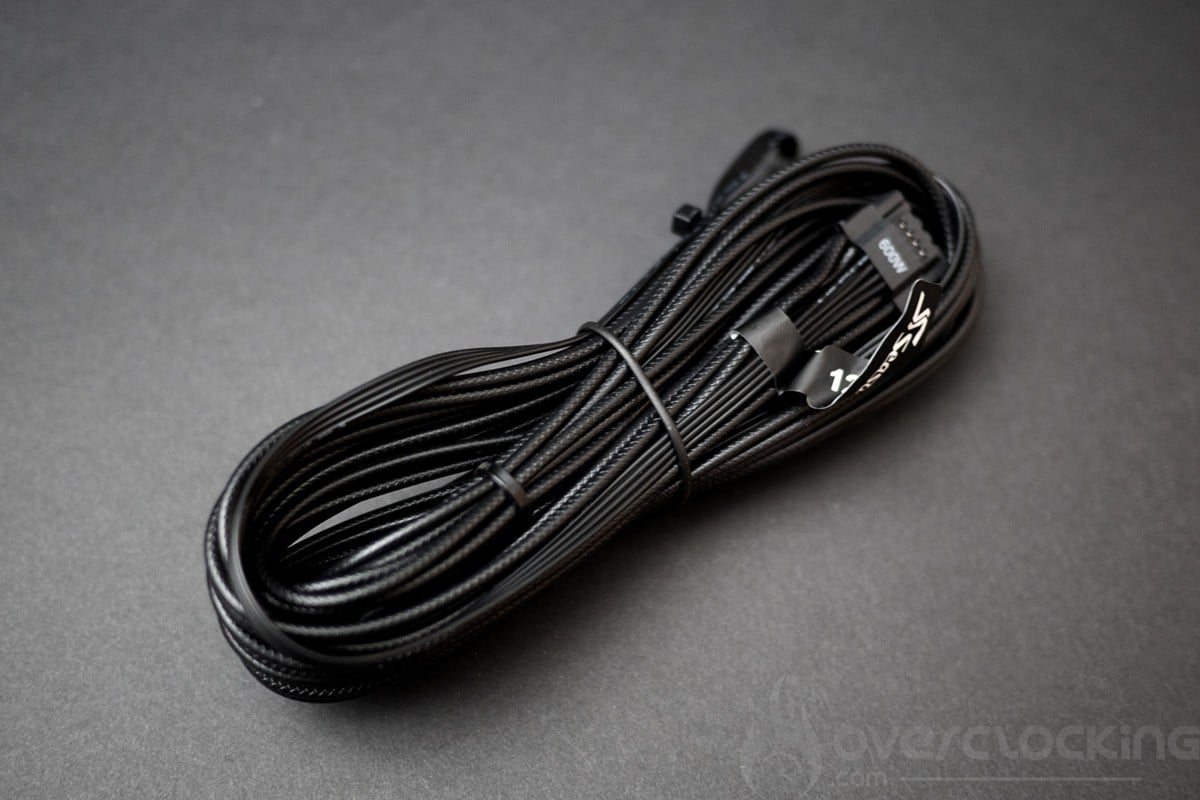
The cables are of good quality, with a sheath covering each wire. From a user’s point of view, they are quite flexible and will facilitate installation in cases with space at the rear.
It’s a shame that Seasonic hasn’t switched to two-tone connectors on the 12V-2×6 connector, as the competition has done. This would provide a visual indicator of the correct connection of this rather controversial connector.
[nextpage title=”The Seasonic Prime TX-1300″]
The Seasonic Prime TX-1300 in ATX model 3.1 2025
Let’s start with the dimensions of this Seasonic Prime TX-1300. Here we have a premium power supply with a certain footprint. These new 1300 W and 1600 W models are the same size. The width is 150 mm, the depth 210 mm and the height 86 mm. It should therefore fit comfortably into most modern ATX cases. The weight should also be taken into account: we’re talking about 3 kg on the scale.
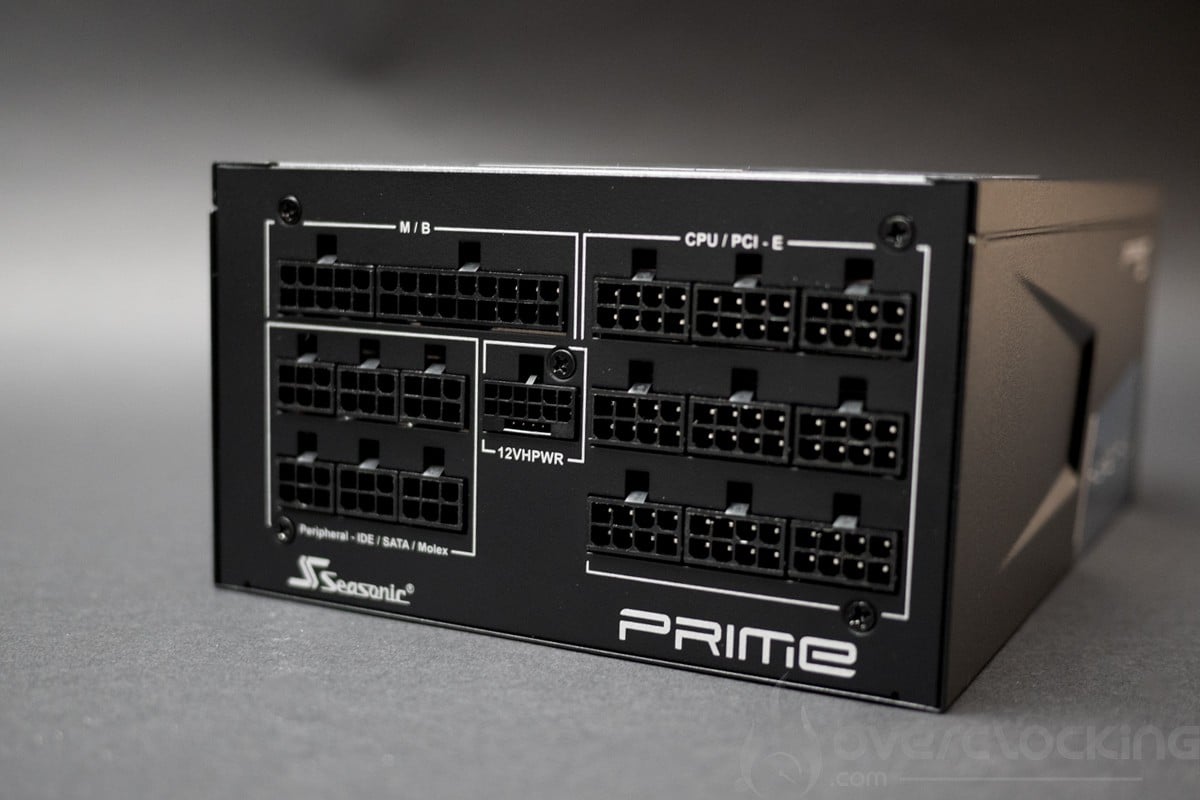
Let’s move on to the finish: we’re talking about a sheet-metal assembly with good-quality paintwork and touches of metallic grey on certain elements. A design that follows Seasonic’s Prime range from the outset. The top of the power supply features a stretched honeycomb grid with the range’s logo in the center. A metallic-grey section marks the range’s signature.
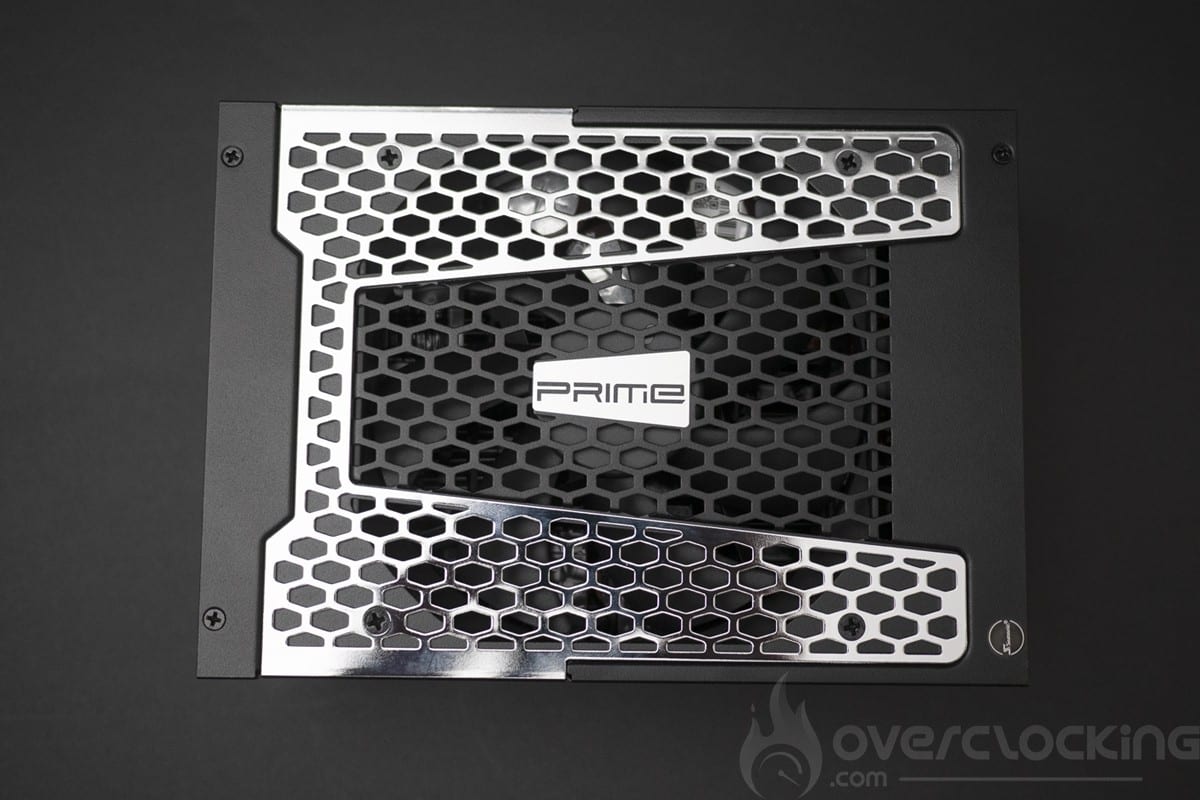
The design remains unchanged from that of the 2022 range. The fan is 135 mm with 11 blades. It is rarely activated, even with loads of over an hour between 500 and 700 W.
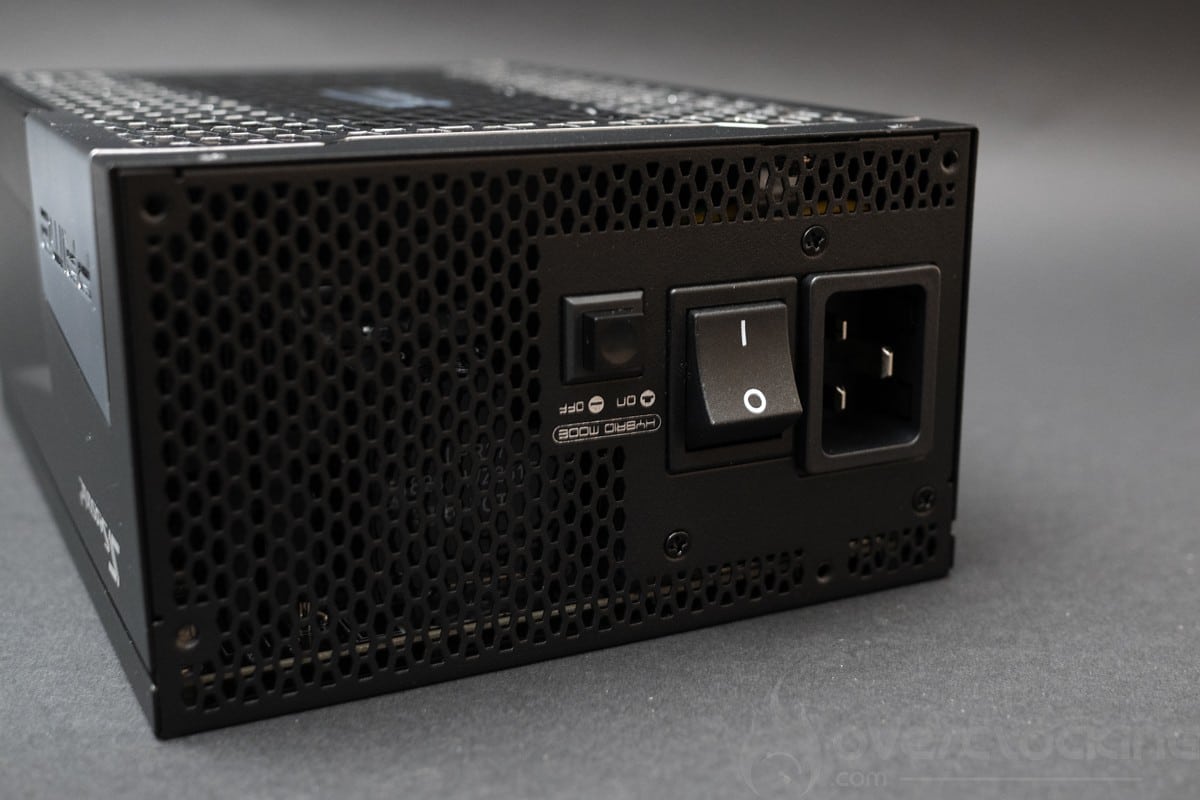
The front of the power supply remains classic. There’s the IEC C19 connector for connecting the power cord, a button for activating the fan’s hybrid mode, and a power switch. In terms of design, there’s nothing to suggest a high-end power supply, apart from the C19 connector.
A word on the electrical side:
As far as the electrics are concerned, this 1300W Prime TX-1300 features a single 12V rail. This rail is capable of delivering 1300 W at 108 A. The internal design is of the highest quality, based on reliable, tried-and-tested components. We can’t wait to put this model through its paces on the test bench and in overclocking sessions.
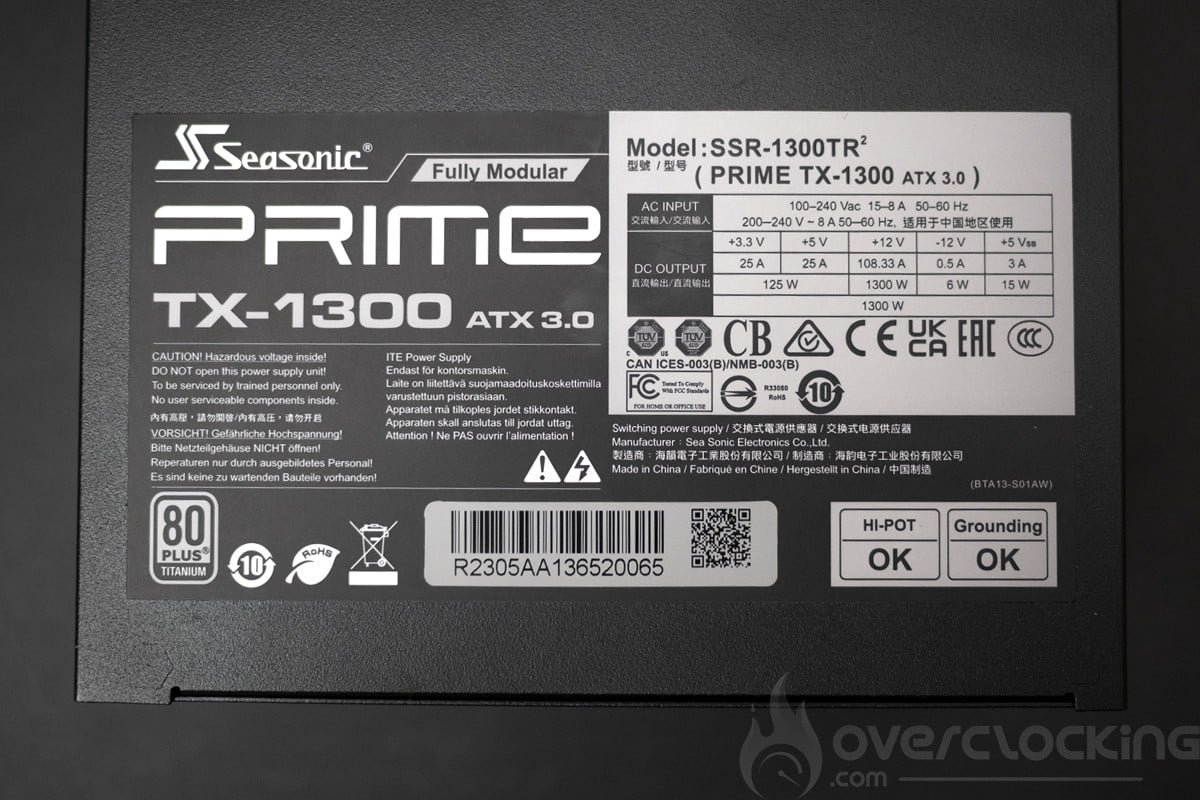
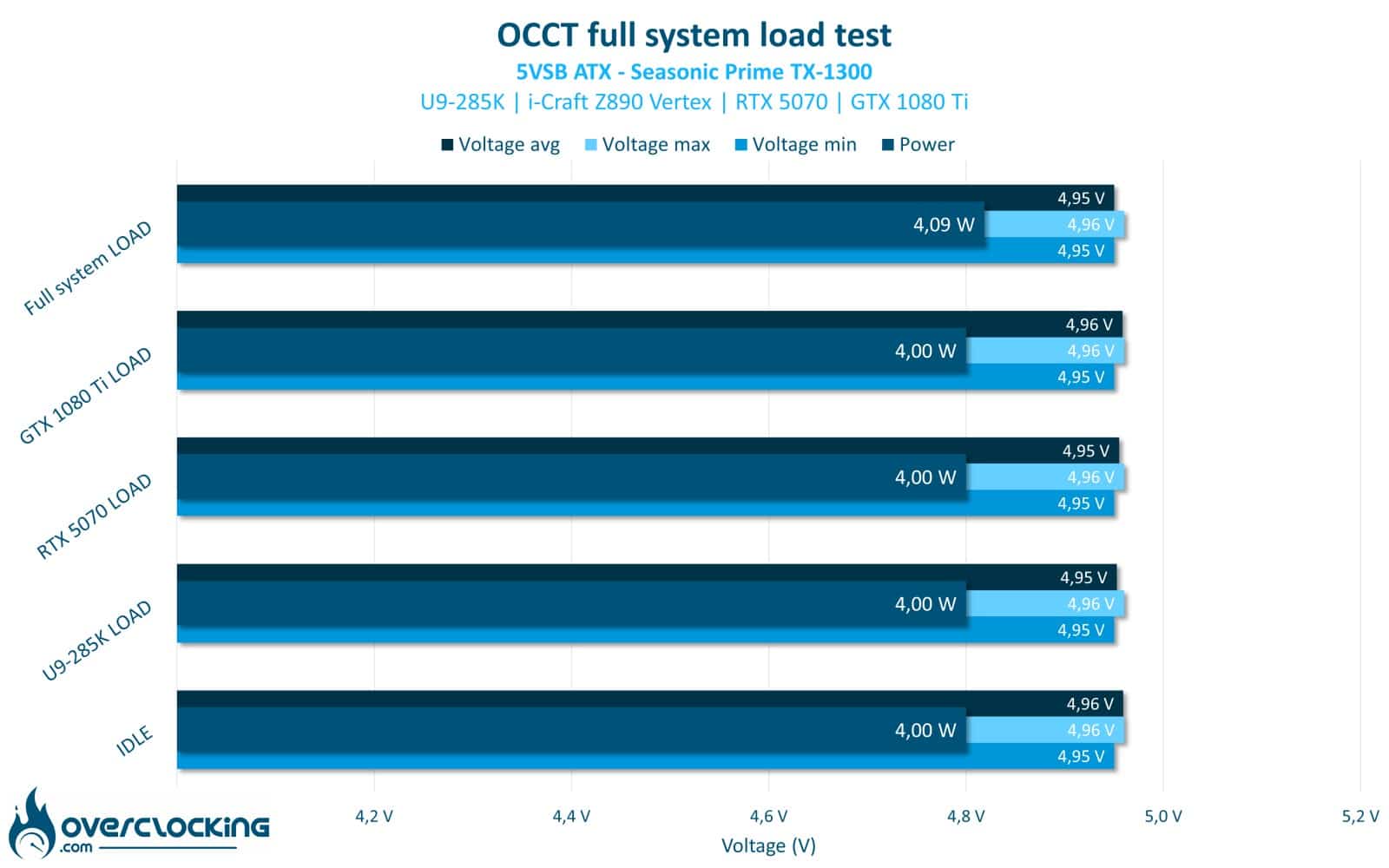
The other rails are rated at 25 A for 3.3 V and 5 V. In terms of combined power, that’s 125 W, enough to calmly power all the machine’s peripherals: SSD, HDD, USB and so on. Finally, we’d like to mention the -12 V 0.5 A (6 W) and 5 VsB 3 A (15 W) rails.
Concerning protection, the brand communicates on this without describing each abbreviation, but after some research and cross-checking of the merchant sites we find :
- OPP (overload protection)
- OVP (overvoltage protection)
- UVP (under-voltage protection)
- OCP (overcurrent protection)
- OTP (protection against temperature peaks)
- SCP (short-circuit protection)
[nextpage title=”The test configuration”]
Here’s the configuration that will be used for the test:
- Motherboard: Maxsun i-Craft Z890 Vertex
- Processor : INTEL CORE U9 285 K
- Memory: 2×24 GB Gskill Tridentz 8000 CL38
- Graphics card no. 1: MSI RTX 5070 Ventus 2X
- Graphics card no. 2: Gigabyte Aorus GTX 1080 Ti Xtreme edition
- Cooling system: Watercool Heatkiller IV basic + 420mm radiator
- SSD : LEXAR NM1090 2TB PCIE 5.0
- Power supply: Seasonic Prime TX-1300
- Operating system: Windows 11 64-bit (version 24H2)
- Display: Dell S2721QSA
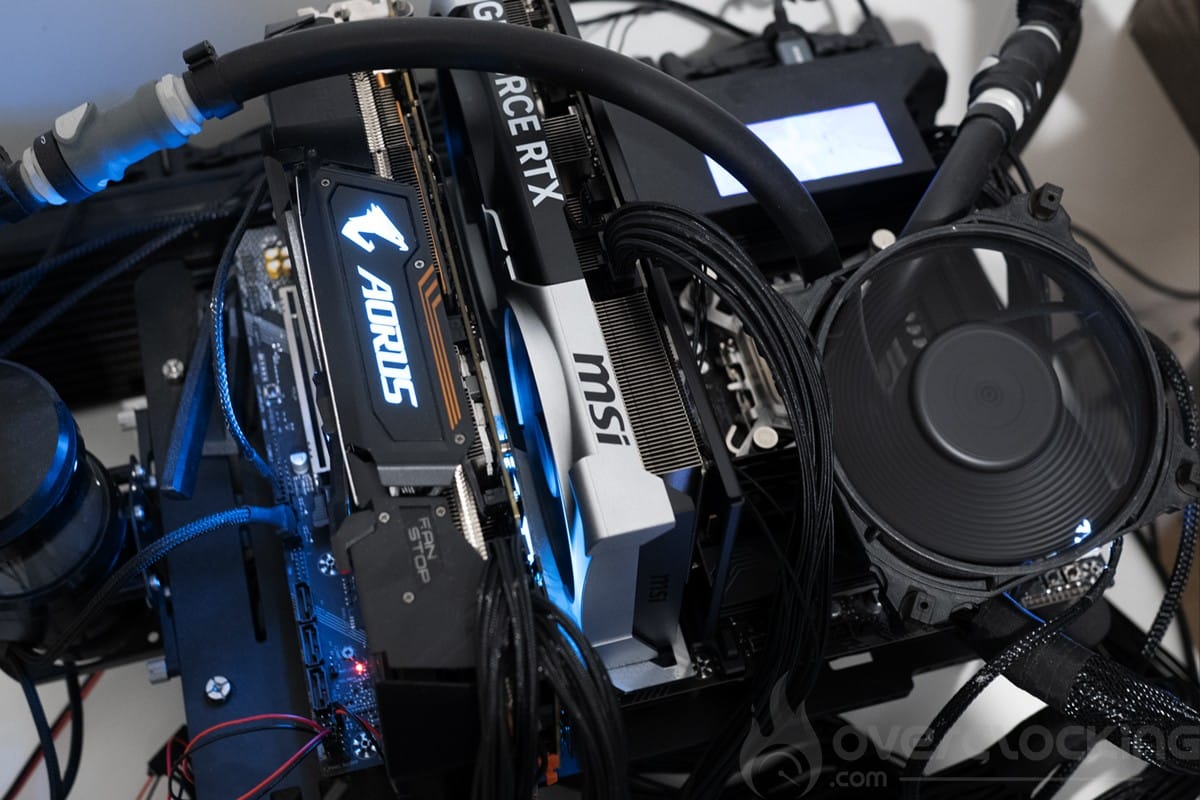
The test protocol focuses on a series of different loads on OCCT. The following scenarios are tested:
- IDLE: the configuration is unloaded on the desktop
- i9-14900KF LOAD: voltage measurements with CPU (U9-285K) only
- RTX 5070 LOAD: voltage measurements with RTX 5070 only
- GTX 1080 Ti LOAD: voltage measurements with GTX1080 Ti only
- Full System LOAD: voltage measurements with CPU, RTX and GTX at the same time
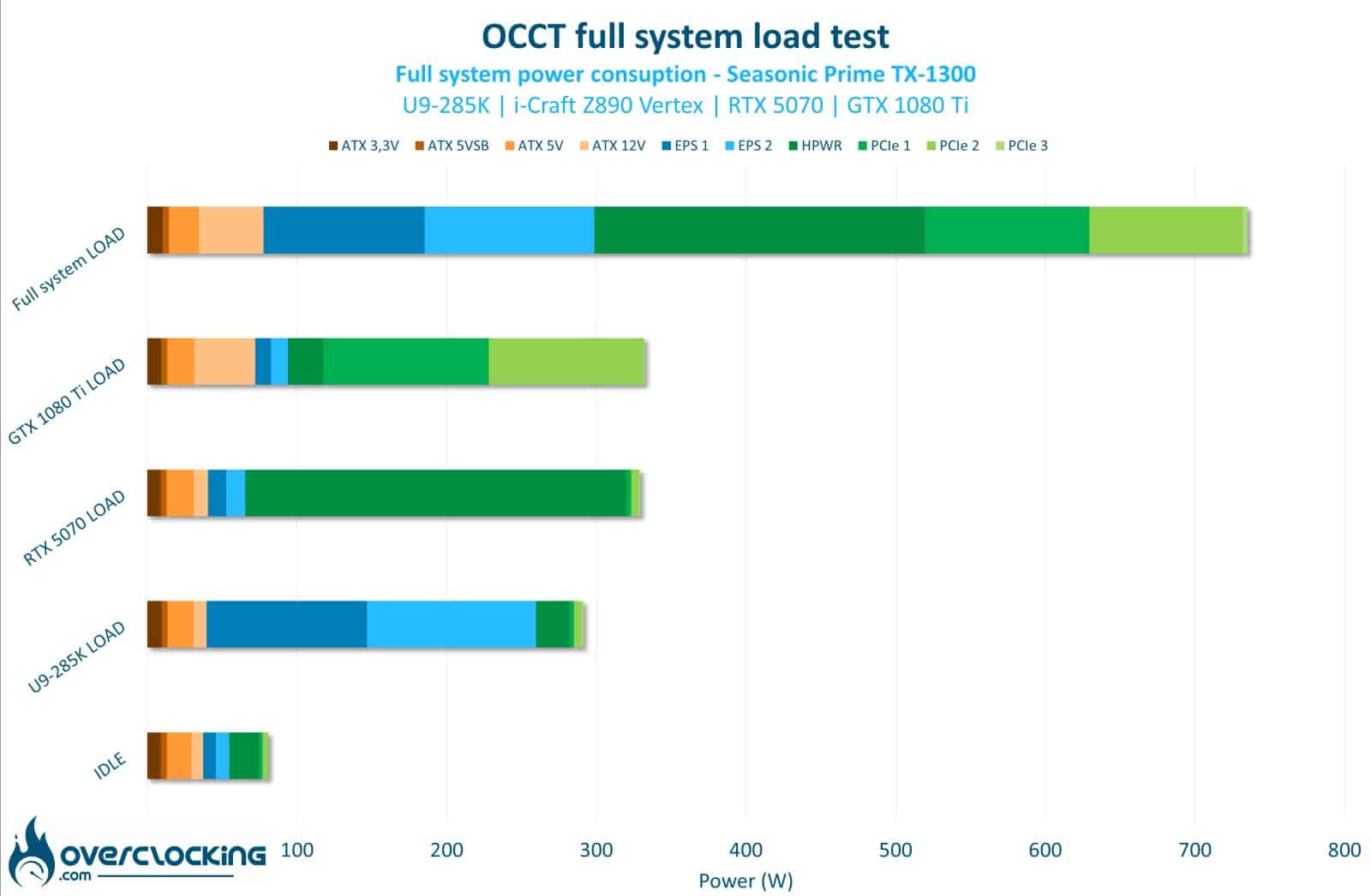
The voltages of the various components are measured using an external device:
- Motherboard: pass-through measurements on 24-pin ATX cable
- i9-14900KF: pass-through measurements on two 8-pin EPS cables
- RTX 5070: pass-through measurements on 12VHPWR cable (12V-2×6)
- GTX 1080 Ti: pass-through measurements on two PCIe 6+2 pin cables
Our measurement system does not allow power consumption to be measured on MOLEX and SATA sockets, so the cooling system (D5 pump) is not included in the measurements. [nextpage title=”Measurements”] Before we begin, it’s important to recall a few points about the measurement system used here. To come as close as possible to real-life conditions, measurements are made on components and not via laboratory equipment such as charge generators. Fluctuations, due to the complex electronics of CPUs or GPUs under load, can have a major influence on voltage drops. Our measurement device allows you to separate the measurements of the various components, something not usually done where only a 12 V voltage is read.
12 V measurements :
This table groups together measurements of overall power, power on the 12 V rail, as well as minimum, maximum and average readings of 12 V voltages at different load levels.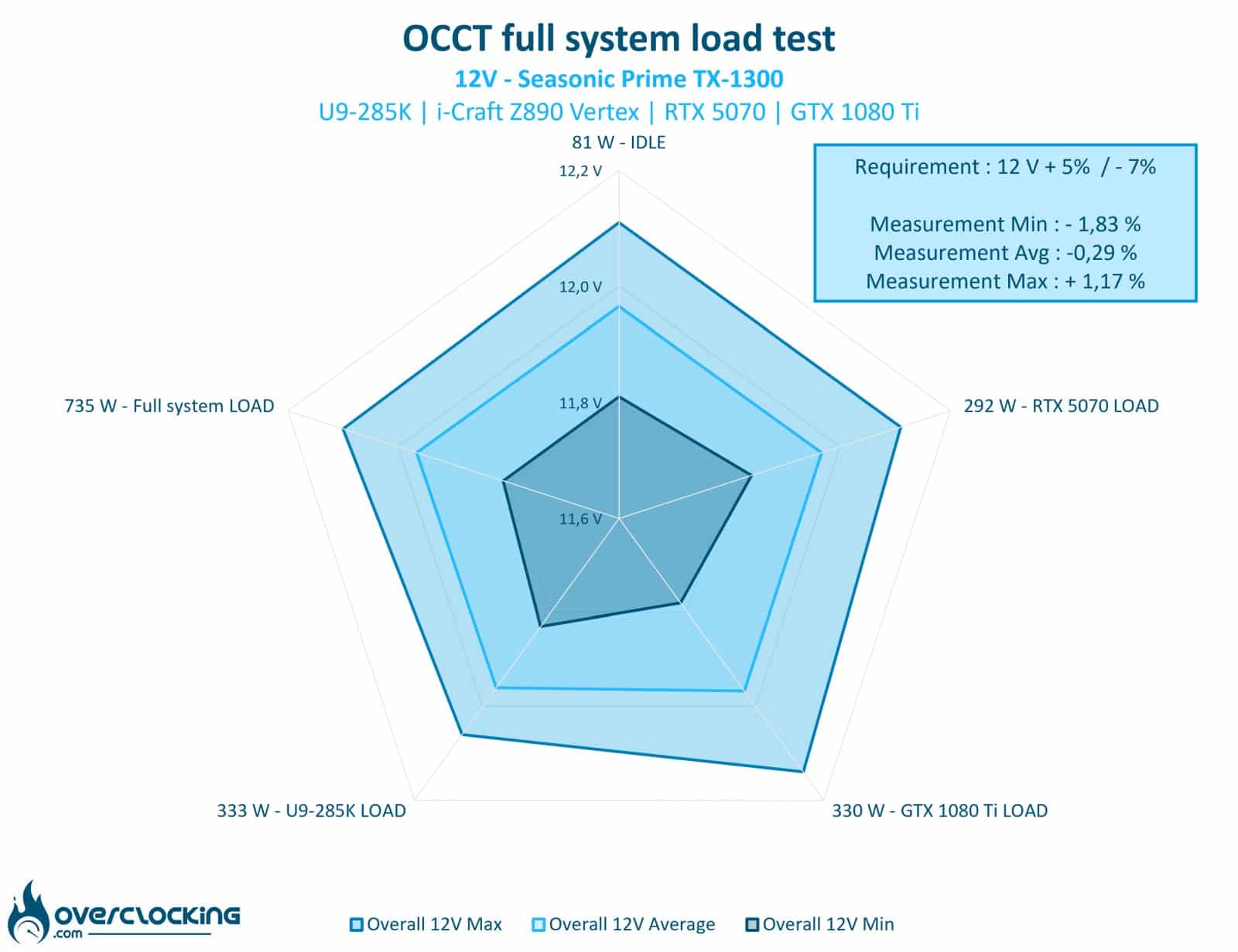
As can be seen, the 12 V average is very stable regardless of load, fluctuating by just 0.04 V (-0.29%). Only the minimum level varies more, with up to 0.22 V of fluctuation, essentially due to the GTX 1080 Ti’s 6+2 pin PCIe connector #2.
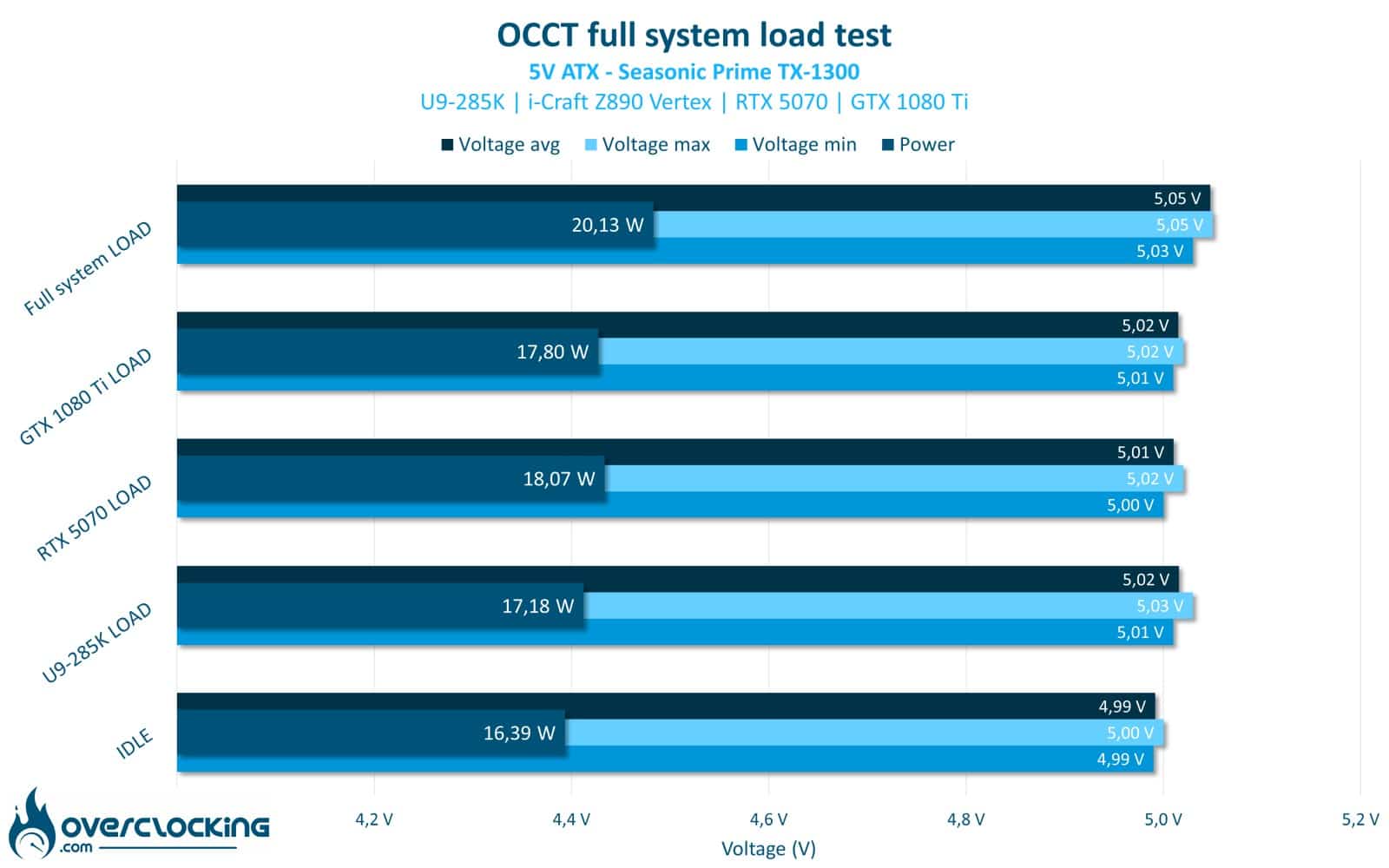
5 V measurements :
This table groups together measurements of overall power, power on the 5 V rail, as well as minimum, maximum and average readings of 5 V voltages at different load levels.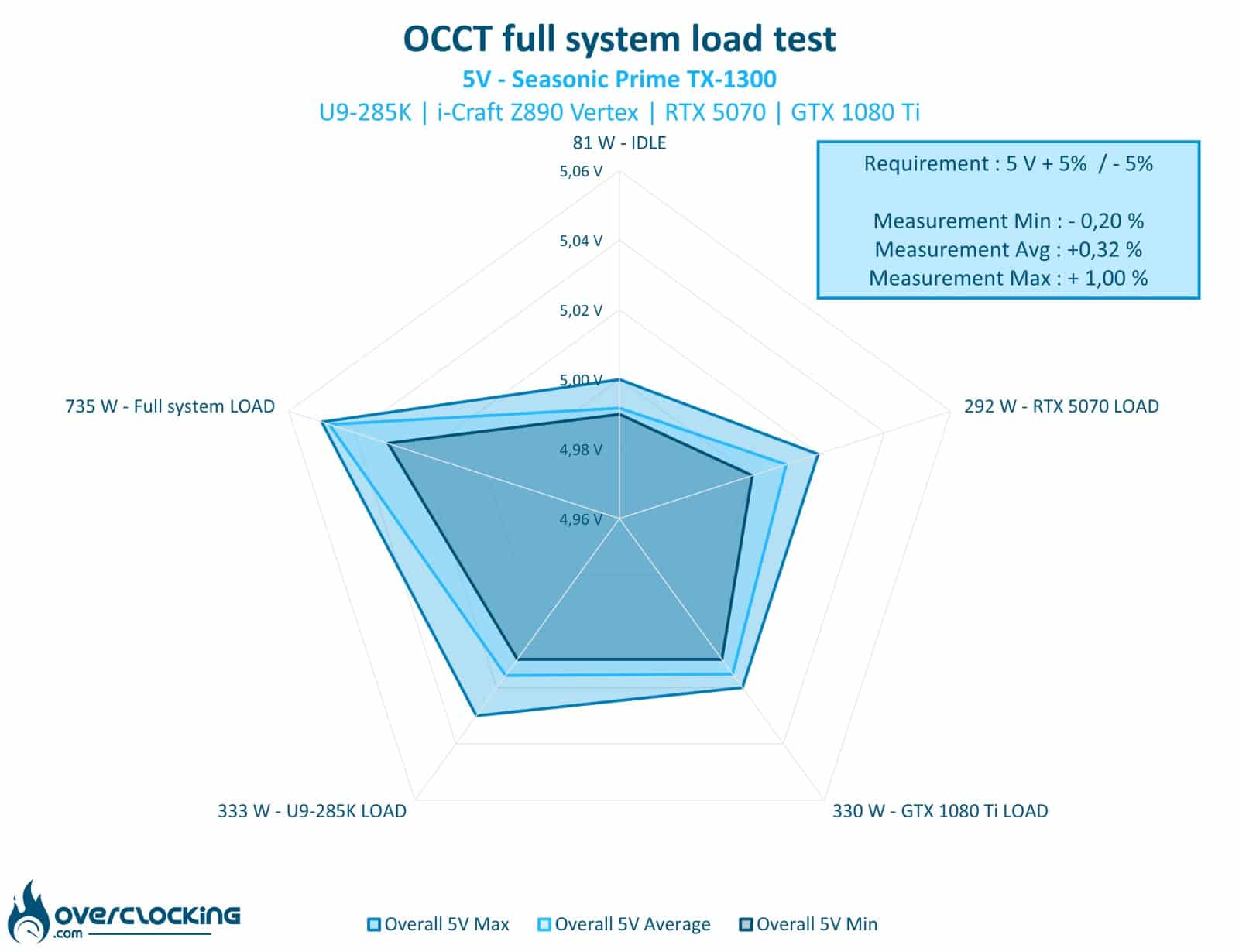
The 5 V average is also fairly stable, although it increases with load, with a fluctuation of 0.05 V (+0.32%). The standard deviation is very low, even at high loads, with a variation of just 0.06 V between the minimum and maximum values recorded.
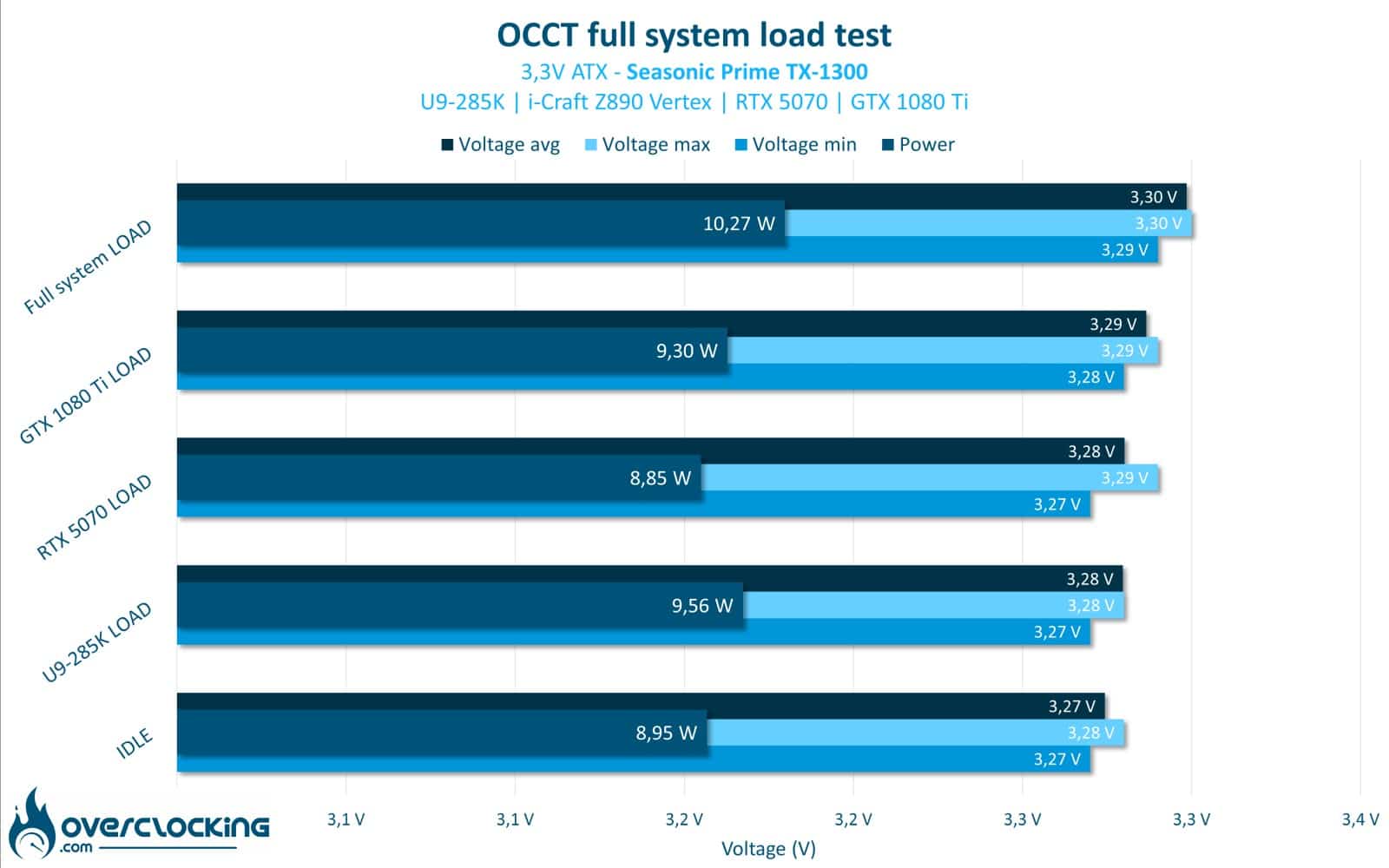
Measurements at 3.3 V :
This table groups together measurements of overall power, power on the 3.3 V rail, and minimum, maximum and average readings of 3.3 V voltages at different load levels.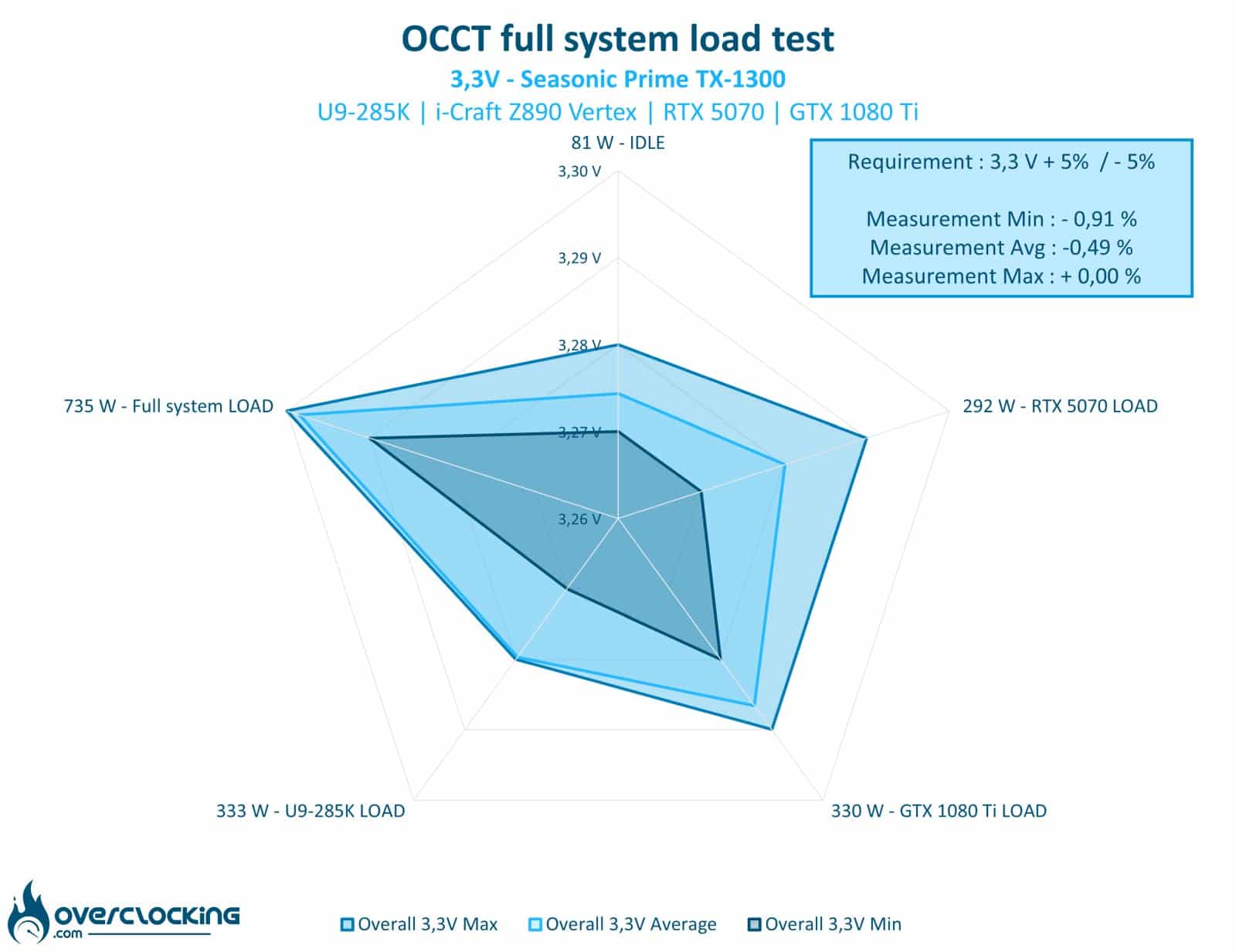
The average on the 3.3 V rail is also fairly stable, with less influence from the overall load level than on the 5 V rail. The fluctuation on the average is 0.03 V. The standard deviation is very small, even at high load, with a variation of just 0.03 V between the minimum and maximum readings. [nextpage title=”Appendix: details of readings”] Here are the details of the voltage measurements taken at different load levels.
CPU measurements (U9-285K): 2x EPS 8 pins
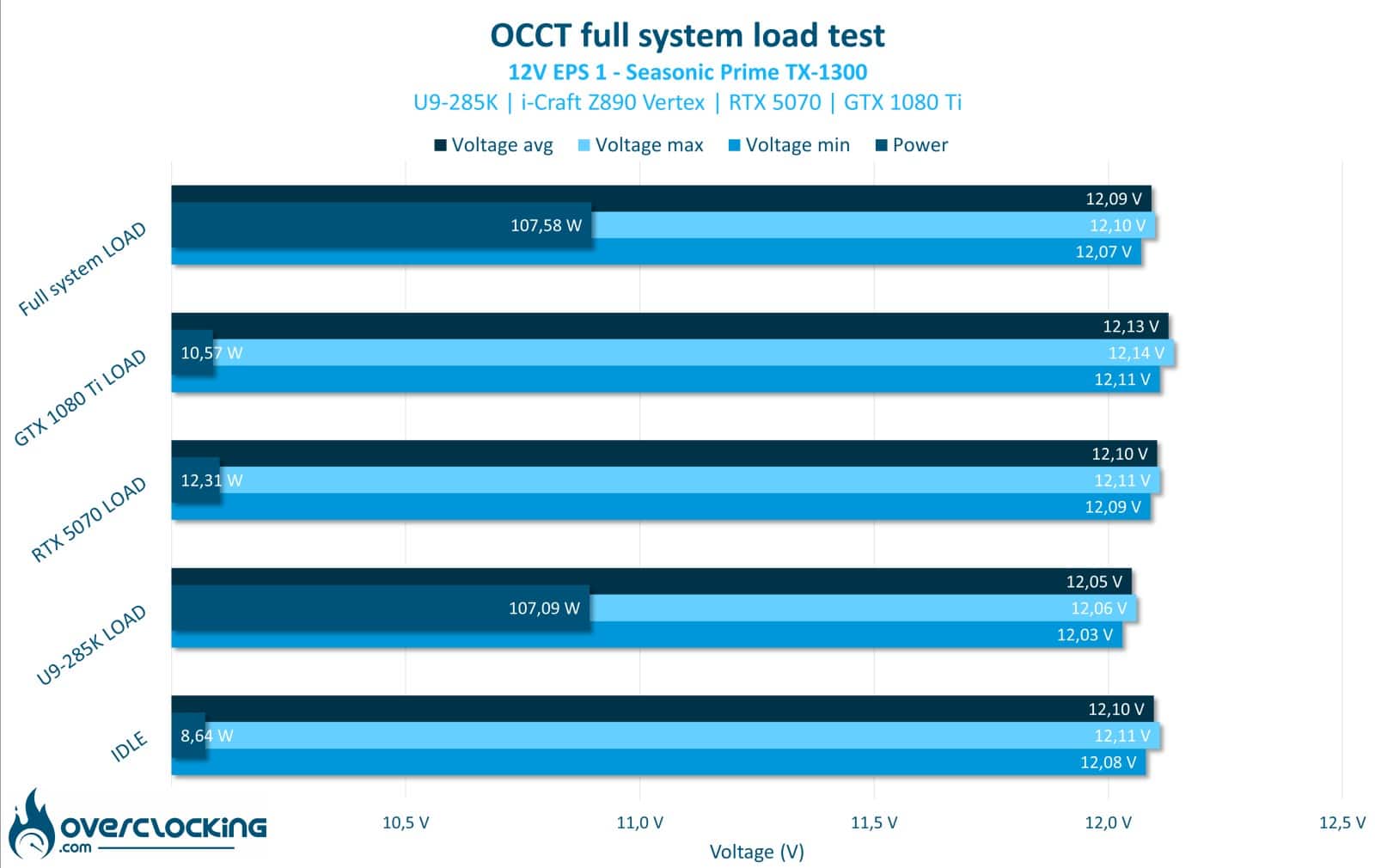
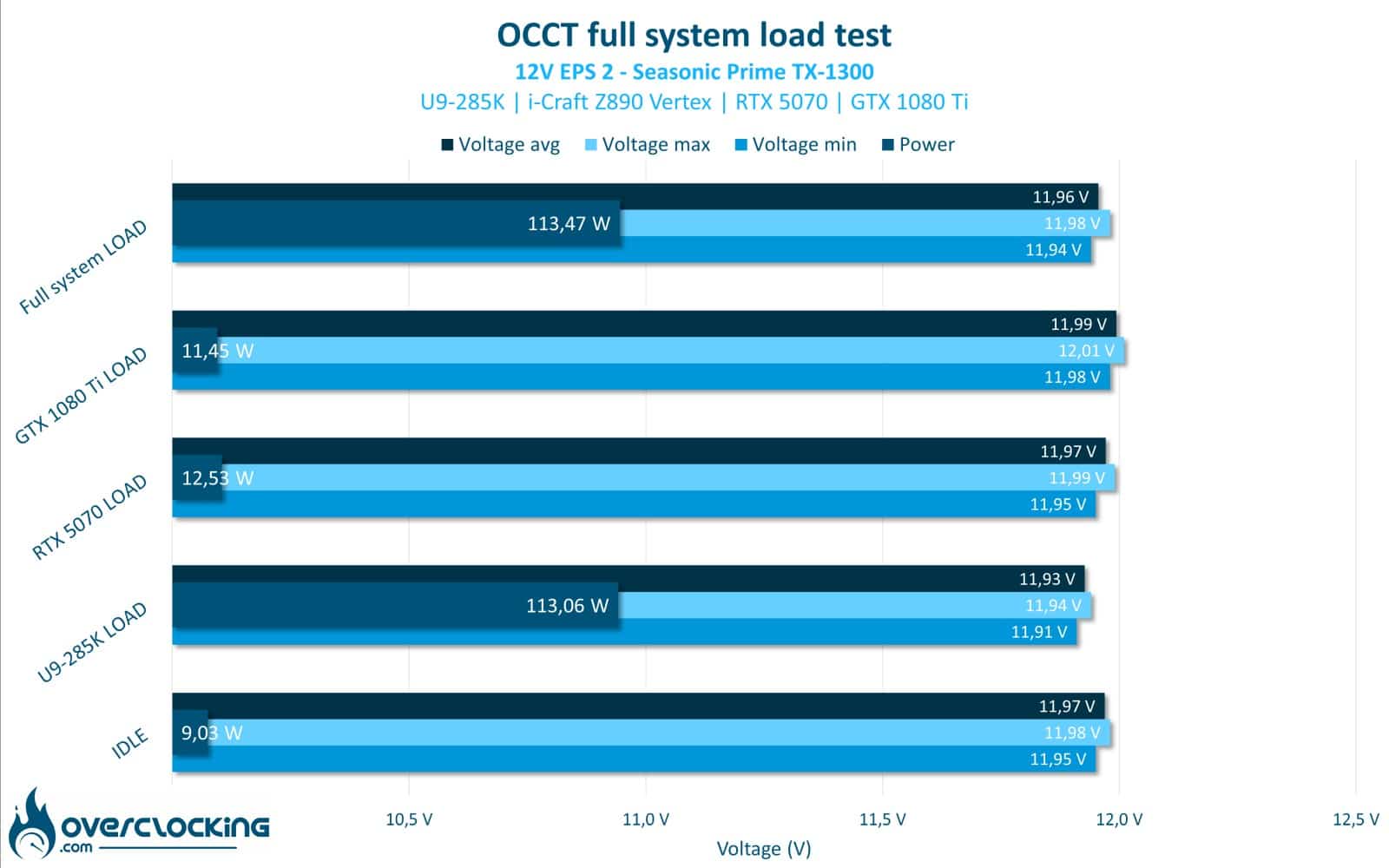
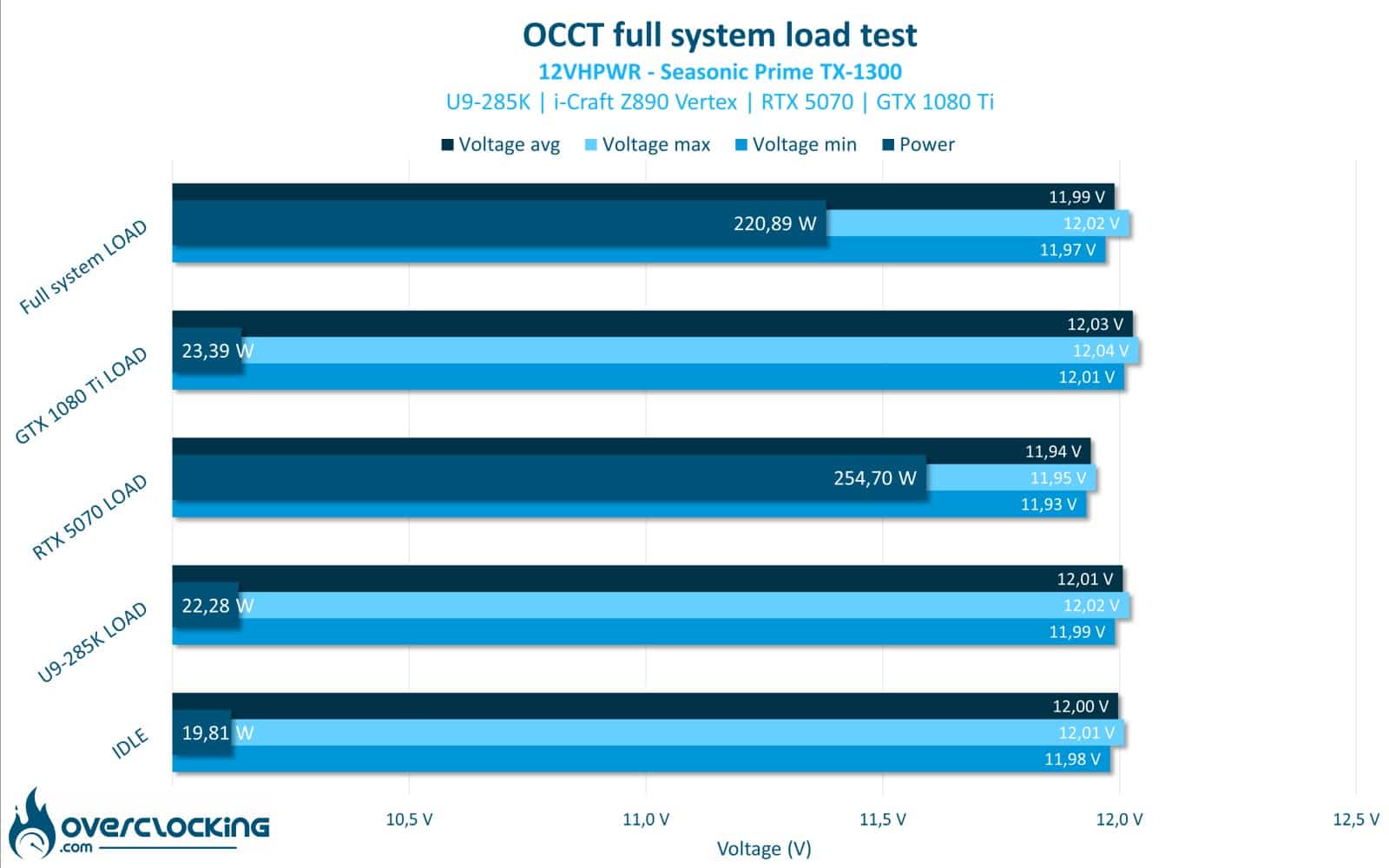
GPU 1 measurements (RTX 5070): 1x 12VHPWR (12V-2×6)
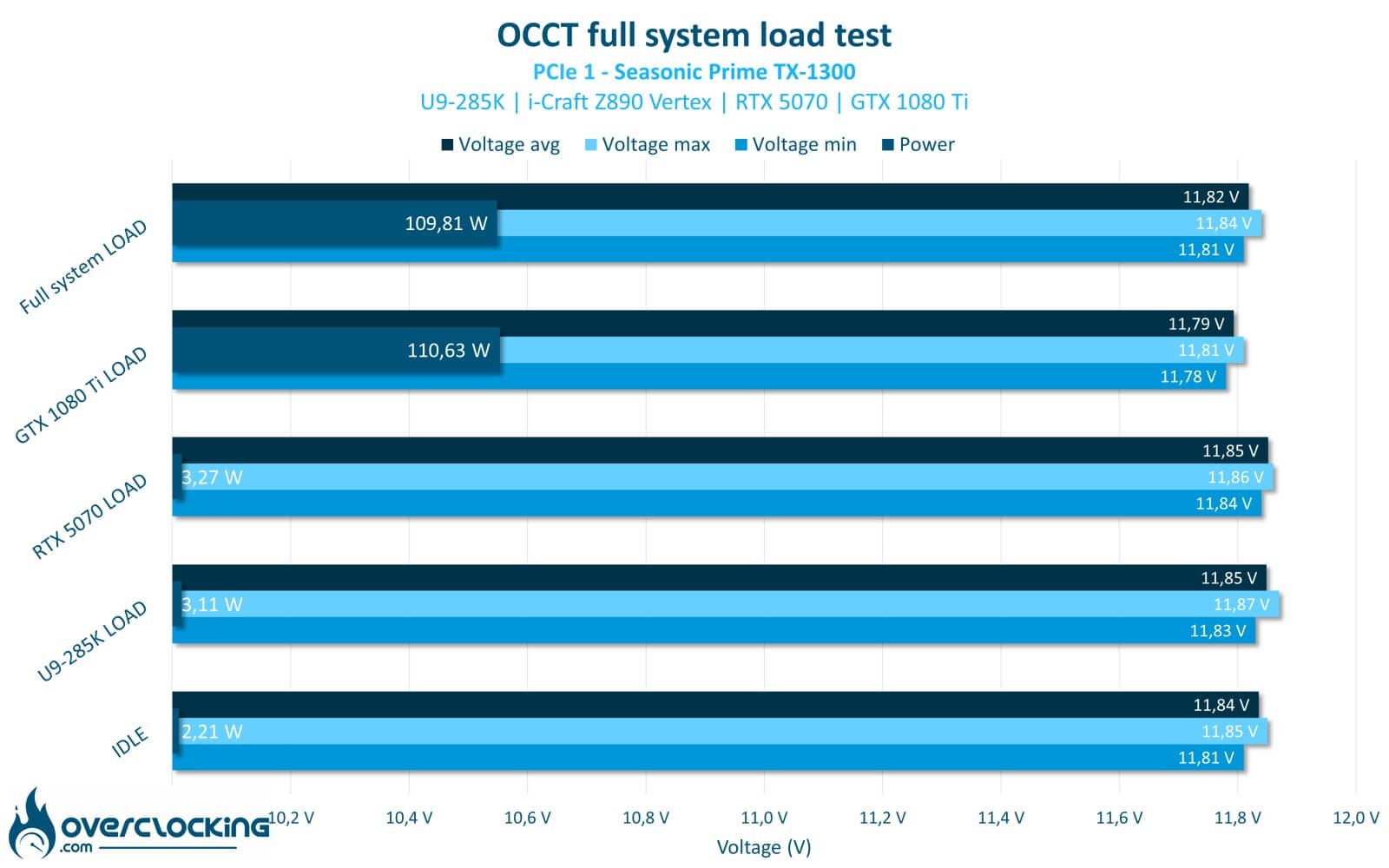
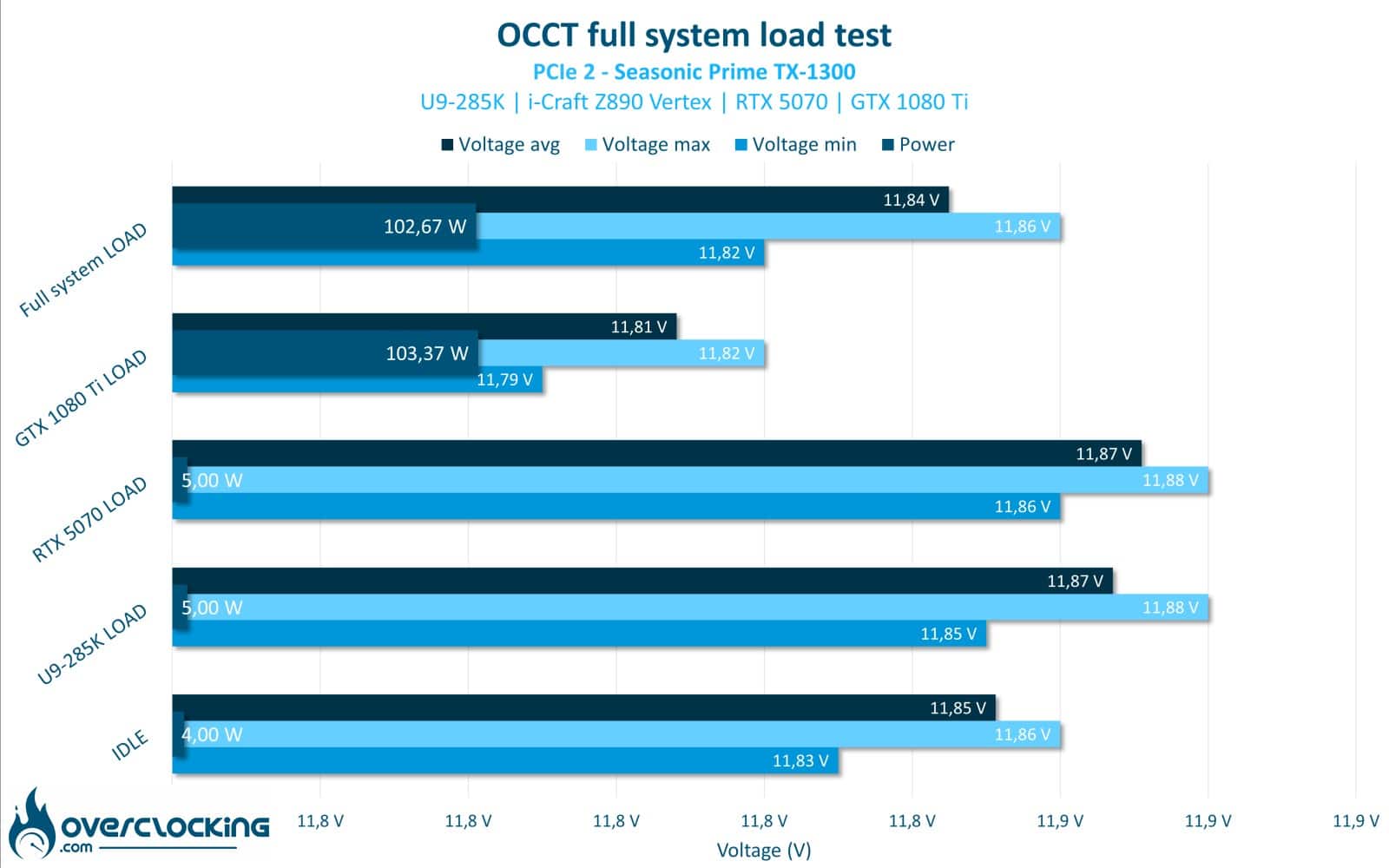
GPU 2 measurements (GTX 1080 Ti): 2x PCIe 6+2 pins
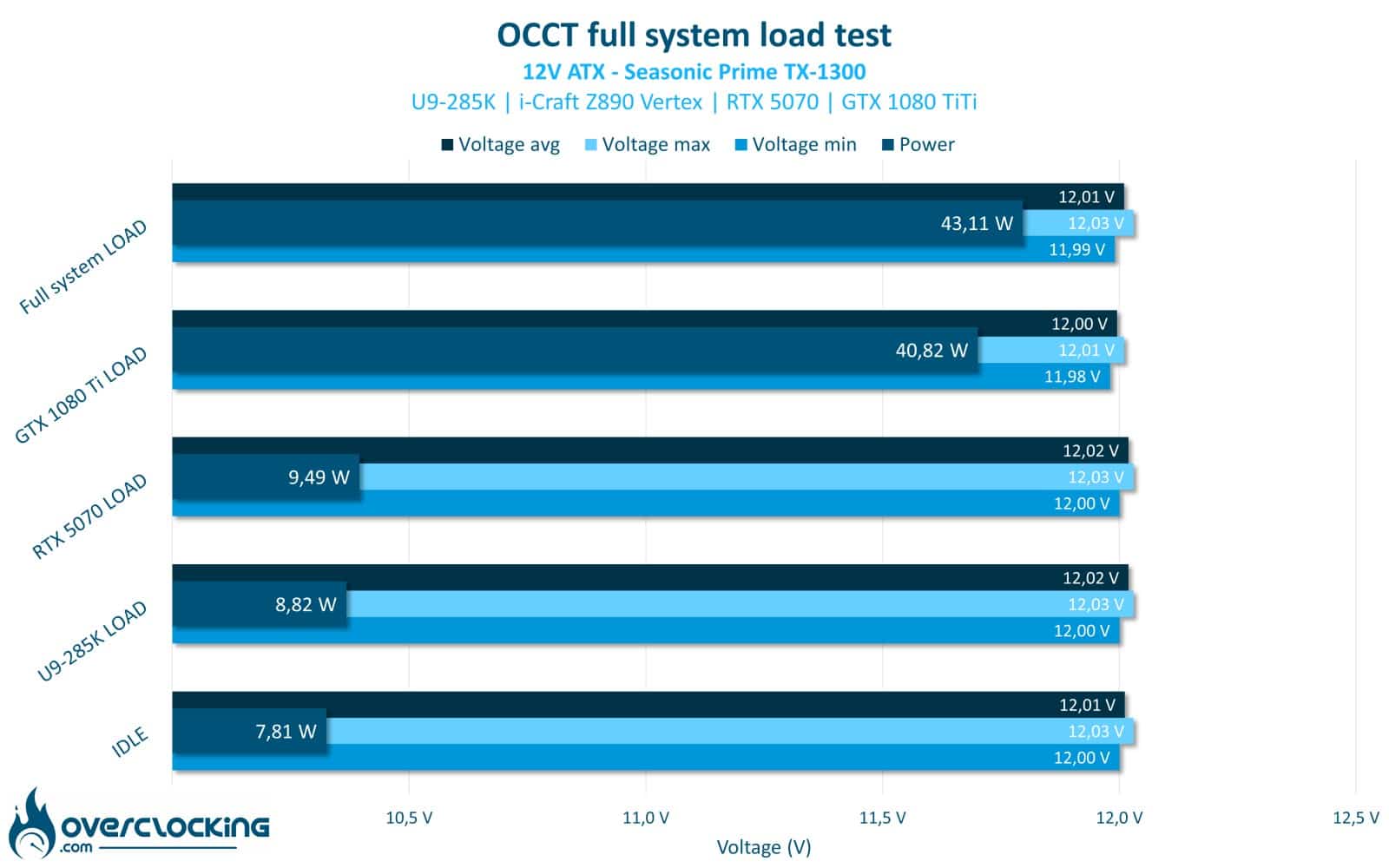
Motherboard dimensions: 1x ATX 24 pins
[nextpage title=”Conclusion”]
Conclusion:
We’ve come to the end of this test of the Seasonic Prime TX-1300 power supply in its new ATX 3.1 version, and it’s fair to say that this new generation offers performance that lives up to its price. We recently tested the Corsair HX1500i, which remains the most responsive power supply for extreme overclocking, but the Seasonic is no slouch. It offers similar performance at 12V, and far superior performance at 5V and 3.3V. The higher-end bundle and ventilation also raise the score. The only negative points here would be the price, almost €200 more, and the responsiveness at shutdown for extreme overclocking.
At €440, the price is certainly very premium, but if we look at the market for ATX 3.1 Titanium power supplies today, the competition is slim. A few models between €400 and €500 from be quiet! and Thermaltake, and 2 models from Asus and MSI at over €700. Corsair has not updated its AX1600i (€600) to the latest standards. All in all, this Seasonic Prime TX range is well placed in the overpriced category.
As a reminder, this Seasonic Prime TX-1300 is available at around €420-440 . The price positioning is clearly premium, and the standard 1300 W and 1600 W versions are of little interest compared with the Noctua version at less than €500 in 1600 W.
Seasonic Prime TX-1300
We liked:
- Performance
- Silence
- Almost passive use
- Individually sheathed cables
- Complete bundle
- Simple, yet highly attractive packaging
We would have liked :
- a more responsive power-down function
- More aggressive pricing
- A dual-tone 12V-2×6 connector

With its Prime TX-1300, Seasonic has narrowly managed to take first place in our comparison. It’s Gold for this new ATX 3.1 edition, even if Silver wasn’t far off because of its very high price and its shortcomings when compared with models costing €200 less. Overall, this Prime TX-1300 reconciles me a little with the Seasonic range after a 2018 Prime Gold that was rather noisy, a point corrected here.

