
[nextpage title=”Introduction”] Some time ago, we received the new Lexar Ares II kit, in its 2×16 GB 6000 Mt/s CL26 version. This is a very popular test in our community, especially in 2025, when many configurations are on AMD, more precisely mostly with a 9800X3D. This is one of the new EXPO kits for AMD, in 2×16 GB format, and Lexar now offers its declination with the Ares II. What interests us most is to see if these new 6000 CL26 EXPO kits have anything interesting to offer, especially when compared with the 8000+ XMP kits. This kit can be found on Amazon at around €170.
Many thanks to Lexar for sending us this sample for testing.
[nextpage title=”Lexar Ares II DDR5 32GB 6000 CL26″]
The Lexar Ares II 6000 Mt/s CL26
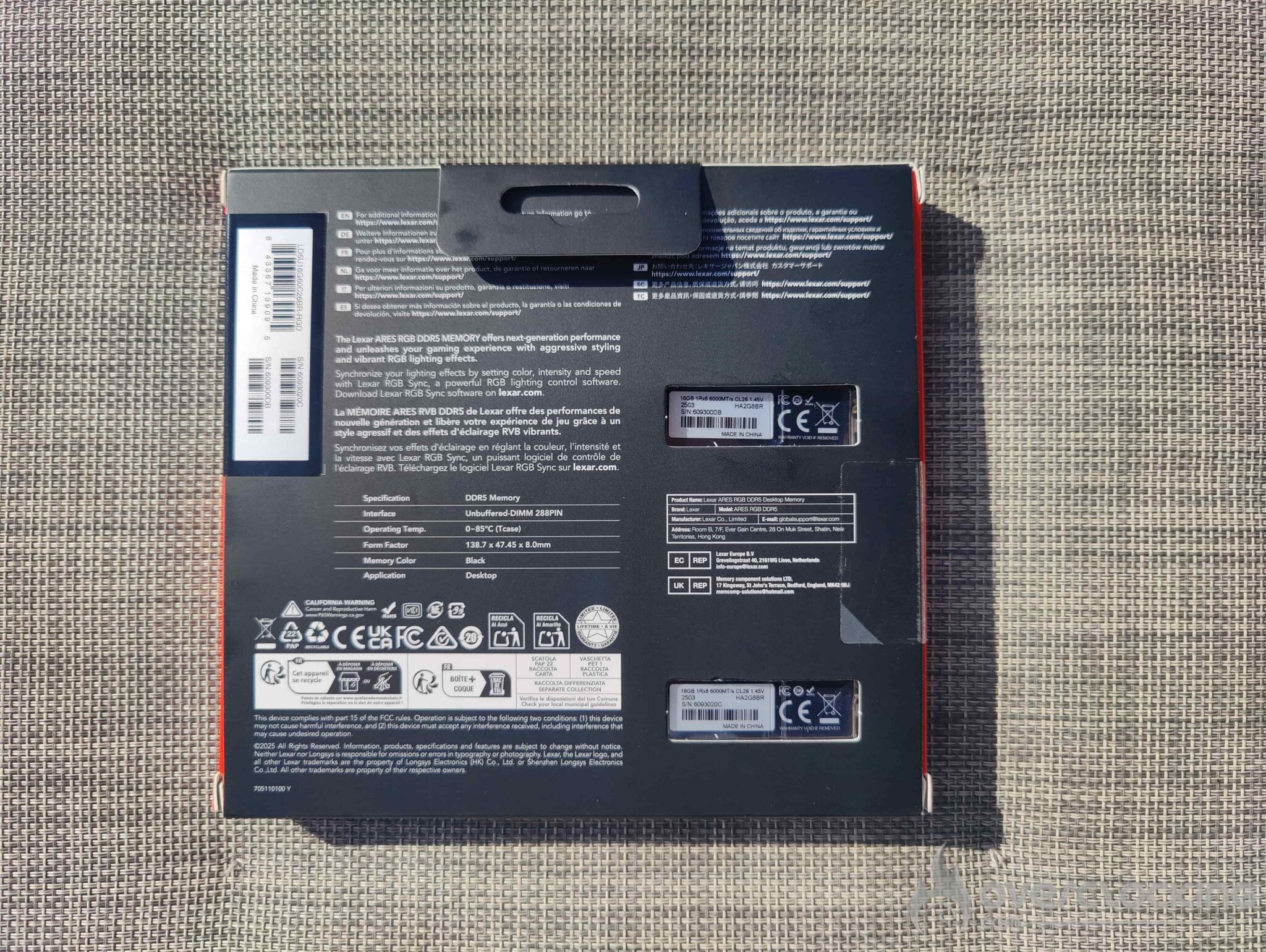
The packaging is rather neat, showing off the RGB kit to its best advantage. Above all, it clearly reminds us that this kit is designed for AMD, with the words “Best match for AMD 6000MT/s CL26”. Another interesting point (and not always indicated by other brands). The presence of SK Hynix chips, specified directly on the box. And that’s a good thing, because SK Hynix is simply the best RAM chip on the market today for DDR5. This suggests, with a high degree of probability, that the kit is equipped with A-die chips

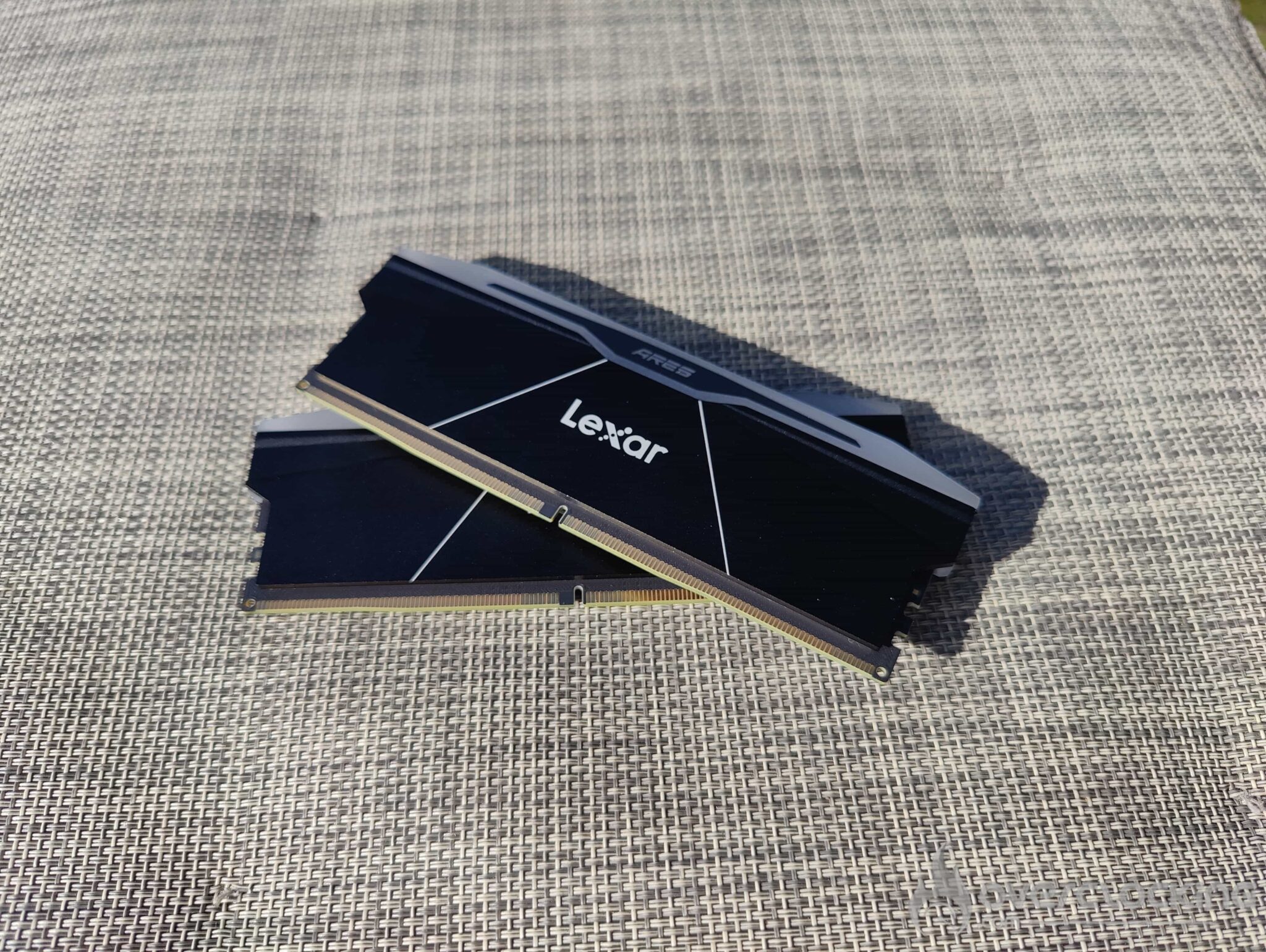
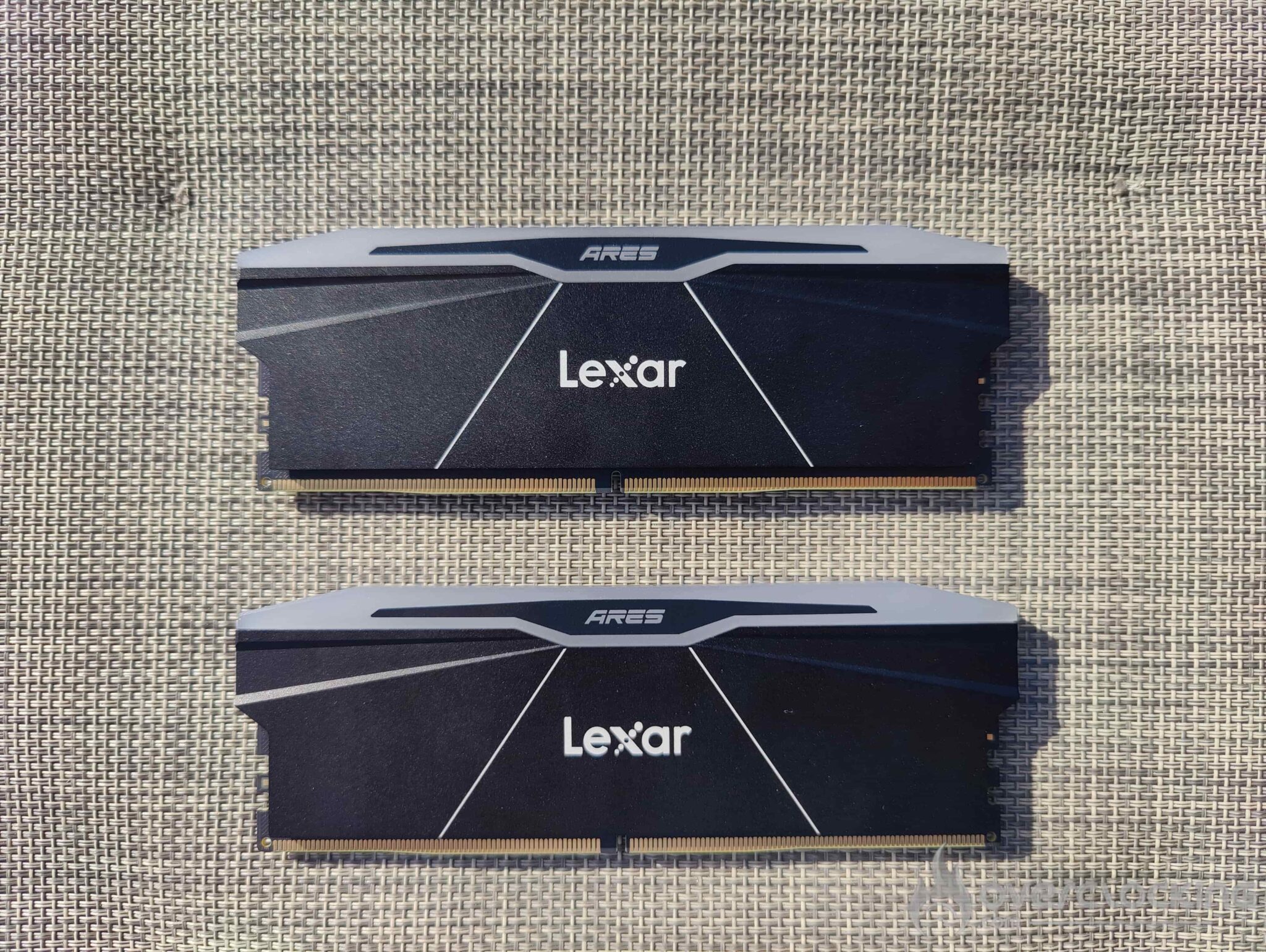
The Lexar ARES heatsink:
To present the heatsink of this new Ares II range, we’re going to compare it to the radiator of a first-generation Ares kit. The heatsink at the top of the photo is that of the new Lexar 6000 CL26 kit. It has undergone a complete overhaul in terms of design, quality and performance. At the bottom is the old heatsink from previous Lexar kits, but with this new model, the quality is clearly improved! The steel heatsink is thicker and better finished. You can feel Lexar’s desire to move upmarket, and frankly, it’s a pleasure to see. Especially when you consider the price of this kit, which offers excellent value for money compared to the competition. You’re assured of an original heatsink that will cool your RAM kit efficiently, especially in summer.
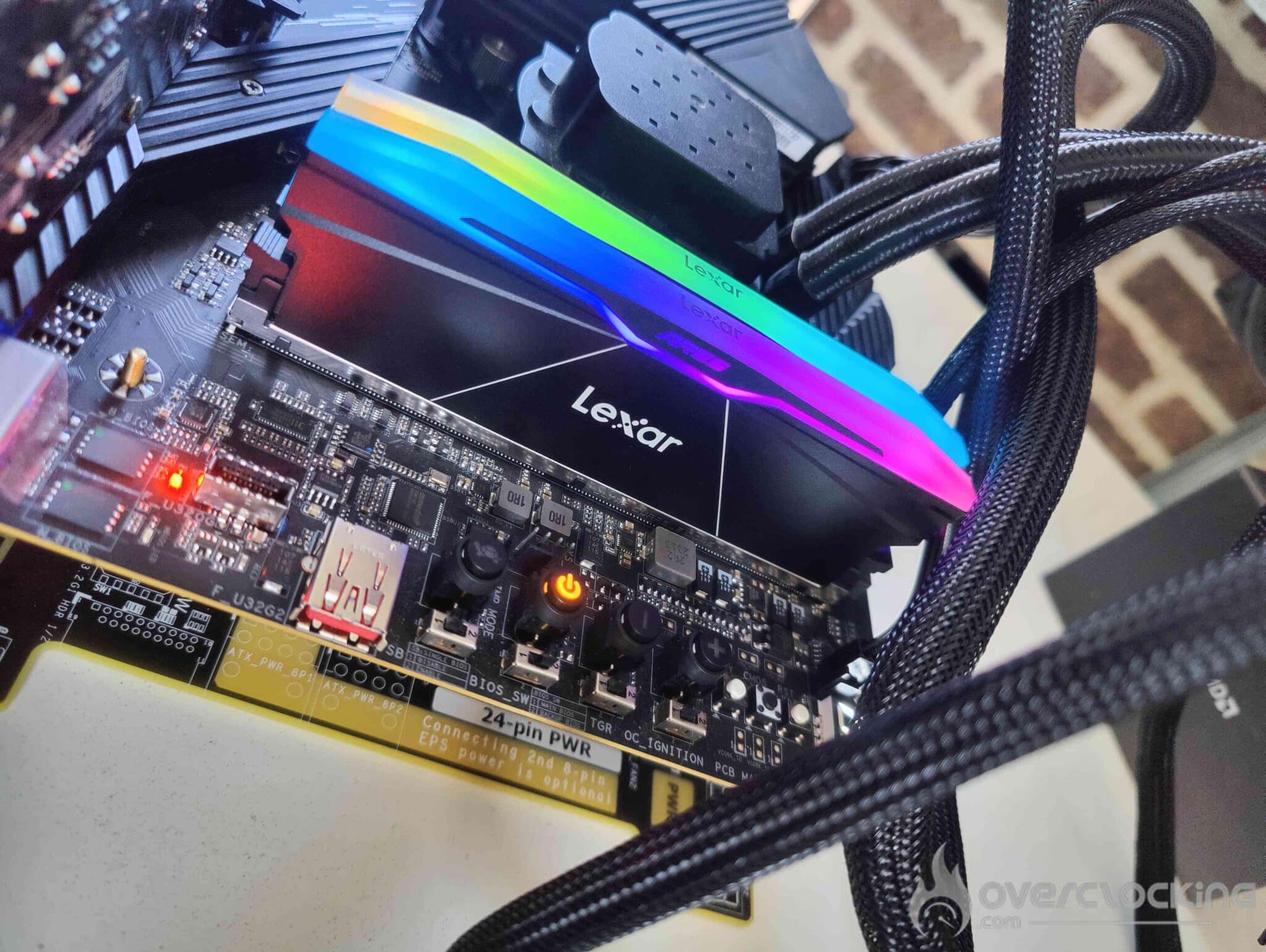
Lexar ARES II RGB:
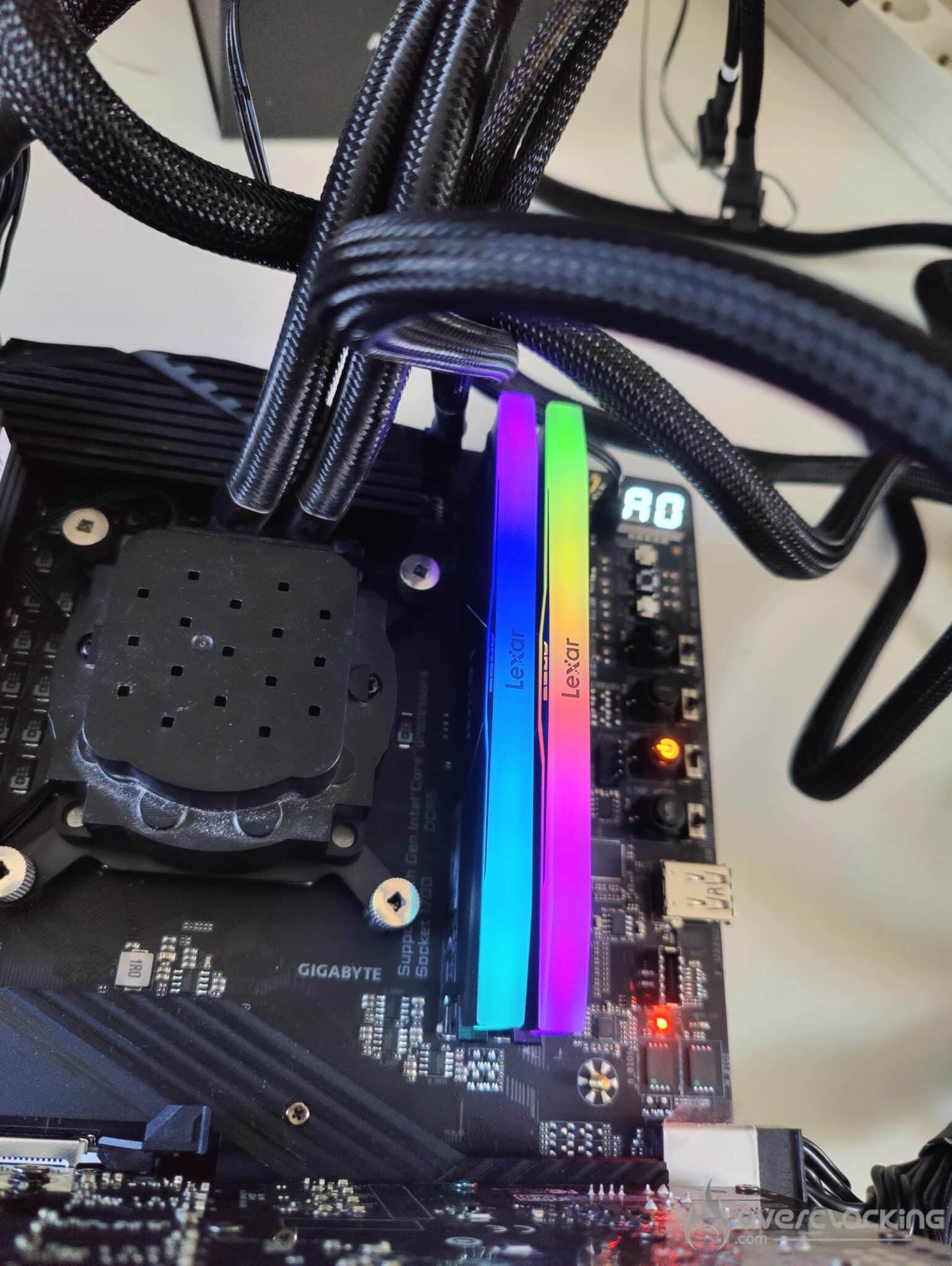
The RGB is also much more aesthetically pleasing than on the brand’s previous kits, with brighter colors and a much less cheap look. A real plus for RGB fans!
[nextpage title=”How to identify your memory kit:”]
Basic features :
There are two ways of identifying a memory kit: either by reading the information on the labels, via cpu-z, or by dismantling the RAM kit heatsink. In the case of this Lexar kit, disassembly is necessary, as no information is given on the nature of the chip. Nevertheless, don’t forget that CPU-Z gives you some useful information on the RAM kit. The EXPO profile, the module manufacturer and the chip manufacturer. In our case, SK Hynix.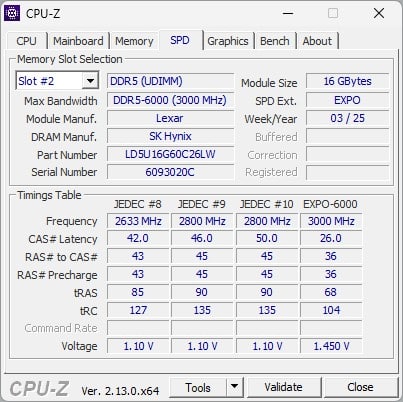 As indicated on the packaging and confirmed by CPU-Z, this kit uses SK Hynix chips. A good point, confirmed by disassembly, which also allows us to confirm that we are indeed using A-die chips.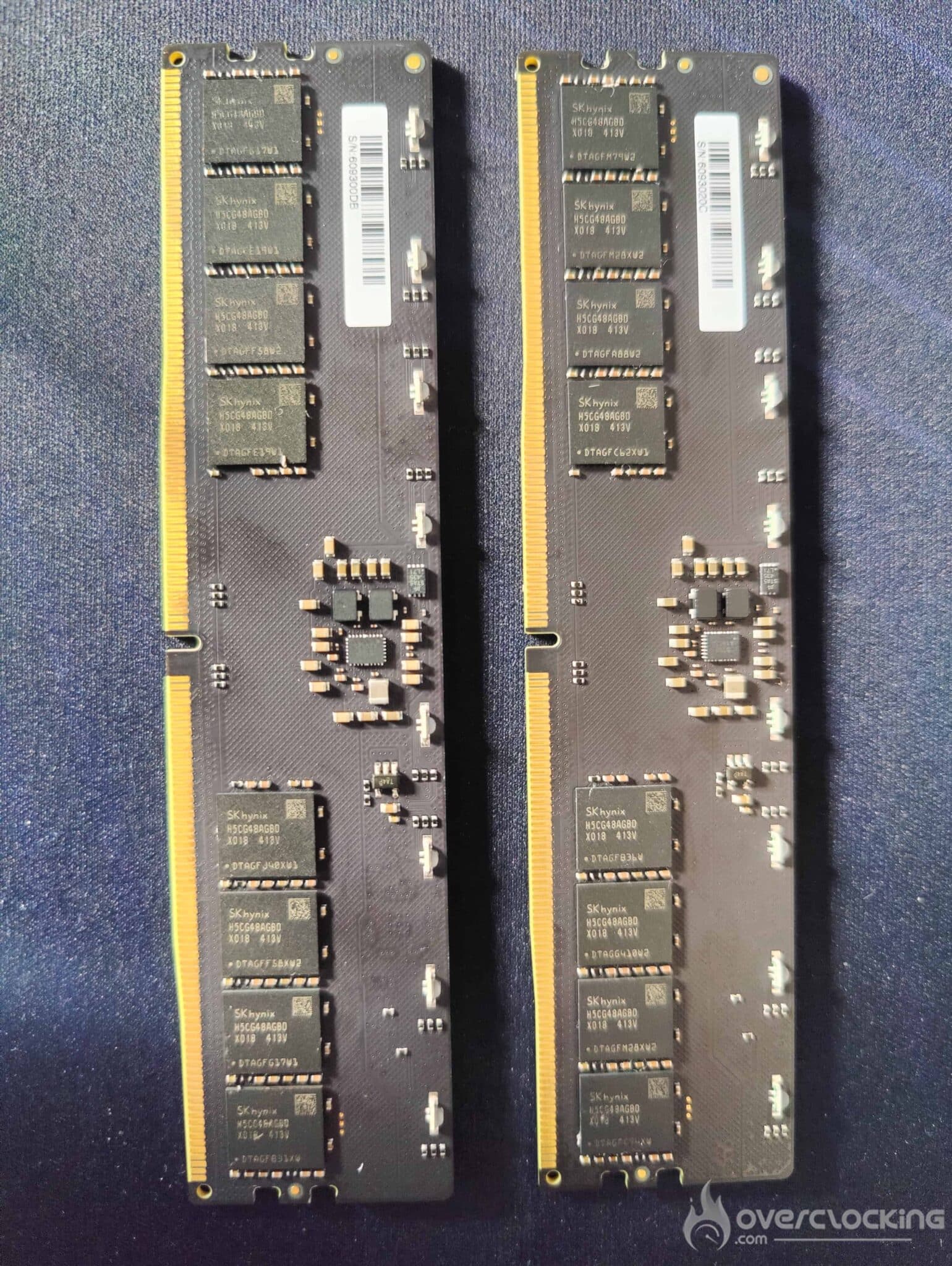
Disassembling the RAM kit reveals that these are Hynix 413V chips, a more recent version of the A-die chips, which operate at a reduced voltage compared to previous generations. They don’t necessarily bring gains in timings or raw frequency, but their energy efficiency provides an excellent basis for overclocking, especially with much lower VDD requirements. [nextpage title=”The test configuration: “]
The test configuration
- Motherboard: NZXT X870E N9
- Processor: Ryzen 9 9950X with PBO
- Memory: 2×16 Gb Lexar Ares II 6000 Mt/s CL26
- Graphics card: RTX 3090 Founder Edition
- Cooling system: Deepcool Mystic240mm
- SSD: Lexar NM790 4TO
- Power supply: EVGA Supernova 1600 Watt T2
- Operating system: Windows 11 64-bit (version 24H2)

[nextpage title=”EXPO performance test”] We now move on to the EXPO test with a few synthetic benchmarks, to get a first idea of the kit’s performance. As a reminder, 6000 Mt/s kits are in AMD’s sweet spot when it comes to RAM, especially with CL26 latency. AMD’s memory controller particularly likes to be synchronized with FCLK and latency as low as possible. This is an excellent EXPO profile for lambda users, those who just want to install their RAM and enjoy good perfs without getting bogged down with often complex and time-consuming manual settings. So this kit ticks all the right boxes for a plug and play configuration that’s simple, stable and efficient.
EXPO profile details:
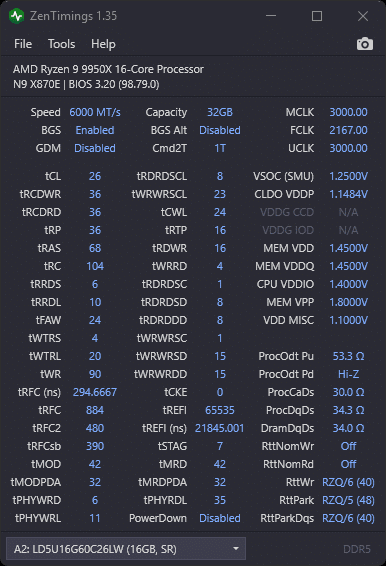
With the ZenTimings application on AMD, you can view the active RAM profile in detail. What’s really interesting with this kit is the voltage required in EXPO for 6000 CL26. Thanks to the new chips, voltage requirements are much lower than before, as I’ve already mentioned, resulting in higher EXPO profiles while remaining contained around 1.45. By way of comparison, on my old RAM kits. I often had to go up to 1.55 (or even higher) when overclocking to stabilize this type of frequency and latency in 6000 CL26 For my part, I tried to push things a little further by testing the lowest possible VDD voltage, while keeping the original EXPO profile settings. After 8 hours of Karhu testing, I was able to get down to 1.39 V, which is excellent for this frequency and latency level. I’m really impressed by the efficiency and possibilities of this kit.
Benchmarks with the Lexar ARES:
For synthetic benchmarks, I chose to use Geekbench 3, 7-Zip and OCCT.
Geekbench 3:
We start with Geekbench 3, in a configuration where only PBO is enabled on the 9950X.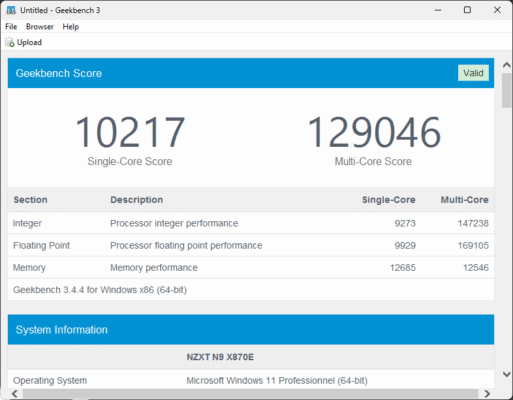 On Geekbench 3, we get an overall score of over 129,000 points with EXPO enabled. Memory shows 12,546 points, an excellent result for an original, unmodified EXPO profile. Finally, the single-core score is an impressive 10,217 points, which is really good!
7-ZIP:
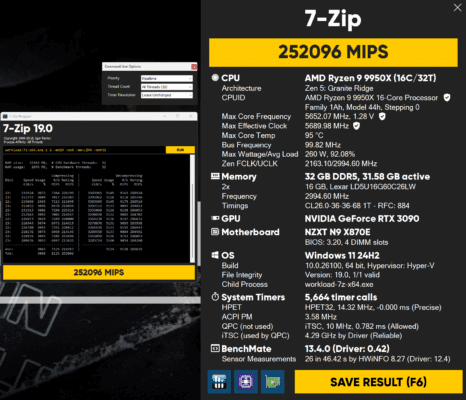
On 7-Zip, an overall score of 252,096 points is achieved. In detail:
- 218,357 MIPS in average compression
- 285.835 MIPS decompression average
As is often the case with AMD, the best performance is obtained when the UCLK is synchronized with the MEMCLK. This is the platform’s sweet spot, where it delivers the best performance in the majority of cases. For comparison, here’s a screen of RAM overclocking in 8300 CL34 on one of my other RAM kits.
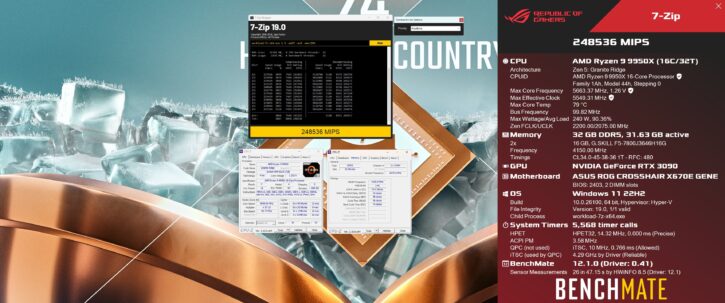
On 7-Zip, there are obviously some variations, as it’s not the same motherboard, but the PBO is identical to the one used on the NZXT motherboard I use. This gives you a good idea of performance between a synchronized profile (UCLK = MEMCLK) and an desynchronized profile (UCLK = MEMCLK / 2). Overall, we get better performance with an EXPO in 6000 CL26 with lexar ARES than with a RAM profile overclocked to over 8000 MT/s as in the photo.
OCCT:
On OCCT, in the Memory Bandwidth section, we reach more than 95.5 GB/s read and 67.7 GB/s write, with a latency of 80 ns. On the OCCT memory benchmark, we obtain a score in the average range for AMD, whether in read, write or combined.
It’s worth remembering that AMD performs worse than Intel in bandwidth, so direct comparison with an Intel platform doesn’t really make sense.
gallery columns=”2″ size=”large” link=”file” ids=”219166,219168″] [nextpage title=”Overclocking the ram “] Now I’m going to move on to overclocking this Lexar kit and see what gains it makes. The profile is stable under Karhu for 8 hours. I haven’t yet tested the stability further over a longer period.
Details of the overclocking profile:
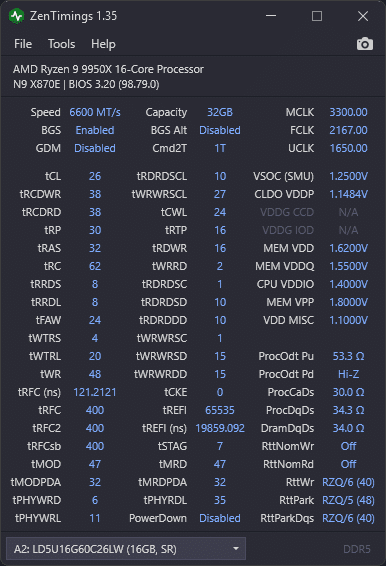
For RAM overclocking, I opted to stay with CL26 while going up to 6600 MT/s, a pretty hefty profile that gives a good measure of the kit’s capabilities. I didn’t test lower voltages, but the kit for the test is at 1.62 V in VDD, where older chips often required more than 1.72 V for similar profiles. This gives you a good idea of what’s required for this kind of frequency and latency, and don’t forget: above 1.55 V VDD. It’s recommended to add a fan to help cool the RAM and maintain good thermal stability.
Geekbench 3:
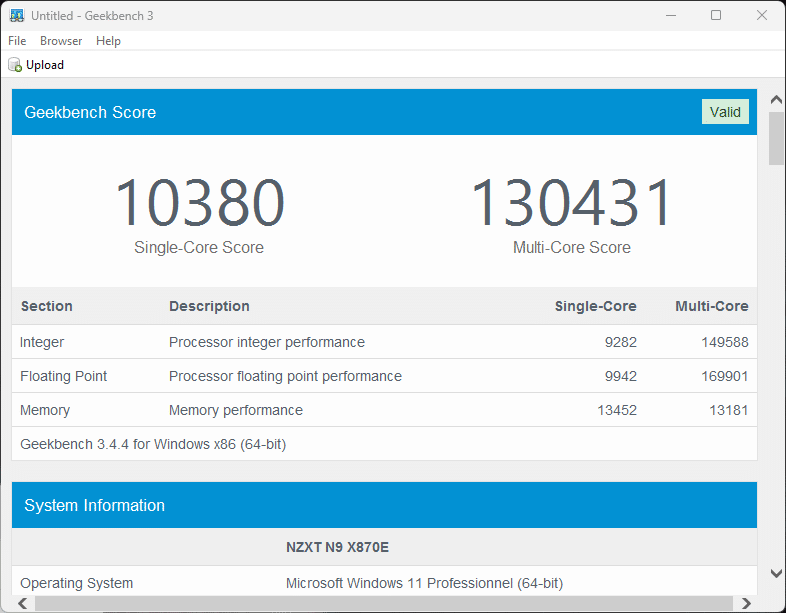
On Geekbench 3, we gained slightly on the overall score, both single-core and multi-core, but the biggest gain is on the memory part. Compared to the EXPO profile, we go :
- from 12,546 to 13,181 points in multi-core memory
- from 12,685 to 13,452 points in single-core memory
7-ZIP :
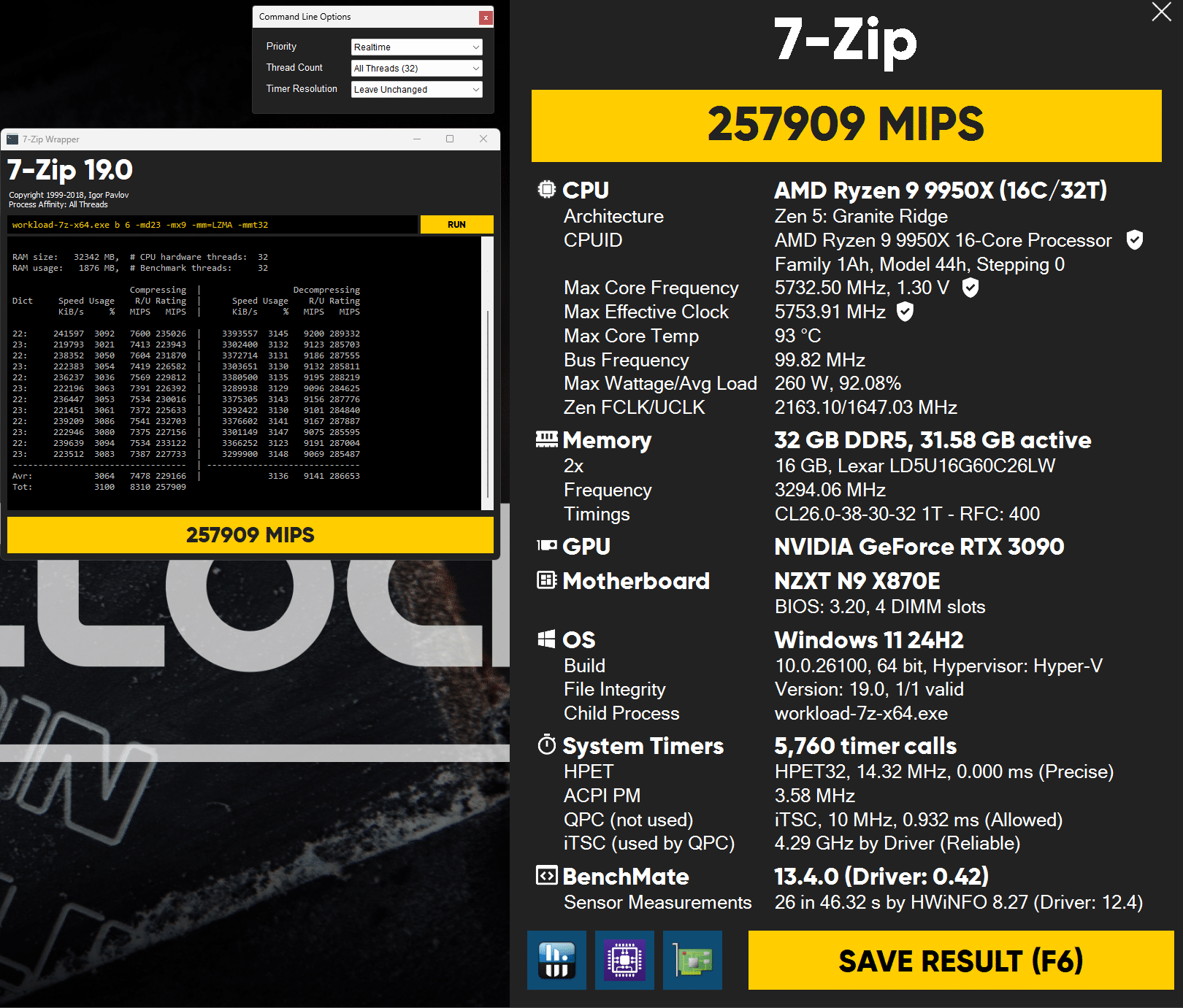
On 7-Zip, overclocking the Lexar Ares II kit to 6600 MT/s CL26 delivers a measurable overall gain. The total score rises from 252,096 MIPS to 257,909 MIPS, a gain of +5,813 MIPS (+2.3%), with +10,809 MIPS in compression (from 218,357 to 229,166) and +818 MIPS in decompression (from 285,835 to 286,653). The gain in compression is small, as it is mainly dependent on CPU frequency.
OCCT :
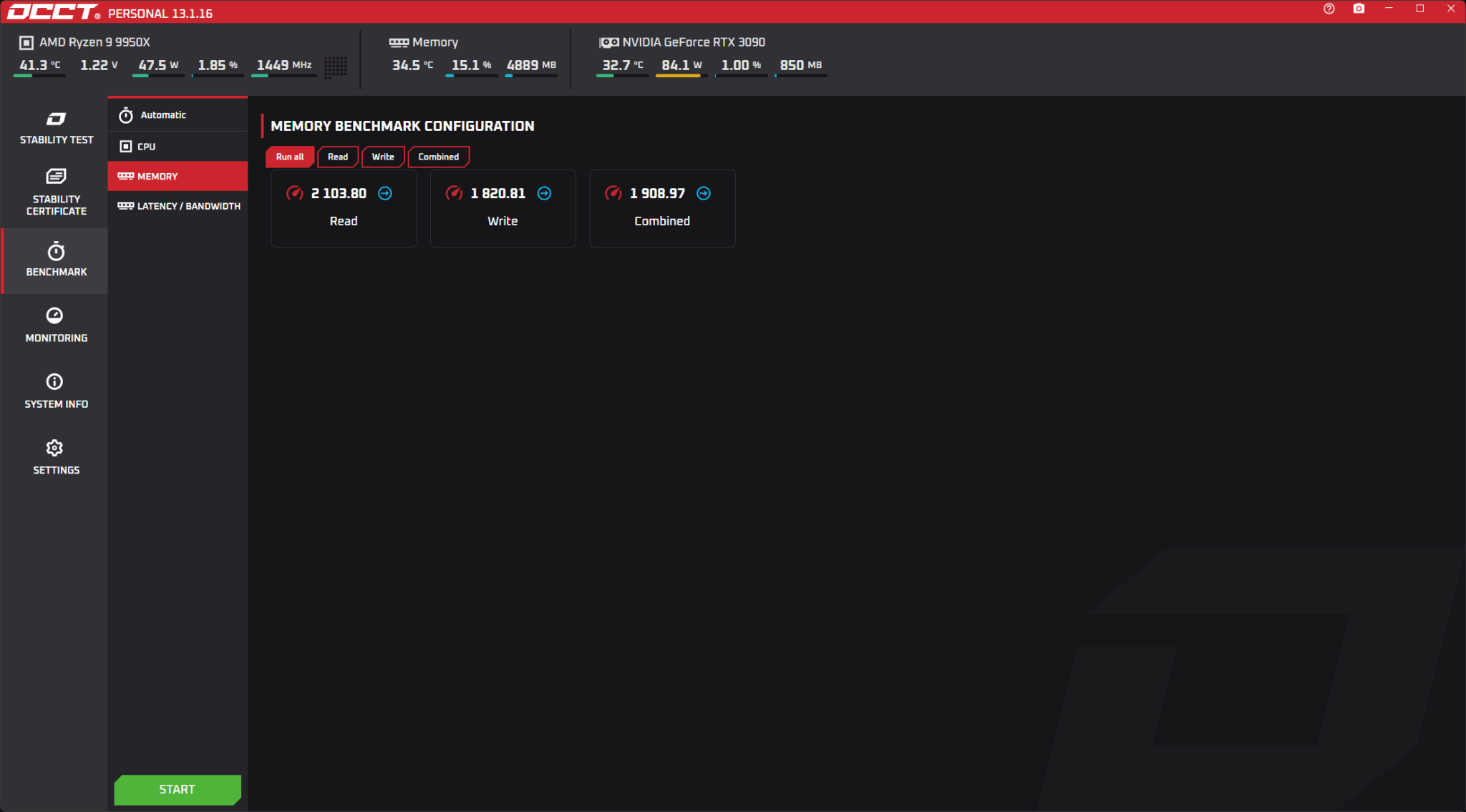
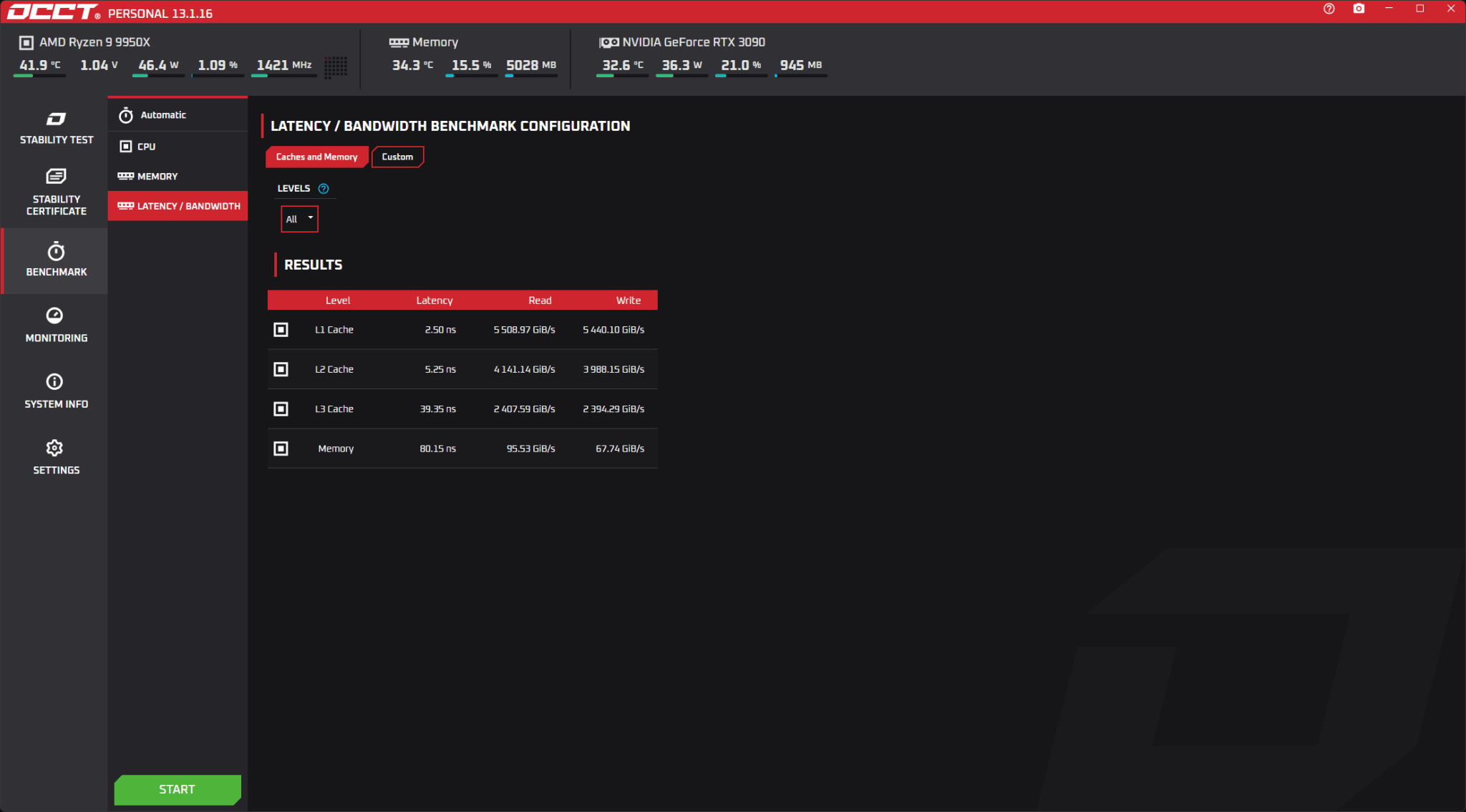
After overclocking the Lexar Ares II kit to 6600 MT/s CL26, we observe a significant gain in memory performance: read throughput rises from 95.53 GB/s to 101.15 GB/s, while write throughput climbs from 67.74 GB/s to 71.08 GB/s.
Memory latency improves slightly, from 80.15 ns to 78.76 ns. On the global OCCT memory benchmark, scores are also up: read from 2,103 to 2,222 MB/s, write from 1,820 to 2,133 MB/s, and combined from 1,908 to 2,061 MB/s.
Mini conclusion in Lexar ARES overclocking:
The gain in overclocking remains limited, as the original EXPO profile is already very good and allows you to reach almost maximum performance, with the sweespot on AMD. I’ve carried out some gaming tests, but the gain is small, between 1 and 3% depending on the title. RAM overclocking can bring an advantage in productivity, but in everyday use or gaming, the impact remains marginal. [nextpage title=”In extreme overclocking”]
Bonus: Extreme RAM overclocking!
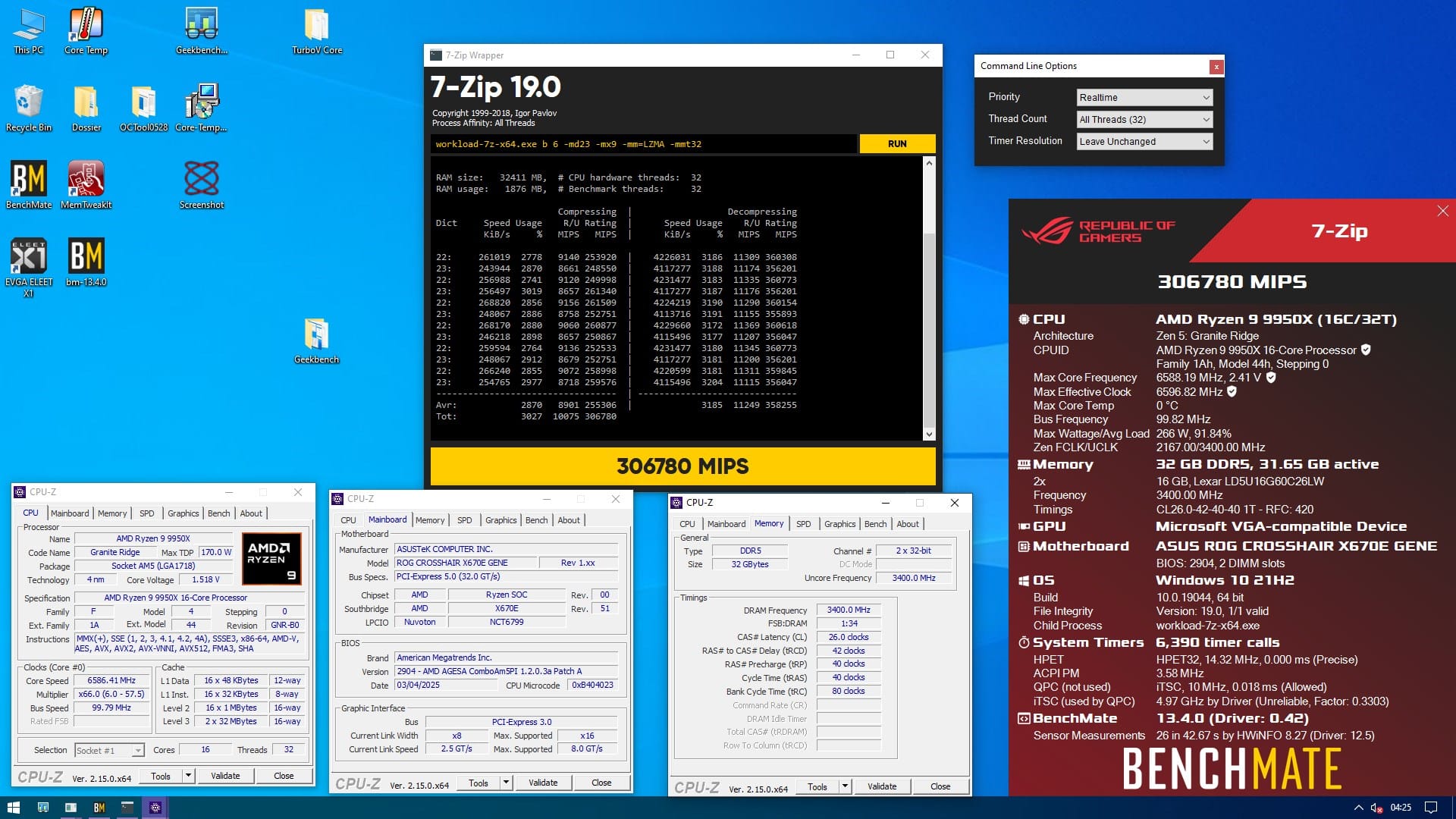
Without commenting too much, here are a few uses of the Lexar kit in extreme overclocking benchmarks. And what I can say is that it’s the best kit I’ve ever had in my hands, even for XOC.I was able to reach 7000 CL26 in UCLK = MEMCLK synchro, which is just excellent for this type of kit, while being air cooled, with only the CPU under liquid nitrogen (9950X and 9900X).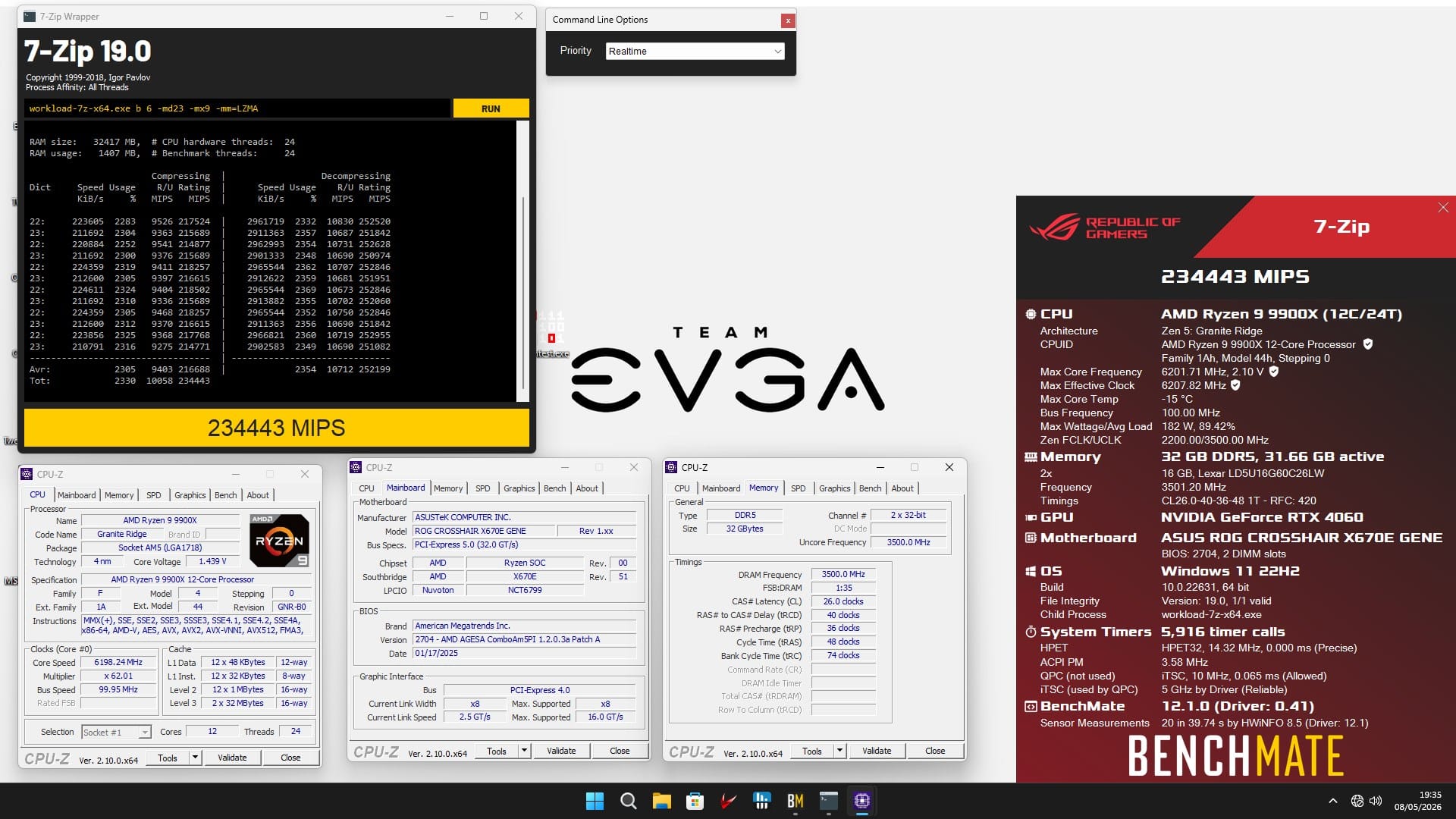
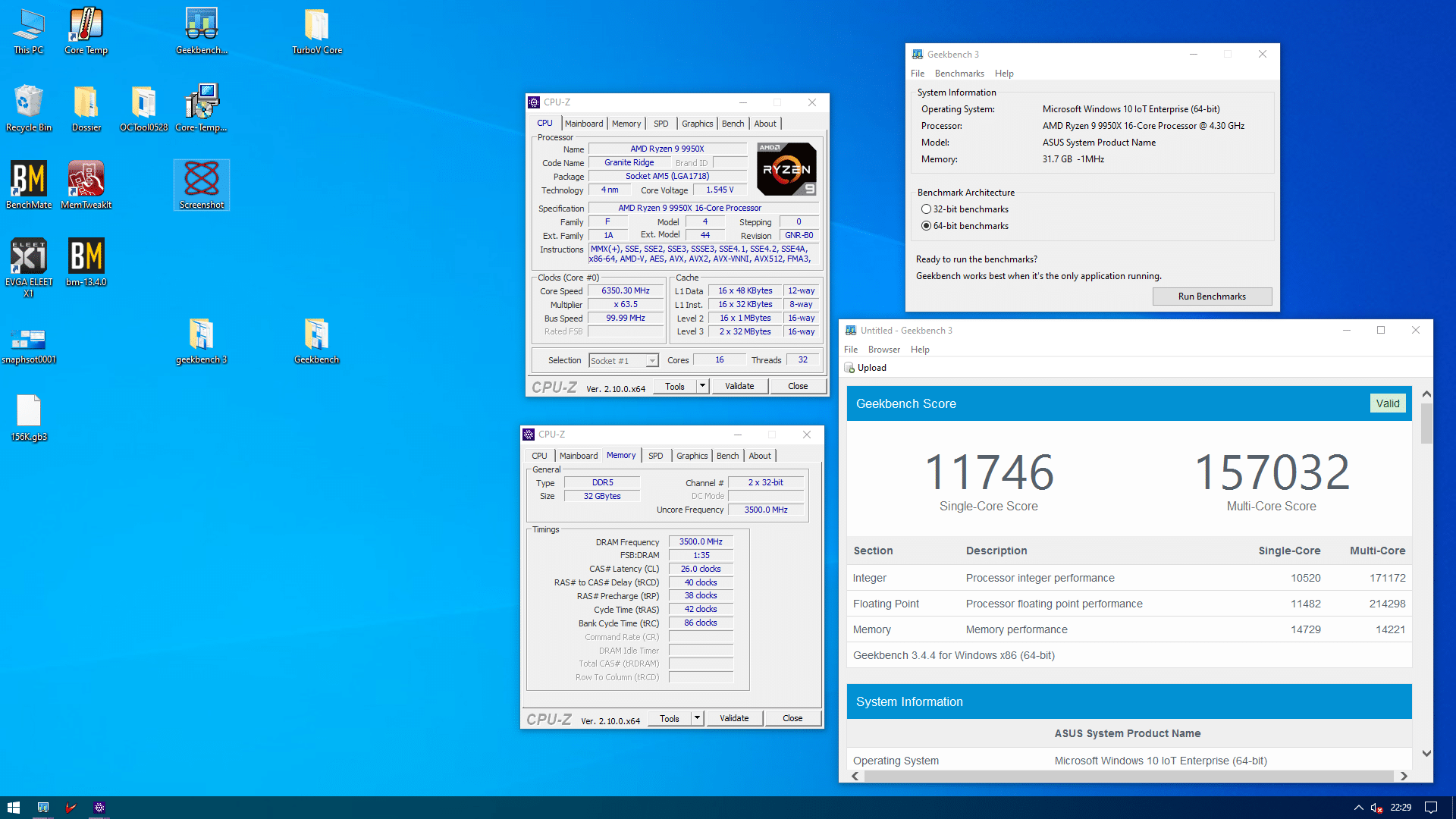
I also tested this kit in ambient overclocking on an Intel platform with a 13900KS, and here again, it proved excellent at high frequencies: it climbs without difficulty to 8600 CL32, the only real limit being the CPU’s ability to handle this kind of frequency. All in all, this Lexar kit is very good, both on AMD and Intel, confirming its versatility, the quality of the chips used and the PCB.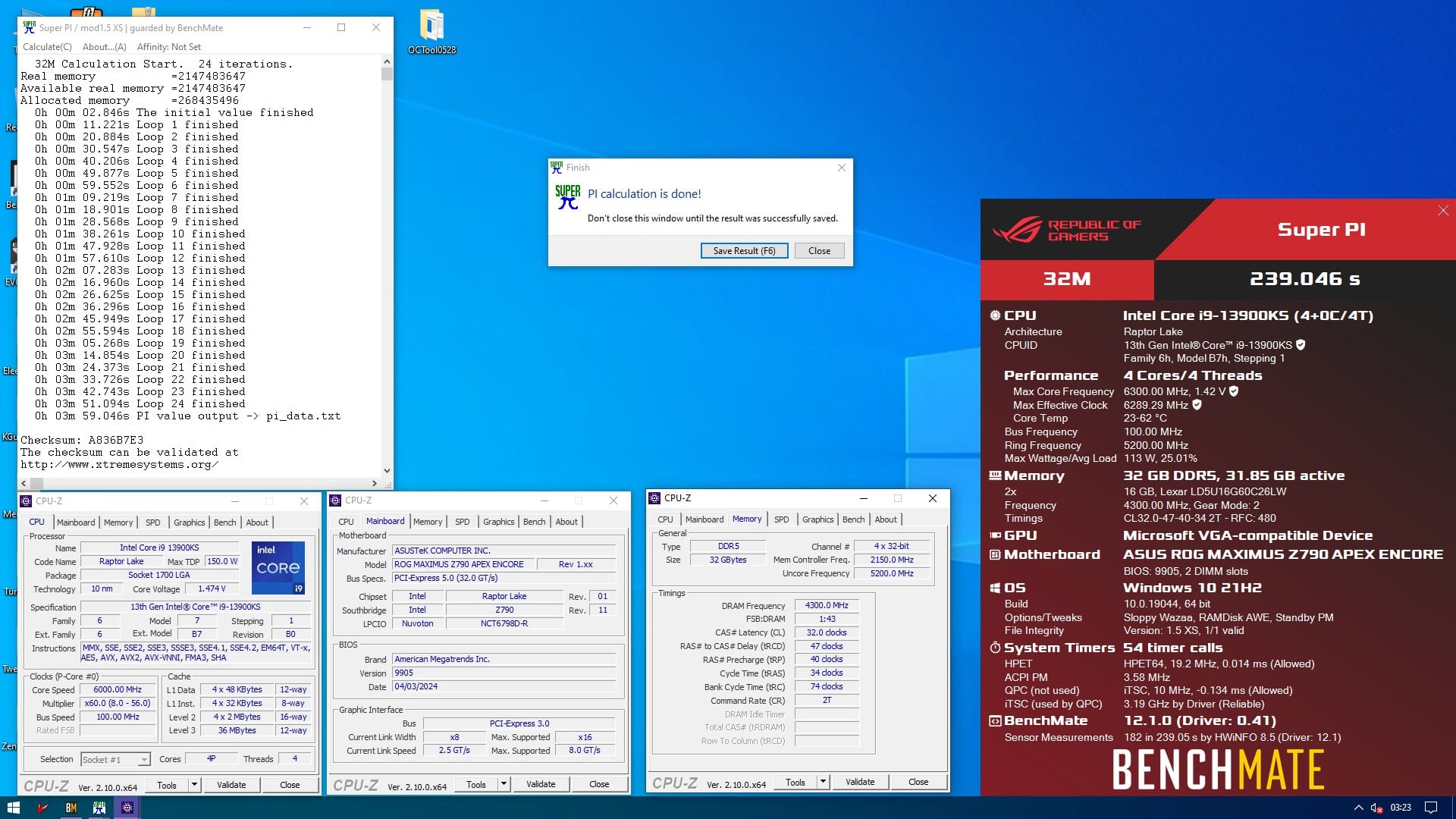
[nextpage title=”The interest of this ram kit and the conlusion “]
The benefits of this RAM kit:
The advantage of this RAM kit over XMP or EXPO at very high frequencies (7600-8000 MHz+) is twofold:
- It features an EXPO profile directly supported by all AM5 motherboards, which is not always the case with high-frequency XMP profiles.
- It lets you aim for AMD’s sweet spot in terms of performance, with UCLK-synchronized ram around 6000-6400 MHz, and tight timings (between CL28 and CL26), which remains the most efficient configuration in most cases.
New-generation chips :
The advantage of the new chips introduced by Lexar in this Ares 6000 CL26 kit is their significantly improved energy efficiency, ideal for RAM overclocking. These chips require less voltage. This allows either higher frequencies or lower latencies, where a conventional kit would quickly be limited by the maximum voltage supported… and the temperature rise that goes with it. As you can see, these new Hynix chips used in the Lexar kit are a real pleasure for anyone wishing to overclock their rams.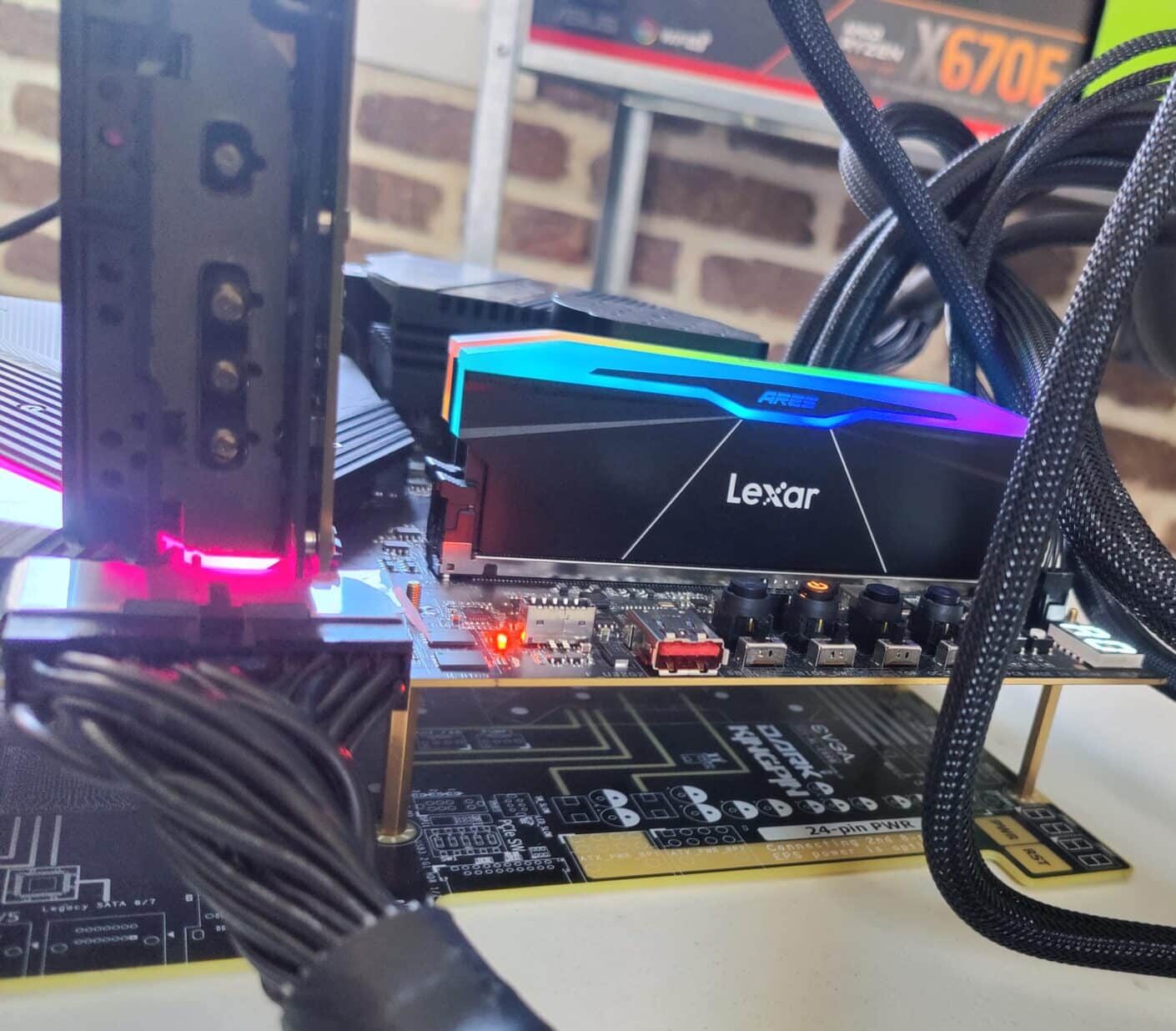
To finish with my conclusion on the new Ares II 6000 CL26 kit from Lexar. I can say that this is the best kit I’ve ever had in my hands in terms of EXPO performance for AMD. You’ll get excellent plug-and-play performance, and overclocking capabilities are much improved compared with older-generation chips, thanks to RAM voltages that are around 0.08 VDD lower than on older kits. This means you can overclock RAM more heavily, without having too great a strain on temperatures, precisely because of this lower VDD voltage.
I can therefore say that for anyone with an AMD platform, whether they just want to use an EXPO profile or overclock their kit, this kit is excellent in both cases, especially at Amazon’s price of €167.99, when competing kits are between €230 and €240.
Lexar Ares II DDR5 32 GB 6000 MT/s CL26
We liked :
- New-generation Hynix A-die chips
- chips that require much less voltage than older generations from before 2025
- Excellent value for money
- The overclocking capabilities of Hynix A-die chips
- High-quality, high-performance kit design compared to previous-generation Lexar ARES kits
- Excellent XMP performance for AMD platforms
We would have liked :
- Nothing more…

Without too much surprise, we give the Gold Award to this RAM kit, which is clearly the best RAM kit we’ve ever had in our hands, both in terms of EXPO performance and RAM overclocking. And as repeated in this review, its excellent value for money is yet another real argument. If you add the finish, the heatsink and the RGB, which are on a par with what the competition is offering at the top end of the market… It’s really great to see Lexar evolve like this, while keeping its prices extremely attractive.

