

Scams involving computer components are by no means a new phenomenon. In fact, we regularly share the latest tips on how to avoid falling into the trap—or at least, how to recognize the kind of scam you might be facing. Today, we’re talking about fake plastic GPUs glued directly onto a piece of PCB. Once again, to spot the scam, you have to take the card apart!
They’re now using fake plastic GPUs!
Even the memory should have been thrown in the trash!
Obviously, online marketplaces are the best place to get scammed, especially those that don’t act as intermediaries between the buyer’s money and the seller’s bank account. Let’s just say that, while this doesn’t prevent everything, it does limit the damage in the event of a scam. The buyer can test the product before opening a dispute and has a slightly better chance of getting their money back.
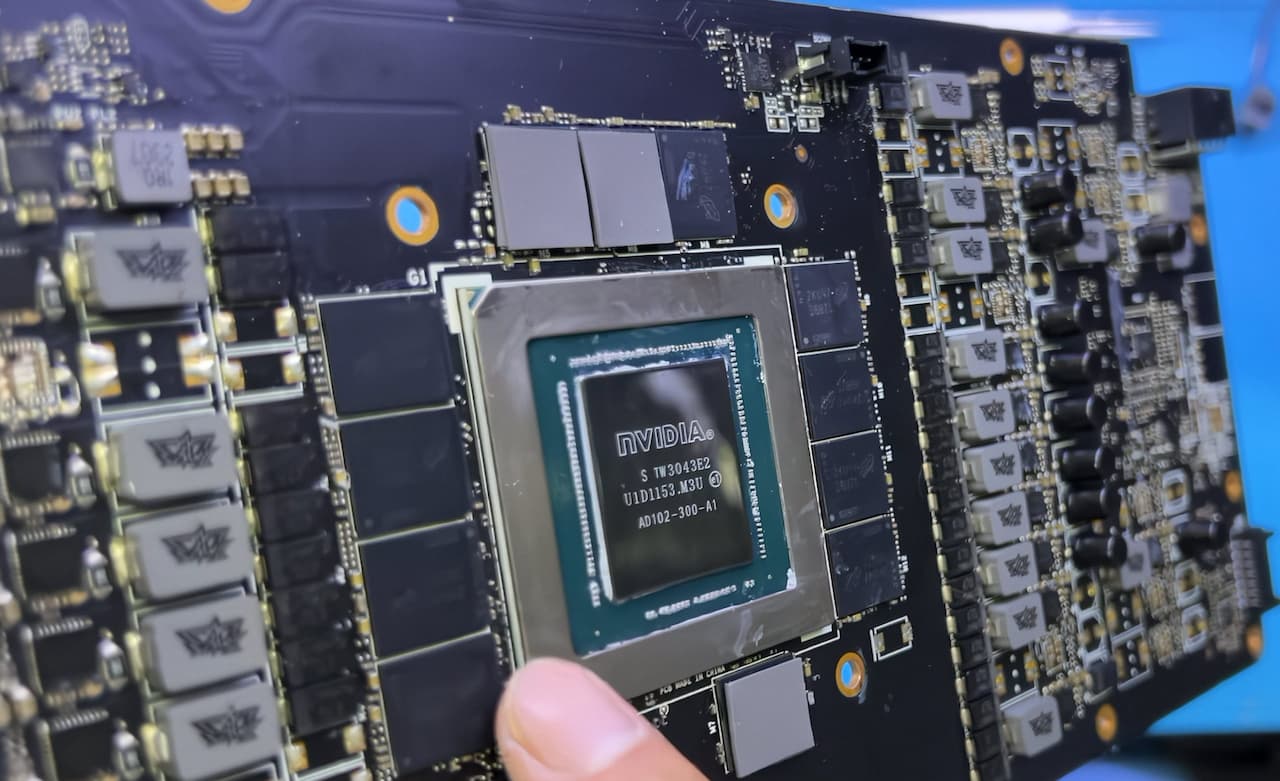
In any case, today’s case involves an ASUS RTX 4090 that was purchased for just $200. Upon arrival, it turns out the card is indeed broken—and for one very simple reason: the GPU is a complete fake. That’s right—the scammers used a plastic part to replace the real one. What’s more, a few things don’t add up:
- It feels different to the touch than a real GPU
- Incorrect font
- Incorrect positioning of the capacitors around the die
- Missing QR code
- Unrealistic production date: 2030
In fact, it’s said that when you touch the die, it comes loose from the rest of the substrate—that’s how much of a piece of junk it is. As for the memory, even if it’s real, these are likely defective modules destined for the trash.
It was too good a deal to pass up:
Of course, in all these situations, you should avoid jumping headfirst into a deal that seems too good to be true—in most cases, it’s just a scam. Here, we’re talking about a $200 graphics card, whereas on the secondhand market, prices go beyond $1,500 and hover around 2,000 € in France. Also, if possible, test the hardware yourself—make sure it works, run a benchmark, verify the specs with GPU-Z, and so on. Otherwise, opt for platforms that offer buyer protection or at least don’t send your money directly to the seller. That way, you’ll have time to run your tests and open a dispute if there’s a problem. And above all, when in doubt, walk away!