




The new generation of ASUS motherboards, based on AMD’s X870E and X870 chipsets, brings no major revolution. Instead, it offers an interesting refresh, with several notable improvements. It’s worth pointing out that the X870E and X870 share the same specifications and chipsets as the X670E and B650E.

Notable improvements for overclocking
One of the new features of this new generation is the Dynamic OC Switch. This BIOS-integrated feature automatically switches between PBO (Precision Boost Overdrive) and manual overclocking, depending on usage scenarios. This option is particularly useful for those wishing to optimize gaming performance with PBO, while reserving manual overclocking for professional tasks.
What’s more, AMD is said to have improved the BIOS for this new generation. As a result, the capabilities and efficiency of the PBO algorithm have been increased, resolving some of the problems encountered on motherboards with 600 chipsets.
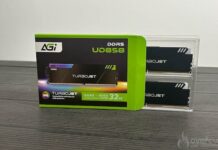
Another important innovation for overclocking concerns RAM slots. ASUS has introduced a new technology called DRAM Nitropath on AMD 800 chipsets. This technology could also appear on Intel motherboards, although it seems to be reserved for high-end models from the Strix range upwards. This technology involves a physical modification of the RAM slot. The gold pins are shorter than those traditionally used, reducing signal noise on the slots. According to ASUS, this modification enables a 400 MHz gain in RAM overclocking. It also considerably increases slot resistance to repeated RAM module changes.
Improvements for motherboard mounting
ASUS continues to improve the ease of assembly on its new-generation motherboards. New features include the PCIe Q-Release Slim. This device enables the graphics card to be clipped in and out without the need to press any buttons. To remove, simply pull gently on the left side of the graphics card to automatically unlock it.
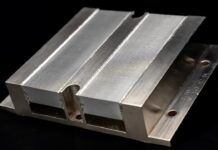
In addition, ASUS has simplified installation of NVMe drives with the Q M.2, M.2 Q-Slide and M.2 Q-Latch features. These innovations enable the NVMe and its heat sink to be clipped in without the need for screws. This eliminates the difficulty of positioning heatsinks on screw threads.
For some time now, ASUS has been seeking to improve the user experience by simplifying component mounting. With the BTF standard, ASUS initiated a new approach to cabling, where all cables run behind the motherboard. This commitment to simplification continues with these new enhancements.