

[nextpage title=”Introduction:”]
An OC LAN is really quite an adventure, lasting three days non-stop! But before we dive into this incredible experience, let’s go back in time to the beginning. A few weeks before D-Day. Excitement and stress are already building. We’re in the middle of preparations for an overclocking LAN for the Country Cup 2024, where our French overclockers are getting ready to proudly defend the colors of France.
The start of the adventure
We start by selecting the weekend that suits everyone best. Once the date is set, we start looking for sponsors to finance part of the LAN, especially the most expensive part: liquid nitrogen (LN2). This precious liquid is essential for overclocking, where performance reaches new heights thanks to its extreme temperatures (-196°C).
This year, two major partners have placed their trust in our community to organize this event.
Thermal Grizzly, a company specializing in PC cooling, and Dstny, a European telecommunications operator. These two partners, who renewed their trust following the 2023 LAN, enabled us to cover the vast majority of costs.
A big thank you to Thermal Grizzly and Dstny on behalf of all French overclockers for this precious help, which enabled us to take part in this competition. Their support was essential in making this event possible!


With sponsors found to take charge of the liquid nitrogen (LN2), and the date set to suit everyone, all that’s left is to wait until D-day, while preparing the equipment and components.
This year’s LAN for the Country Cup 2024 will take place from December 13th to 16th, 2024. Every year, HWbot organizes a major overclocking event where each participant proudly represents his or her country.
Last year, France finished in an honorable 3rd place, just behind Australia and the USA. But for 2024, the objective is clear: aim for the top of the podium and bring home the win.
What is the Country Cup?

The Country Cup, organized every year by HWbot, is an international overclocking competition. Unlike individual competitions, the Country Cup emphasizes team spirit, as participants represent their country.
Key principles of the Country Cup :
- National representation: to take part in the competition, overclockers from the same nation come together. They all join forces to accumulate points.
- Diversity of benchmarks: the competition is made up of several stages, each testing different overclocking skills (CPU, GPU, memory, etc.) and using hardware from different generations.
- Collaboration and strategy: overclockers must coordinate their efforts to maximize scores in the various events, dividing up tasks according to skills and available hardware.
- World ranking: each team’s performance determines their position in the final ranking, establishing which country is the best at overclocking for the year.
[nextpage title=”OK, but what’s a Lan:”]
Lan history and explanation:
Each overclocker participating in this LAN comes from a different region of France. It’s a long way for some, but the passion and desire are there. This year, the event is taking place in Montaigut-en-Combraille (63700), an emblematic location for overclocking LANs in France.
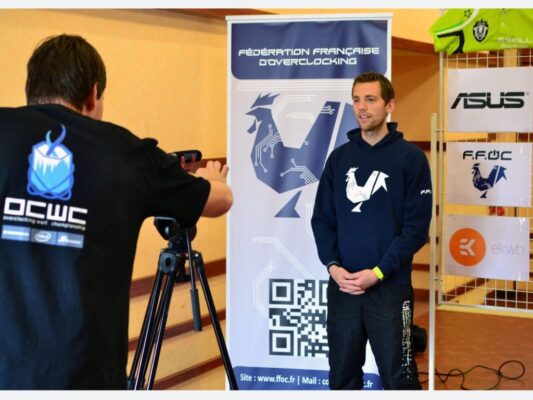
Why Montaigut-en-Combraille? Because this village is already etched in the history of French overclocking. It was here, a few years ago, that French overclockers, notably Wizerty, laid the foundations of the community by creating the FFOC association. If you’re not familiar with the name, the Fédération Française d’OverClocking (FFOC) is an association dedicated to the promotion of overclocking. Its aim is to support this passion by organizing events, competitions and gatherings to unite the community and raise the profile of French overclocking.
Montaigut-en-Combraille is more than just a meeting point: it’s a symbolic place that embodies the history of French overclockers. At every LAN organized here, we don’t just push performance to the limit.
An overclocking LAN is much more than a simple competition: it’s a true moment of sharing between enthusiasts. Throughout the year, we keep in touch, discussing overclocking, new hardware, product releases and much more. So getting together in person at these events is a valuable and unique opportunity.
What makes these moments so special is their authenticity. Everything happens naturally. An alchemy is created between us, driven by a shared passion that transcends individual differences and even generations. Because yes, and this often comes as a surprise: during this LAN, the participants were between 20 and 50 years old. That’s the beauty of these gatherings! This mix of ages and experiences creates rich exchanges and moments of conviviality, strengthening the bonds that unite this community.
And for those wondering: no, this is not a closed community. It’s simply a niche. But it’s precisely this uniqueness that makes it so rich and authentic.
The day of departure
I, Baron, will briefly recount my journey to this overclocking LAN. It all began on a Friday morning, at Lille Flandres station, around 11 o’clock. There I met up with another enthusiast, “Dede”. Together, we boarded a TGV bound for Paris.
Arriving in Paris around 1 p.m., another overclocker, “MalwarePup”, is already waiting for us to continue our journey. This last leg, from Paris to Montaigut-en-Combraille, is done by carpool. The atmosphere is relaxed, punctuated by discussions about our setups and objectives for this intense weekend.
We finally reach the venue at around 6.30pm. The first participants, already on site, are in full preparation: tables and chairs are set up, dewars (containers) of liquid nitrogen (LN2) lined up and ready for use, and some have already taken care to provide food and drink for everyone. A few overclockers, like “Flop”, are already benching, concentrated.
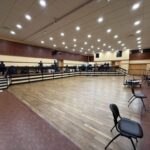
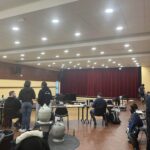
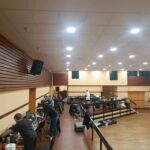
Everything is in place to kick off this first day, which promises to go on well into the night.
[nextpage title=”Organization and start of benching:”]
What does an overclocking LAN look like?
Unpacking and preparation: the importance of insulation
Here’s a series of photos of our motherboards insulation and the LN2 Pot that will hold the liquid nitrogen to keep temperatures cool 🙂
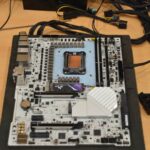
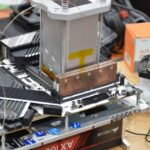
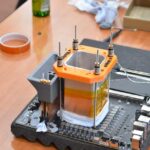
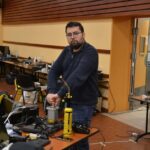
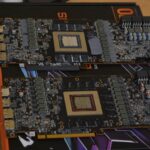
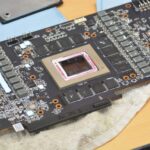
During an overclocking session under liquid nitrogen (at -196°C), component insulation is crucial to avoid any damage caused by condensation.
The main objective is to make the area around the processor completely watertight. We generally use absorbent paper (such as Sopalin), carefully cut and placed around the processor to cover sensitive areas.
Once the insulation is in place, we add a heater, a small heating device installed under the motherboard. This heater prevents cold from settling on the motherboard and limits condensation during the session.
Next, we install the cooling pot (called a ” LN2 Pot“), which we attach to the processor. This pot is designed to hold liquid nitrogen and dissipate the heat produced by overclocking the processor.
Finally, to further limit condensation, a towel is often wrapped around the bucket. This simple and effective method protects all sensitive components while ensuring optimum session performance.
During the session :
Liquid nitrogen and coldbug management during overclocking sessions
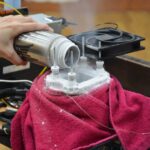
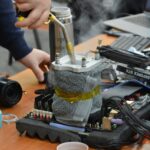
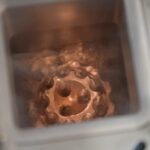
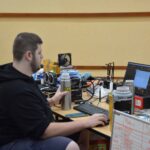
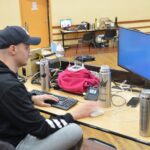
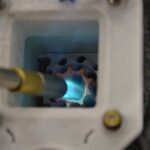
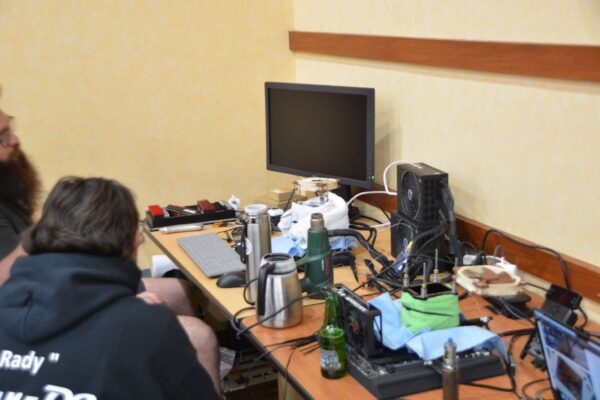
During overclocking sessions, we use thermos flasks to facilitate the pouring of liquid nitrogen into the bucket. The aim is to get the processor temperature as low as possible to achieve maximum performance.
However, not all processors can withstand the maximum temperature of -196°C liquid nitrogen. Some present a phenomenon known as Coldbug: this is the temperature limit below which the processor ceases to function, causing it to shut down.
This coldbug varies from one processor to another. For example, some processors can operate down to -170°C, while others reach their limit as early as -130°C or -150°C. This depends on a kind of “silicon lottery”, where each CPU, even of the same reference, can react differently. This calls for special care to avoid falling below this limit.
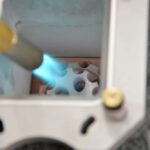
Identifying this critical temperature is essential during an extreme overclocking session. Precise control of the liquid nitrogen is essential to maintain the processor at its optimum temperature. If we exceed this limit and the processor goes into coldbug, we need to heat up the bucket using a torch or a heat gun to return it to a stable, working temperature.
Pushing components :
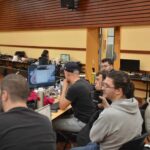
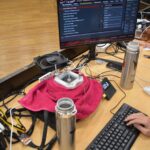
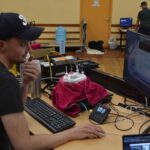
All that remains is to push the processor or graphics card to its limits. Thanks to liquid nitrogen, it’s possible to significantly increase voltage, power consumption and component frequencies, far beyond what is achievable at room temperature.
The aim is to achieve performance unattainable under normal conditions, pushing the limits of components to achieve frequency or benchmarkrecords.
To optimize the session, it’s important to get to know your processor or graphics card at room temperature beforehand. This enables you to understand how it behaves and operates, even if the limits are quite different and much higher under nitrogen.
Another key step is to prepare the operating system (Windows) so that it is as light and efficient as possible. Indeed, operating system optimization has a direct impact on benchmark performance, and every detail can make the difference in achieving a maximum score.
Our internal organization
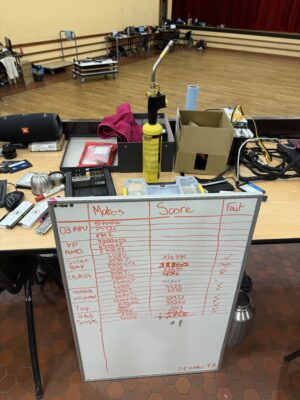
Having explored the basics of overclocking and explained the preparation required to push components to their limits, it’s essential to talk about the internal organization of this LAN. At our event, we had 17 participants, each with their own hardware and varied specialties, covering both recent and older generations of CPUs and graphics cards.
This diversity is a real asset, as it makes us complementary. Competitions like the Country Cup require specific skills on several generations of hardware, including older platforms. Each participant therefore concentrates on the components he or she knows and masters best.
However, given the wide variety of hardware and the sheer number of components to be overclocked in just three days, some participants had to deal with platforms with which they were not necessarily familiar. In these cases, they worked according to the guidelines and advice of the experts on these specific platforms.
[nextpage title=”Results and thanks:”]
Country Cup 2024 results
After battling a multitude of processors and graphics cards that were difficult to overclock (special mention to “Antoine”, “Lennard”, “Jamy” and “Xray” for the 6900 XT and 7900 XTX).
After a tiring night’s sleep, our 17 LAN overclockers gave it their all. Other French overclockers, who couldn’t make it to the event, also overclocked on their own to support the competition.
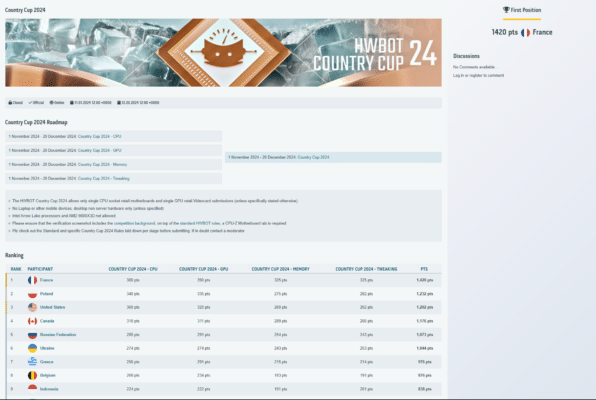
Thanks to this collective effort, France won the Country Cup for the first time in its history. It won ahead of the Poles and the Americans.
In conclusion
An overclocking LAN is first and foremost a human and community adventure, bringing together enthusiasts who share the same passion and the same pleasure. It’s a unique event that unites the members of this community around a common goal.
Overclocking is a demanding discipline, requiring knowledge, components and a bit of specific hardware.
However, before embarking on extreme overclocking, it’s perfectly possible to get started in “ambient” mode, with traditional cooling such as a ventirad or watercooling. This allows you to learn the basics, understand component behavior and progress step by step.
Acknowledgements :
I would again like to thank our sponsors Thermal Grizzly and Dstny for their financial support, which made this event possible.
As well as Intel, overclocking.com and G.Skill supported us last year with components that again this year enabled us to stand out from the crowd and prepare for this LAN in the best possible way.
Many thanks also to the town of Montaigut-en-Combraille for renting out the hall, which enabled us to host this overclocking event in excellent conditions.
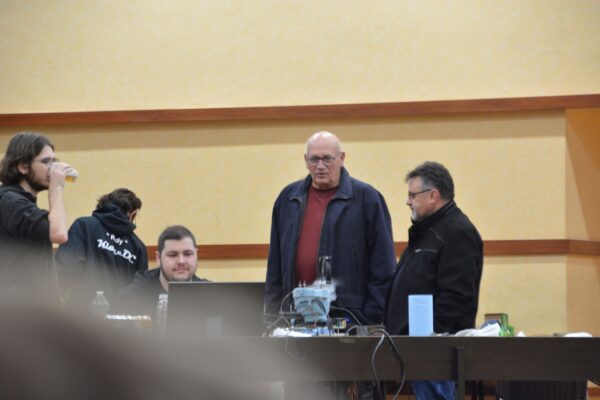
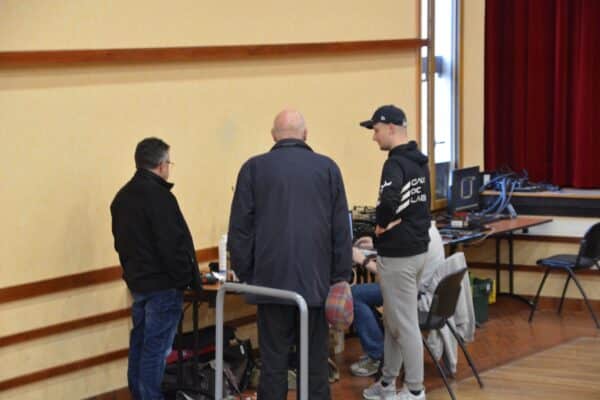
And finally, a huge thank you to all our French overclockers who fought to represent France at this overclocking competition.
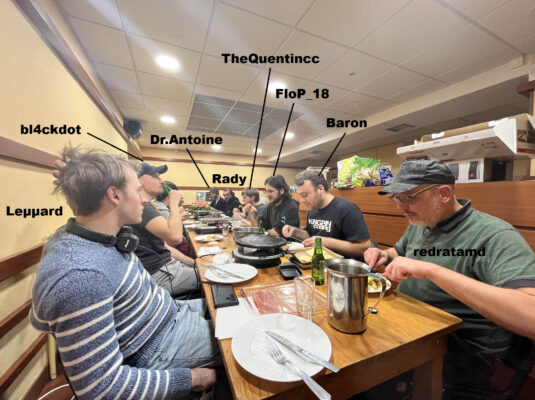
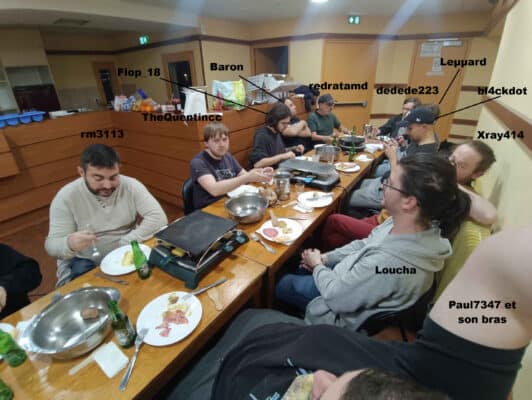
Thanks to their talent and determination, we won Country Cup 2024!
A huge thank you to our dear “Dede“, who brilliantly took on the role of chief photographer for this LAN!
A quick hello to “SArd”, a Ukrainian overclocker well known to the community, who currently resides in France and who did us the honor of visiting us with his family during this LAN, much to our delight.
And on behalf of the entire French overclocking community, I’d also like to thank the other countries and overclockers for their participation.